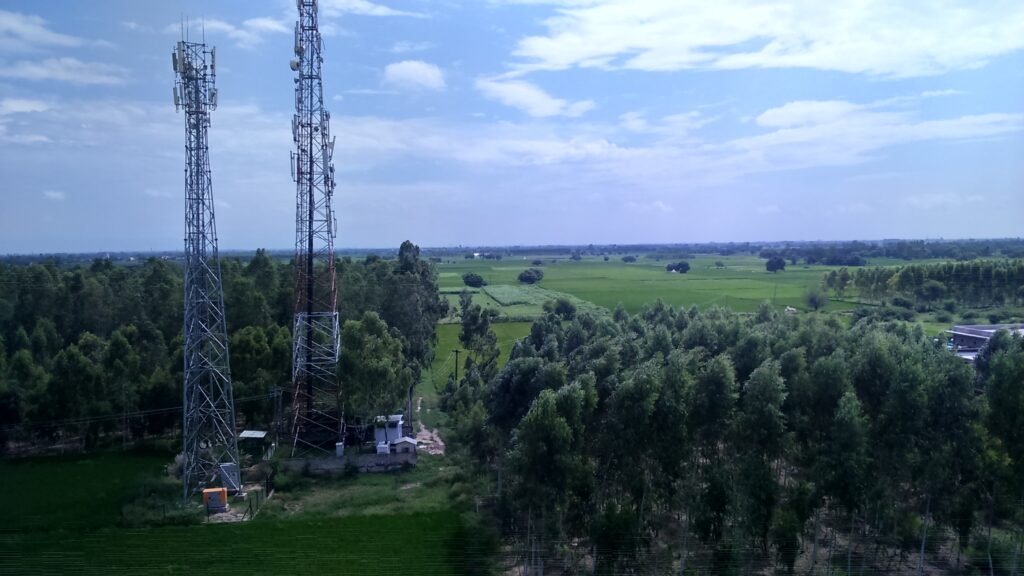
The regulator has taken enforcement out of Islamabad and into the field in the latest PTA telecom coverage drive: all ten zonal offices spent a week measuring real network performance across six regions, and mobile operators now face hard deadlines and financial penalties if coverage does not improve.
What PTA’s October field drive covered
The Pakistan Telecommunication Authority announced on 16 October 2026 that it had intensified nationwide monitoring, sending all ten of its Zonal Offices across six regions in a week-long drive from 8 to 14 October. The PTA telecom coverage drive evaluated ground-level service quality and dealt with consumer complaints directly, instead of relying on the operators’ own paperwork.
Teams measured mobile network coverage, voice call quality and internet service performance in the areas where consumers complain most. Operators have been directed to fix the identified problems within a stipulated timeframe, and the closure of a telecom site in Faisalabad was resolved during the sweep. This was not a one-off: a week earlier, from 30 September to 7 October, zonal teams inspected 115 telecom sites across the country — 39 in Lahore, 17 in Karachi, 16 in Sukkur, 14 each in Multan and Rawalpindi, 8 in Quetta, 4 in Abbottabad and 3 in Gilgit.
The priority list: Thatta to Gilgit-Baltistan
The October PTA telecom coverage sweep took teams to Thatta, Dera Ghazi Khan, Mandi Bahauddin, Quetta, Faisalabad and Gilgit-Baltistan — not Pakistan’s wealthiest districts, but places where people have complained about dropped calls and slow internet for years, and where coverage gaps bite hardest.
Gilgit-Baltistan is a special case. The authority’s Quality of Service survey for April to June 2026 had already found continuing connectivity challenges there, with around 4,100 voice and SMS tests and 3,960 broadband tests conducted across six high-altitude sites in Azad Jammu and Kashmir and Gilgit-Baltistan. Separately, PTA has directed all operators to resolve coverage gaps across Rawalpindi and Islamabad by October 2026, including key corridors such as Kashmir Highway and Islamabad Expressway.
Why the gaps persist: the numbers behind the digital divide
An earlier PTA telecom coverage survey in 2026 found that all cellular mobile operators had only partially complied with Quality of Service standards during the first quarter of 2026 — none achieved full compliance across all key performance indicators. Users report average 4G speeds of just 17 to 20 Mbps, while mobile broadband penetration sits between 57 and 60 per cent: roughly 148 million 3G and 4G users out of about 196 million subscribers. Over 40 per cent still use feature phones, and around 10 per cent have no mobile device at all.
The divide is also gendered. Mobile internet usage has reached 65 per cent in urban areas but only 50 per cent in rural areas — and within rural areas, only 7 per cent of women are online, compared with 26 per cent of women nationwide. Geography makes it harder still: load-shedding, fibre cuts, infrastructure theft, right-of-way constraints and security issues all hold back connectivity in places like Gilgit-Baltistan.
Deadlines and penalties: what operators must do next
The PTA telecom coverage teams identify call connection failures, dropped calls, slow mobile internet and coverage gaps, while reviewing consumer feedback to understand service problems better. The teams also engage local administrations and elected representatives to win the local buy-in that technical fixes often miss.
Operators that miss the deadlines face financial penalties. The operators are fighting their own cost battle at the same time: in a recent joint letter to Prime Minister Shehbaz Sharif, the CEOs of Jazz, Zong, Ufone-Telenor and PTCL asked for industrial electricity tariffs for telecom infrastructure, saying commercial power rates had risen about 197 per cent since 2018 while average revenue per user had fallen 22 per cent.
USF, satellites and solar: the bigger fix
Field monitoring alone will not close the gap. The Universal Service Fund, the government-backed subsidy for unserved and underserved areas, has crossed $1 billion in deployed subsidies, and seventeen telecom projects are extending 1,825 km of optic fibre to more than 500 underserved areas.
Satellite broadband is another key piece: the PTA has recommended licensing low-earth orbit providers including Starlink, OneWeb and Amazon’s Project Kuiper for isolated rural communities — see our Starlink Pakistan 2026: launch, prices and availability explainer. The federal IT minister said on 13 October that the satellite internet rules are close to being finalised.
Solar power is bridging the rest of the gap, keeping remote towers running off-grid — including thousands of solar-powered towers in Balochistan, the same rural-connectivity push behind the government’s AI training programme for Balochistan’s youth.
Sources: TechX — PTA Takes Pakistan Telecom Gaps Fight to the Field; Bloom Pakistan — Pakistan Telecom Giants Demand Industrial Electricity Rates
Related Posts
 TechnologyBYD Pakistan Plant to Start Operations by Mid-December, Hubco Confirms
 TechnologySindh Signs MoU with Huawei to Build Pakistan’s First AI-Powered Digital Province
 TechnologyNCCIA Arrests Faheem Akram in Lahore Over Alleged $126M US Postage Fraud
 TechnologyPakistan Expands Digital Infrastructure for AI Push: 5G, Fibre and Satellite Plans Unveiled in Seoul
 TechnologyAround 20 Pakistani Tech Companies Showcase Innovation at TechCrunch Disrupt 2026 in San Francisco
 TechnologyMusavir.AI Unveils Pakistan’s First 3D Digital Twin Map of Islamabad and Rawalpindi
Most Popular
 How-ToPTA Tax Calculator 2026: Check Mobile Tax on Any Phone142 views
 Canada JobsTech Jobs in Canada: Roles, Salaries, and Skills Needed117 views
 TechnologyRedmi K100 Launching on 28 October: 10,000mAh Battery, 185Hz Display and Full Specs110 views
 TechnologyTecno Mobile Prices in Pakistan 2026: Spark, Camon and Pova Series Compared109 views
 ShowbizWomen’s Fashion in Pakistan 2026: Trends, Brands and Style Guide97 views
 BISPPunjab Driving License Scam Alert: Fake Websites & “Without Test” Fraud | UrduPro94 views



One comment