Sindh Signs MoU with Huawei to Build Pakistan’s First AI-Powered Digital Province
The Sindh government has signed a memorandum of understanding (MoU) with Chinese technology giant Huawei to develop Pakistan’s first AI-powered digital province, in a deal finalised during Chief Minister Syed Murad Ali Shah’s visit to China. The agreement sets out a first-year workplan covering a Karachi flood early-warning system, a provincial cloud and data-centre roadmap, and large-scale ICT skills training for students — making the Sindh Huawei AI digital province pact one of the most ambitious provincial technology agreements Pakistan has signed to date.
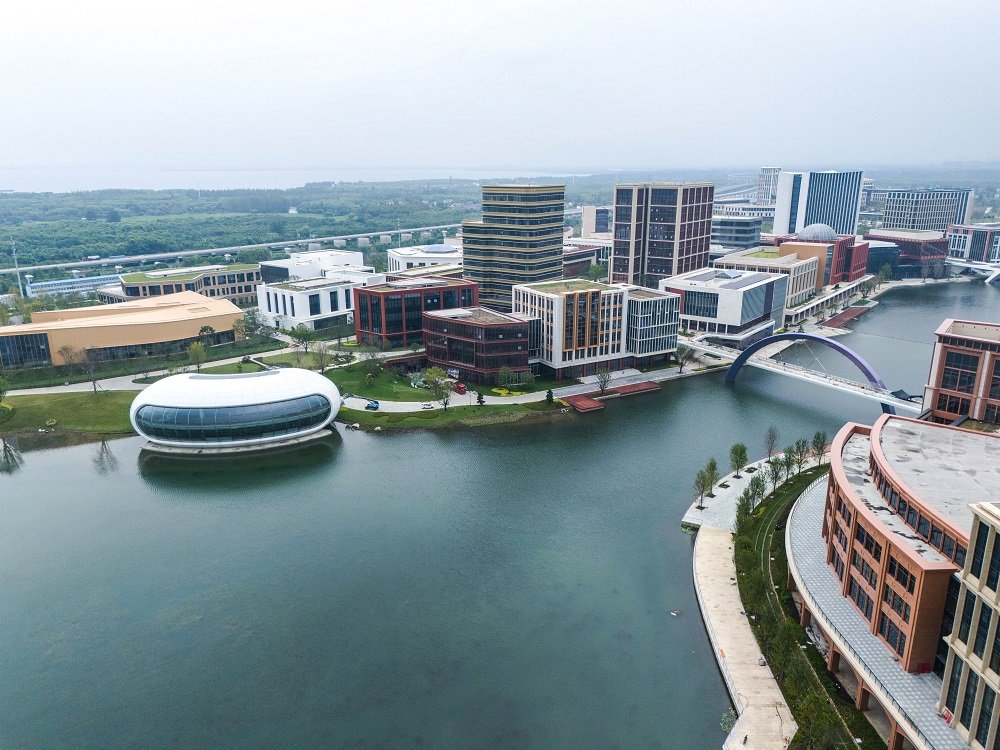
The framework MoU was signed on Friday, 16 October 2026, during the chief minister’s tour of Huawei’s Lianqiu Lake Research and Development Centre in Shanghai’s Qingpu district — the company’s largest global R&D campus. The document was signed on Sindh’s behalf by Special Assistant to the Chief Minister for Investment, Syed Qasim Naveed Qamar.
What the Sindh–Huawei MoU Covers
The MoU is a non-binding framework agreement focused on five areas: artificial intelligence, cloud computing, digital governance, smart-city solutions and technology training for Sindh’s youth. It calls for a joint working group and a mutually agreed first-year workplan to convert the priorities into technical designs, pilot projects and formal procurement.
Under the Sindh Huawei AI digital province framework, Huawei briefed the Sindh delegation on its research in semiconductor design, 5G and 6G technologies, cloud computing, artificial intelligence and the Internet of Things. The chief minister said cooperation should go beyond technology procurement to joint projects, capacity building, research and development, and technology transfer.
“We are moving from buying technology to building it together,” the chief minister said during the visit, a sentiment echoed across the official coverage of the trip. Murad Ali Shah also invited Huawei to establish R&D facilities or technology laboratories in Karachi, particularly in connection with the proposed Karachi Education City and other technology-focused initiatives.
Karachi Flood Warning System Among First Priorities
The most concrete near-term deliverable is a pilot city-operations platform with flood early-warning capability for Karachi — a city of more than 20 million people that faces recurring urban flooding, traffic congestion, waste-management problems and strained public infrastructure.
Days before the Shanghai signing, the chief minister had already sketched the idea during a visit to Huawei’s urban-governance centre in Wuhan, proposing a pilot smart-city system for Karachi with an initial focus on flood warnings, emergency response and city operations. The proposed pilot would begin in one district before potentially expanding across the city.
The chief minister referred to Wuhan’s smart-city model as a potential example for improving urban management in Karachi, and said data-driven technology could help the city address flooding, traffic, water management and waste disposal — all chronic pain points for the provincial capital.
Cloud, Data Centres and Cybersecurity Plans
Beyond the Karachi pilot, the Sindh Huawei AI digital province agenda includes a provincial cloud and data-centre roadmap. The chief minister proposed cooperation with Huawei in developing government cloud infrastructure, data centres, disaster-recovery systems, cybersecurity capabilities and AI computing infrastructure.
Sindh is already pursuing digital governance initiatives, including the provincial e-Portal and a broader cloud and digital transformation agenda. The Huawei partnership is positioned to accelerate that work by adding enterprise-grade cloud capacity, structured disaster-recovery planning and dedicated AI computing resources for government use.
The province also discussed linking Sindh’s universities and researchers with AI training and computing resources through Huawei’s facilities, with the chief minister noting that Karachi Education City could help develop the province as a hub for research and emerging technologies.
Training, R&D and the Role of Karachi Education City
A significant pillar of the agreement is human-capital development. The first-year priorities include an innovation and training centre at Karachi Education City, plus ICT skills training and certification programmes for students across the province.
The chief minister told the Huawei leadership that Sindh was seeking a long-term partnership involving technology transfer, training and local expertise — not simply the purchase of equipment. He also suggested study visits for provincial officials and closer cooperation between Huawei, Sindh’s universities and technical institutions.
The Sindh delegation accompanying the chief minister included Senior Minister Sharjeel Inam Memon, Planning and Development Minister Jam Khan Shoro, Agriculture Minister Sardar Muhammad Bakhsh Khan Mehar, Karachi Mayor Barrister Murtaza Wahab and Special Assistant Syed Qasim Naveed Qamar.
Why the Huawei Partnership Matters for Digital Pakistan
The Sindh Huawei AI digital province deal lands at a moment when Pakistan’s provinces are racing to convert the National AI Policy into working infrastructure. A provincial AI roadmap backed by one of the world’s largest ICT companies gives Sindh a potential first-mover advantage in areas — flood early warning, city operations, government cloud — where Pakistani citizens feel the absence of digital systems most directly.
That said, the agreement is a framework, not a contract. Tangible benefits will depend on follow-on planning, procurement, regulatory clearances and local capacity building, so the joint working group’s formal workplan — and any facility agreements for the proposed Karachi R&D presence — will be the real test of whether the Shanghai handshake turns into working infrastructure.
The MoU was among 34 memorandums of understanding and agreements announced during the Sindh delegation’s China visit, which concluded with the second Sindh Investment Conference in Shanghai covering industrial use of Thar resources, renewable energy, electric vehicles, agriculture, digital transformation, logistics and industrial development.
For Karachi’s residents, the promise to watch is the flood early-warning pilot: if a data-driven warning system prevents even one monsoon-season disaster in the city’s low-lying districts, the Sindh Huawei AI digital province vision will have earned its headline.
Sources: The News — Murad seeks Shanghai expertise for Karachi’s development; Super News — Sindh partners with Huawei to build Pakistan’s first AI-powered digital province
Related on UrduPro: Pakistan Expands Digital Infrastructure for AI Push: 5G, Fibre and Satellite Plans Unveiled in Seoul · Musavir.AI Unveils Pakistan’s First 3D Digital Twin Map of Islamabad and Rawalpindi
Related Posts
 TechnologyPakistan Sets October 23 as New Date for Mandatory E-Passport Issuance
 TechnologyBYD Pakistan Plant to Start Operations by Mid-December, Hubco Confirms
 TechnologyNCCIA Arrests Faheem Akram in Lahore Over Alleged $126M US Postage Fraud
 TechnologyPakistan Expands Digital Infrastructure for AI Push: 5G, Fibre and Satellite Plans Unveiled in Seoul
 TechnologyAround 20 Pakistani Tech Companies Showcase Innovation at TechCrunch Disrupt 2026 in San Francisco
 TechnologyPTA Deploys 10 Zonal Offices in Field Drive to Fix Pakistan’s Telecom Coverage Gaps
Most Popular
 How-ToPTA Tax Calculator 2026: Check Mobile Tax on Any Phone142 views
 Canada JobsTech Jobs in Canada: Roles, Salaries, and Skills Needed116 views
 TechnologyTecno Mobile Prices in Pakistan 2026: Spark, Camon and Pova Series Compared109 views
 TechnologyRedmi K100 Launching on 28 October: 10,000mAh Battery, 185Hz Display and Full Specs109 views
 ShowbizWomen’s Fashion in Pakistan 2026: Trends, Brands and Style Guide97 views
 BISPPunjab Driving License Scam Alert: Fake Websites & “Without Test” Fraud | UrduPro94 views