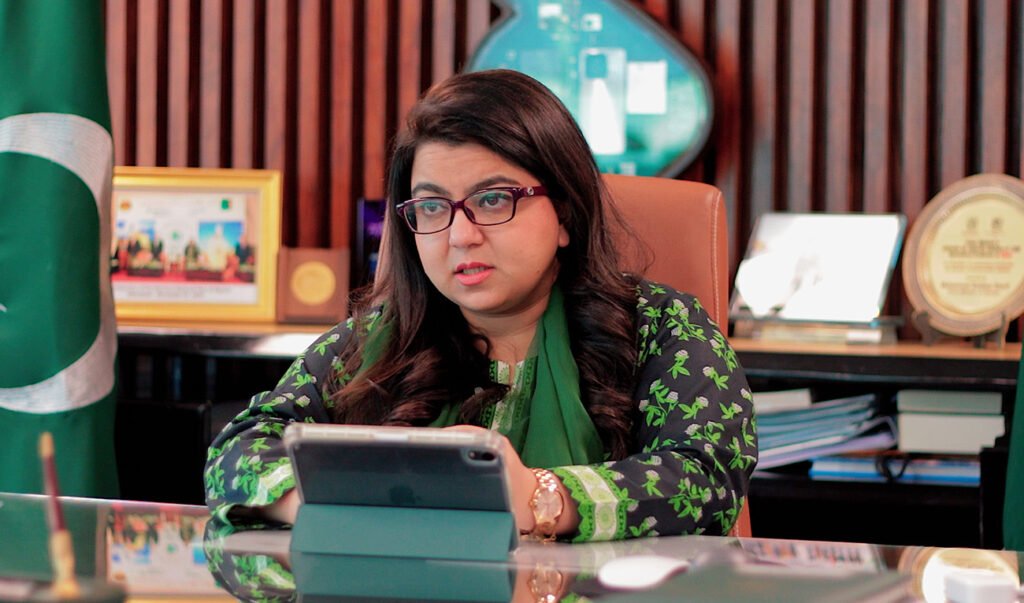
Shaza Fatima Announces $1 Billion AI Commitment at Seoul Summit, Shares Pakistan’s Four AI Governance Lessons
IT minister Shaza Fatima Khawaja used her keynote at the Global AI and Digital Summit in Seoul to lay out Pakistan’s AI governance playbook — and to announce a USD 1 billion prime-ministerial commitment for AI development through 2030.
The Shaza Fatima Seoul summit address, titled “Digital and AI Compacts: From Ambition to Action”, set out four lessons Pakistan has drawn from three years of digitising government. The minister described the forthcoming Digital and AI Compact as a “declaration of independence in the digital age”.
The summit runs in Seoul from October 19 to 22, hosted by the World Bank Group with South Korea’s science and finance ministries. Pakistan is set to become the first country to sign the Digital and AI Compact, with the minister presenting the country’s AI roadmap in a dedicated session.
Four lessons from three years of AI in government
The Shaza Fatima Seoul summit speech opened with what she called her main lesson from three years in office: governments must be willing to start before they are fully ready. Citing the UN Secretary-General’s warning that institutions are unprepared for machines that make decisions, she said the move from ambition to action is now unavoidable.
1. One owner at the top. More than a hundred government bodies in Pakistan used to work in isolation, she said. Parliament’s answer was the Digital Nation Pakistan Act 2025, creating a National Digital Commission chaired by the prime minister with the four provincial chief ministers, key regulators and the Digital Authority as members. The prime minister has approved a National Digital Master Plan to digitise 12 priority sectors through 2035 — because only top-level leadership can break institutional inertia.
2. Pathways for everyone. Pakistan is building a Data Exchange Layer, a Digital Identity and a Unified Payment Interface as one interoperable national architecture. Under the governing rule, data is shared but never copied or stored, always with citizen consent and a transparent record. She cited the registration of more than one million women-led farms in agriculture as an example, and said 57 national standards have been set to ease private-sector dealings with government.
3. Govern the state first. To rebuild public trust, she outlined proposed legislation requiring labelling of AI-generated content, a citizen’s right to human review of AI-influenced decisions, and mandatory registration and impact assessment of government AI systems before deployment.
4. Measure to improve. Pakistan climbed 14 places in the UN E-Government Index 2024, from 150th to 136th, and each federal secretary will now answer annually to the Commission on their ministry’s digital scorecard.
A $1 billion bet on AI through 2030
The headline announcement of the Shaza Fatima Seoul summit address was financial: a USD 1 billion commitment from the prime minister for artificial intelligence through 2030. AI and digital training is being extended to one million non-IT professionals, and 1,000 fully funded AI PhD scholarships are on offer, she said. The country’s digital workforce is being quadrupled within a single year under the Islamabad AI Declaration on sovereign and responsible AI.
The commitments build on the National AI Policy 2025, which targets three million AI-related jobs by 2030, and follow a record year — state media reported IT and telecom export remittances of Rs1.2 trillion in FY 2025-26.
Sovereign AI and a free digital stack for the world
The Shaza Fatima Seoul summit remarks also carried a sovereignty message. Citing a scientific panel report warning that dependence on foreign AI models erodes local control, Khawaja said Pakistan is focusing on sovereign AI that understands the country’s language and cultural nuances and serves its own interests. She welcomed the UN Secretary-General’s Global Fund for AI.
She noted that Pakistan holds the Digital Cooperation Organization (DCO) presidency, which has approved the Regional DPI Initiative proposed by Pakistan. Once the national digital stack is complete, she said, Pakistan will offer it free to other countries that need it.
On connectivity, she noted that with the 5G auction and right-of-way reforms done, Pakistan led a summit conversation on “Connecting the last 2.6 billion in the age of AI”, per the IT ministry.
‘From Islamabad to Seoul’
She closed the Shaza Fatima Seoul summit keynote by declaring that “from Islamabad to Seoul the future belongs to those who build it with sovereignty and inclusion.”
The Shaza Fatima Seoul summit schedule continues through the week: bilateral meetings with a Google vice president and a World Bank vice president are on the agenda, alongside sessions on equitable internet access and digital inclusion. The summit itself saw the World Bank unveil its first digital strategy, targeting digital opportunities for one billion people worldwide by 2030.
Sources: Global News Pakistan (October 21, 2026); Aju Press (October 20, 2026). Related on UrduPro: Shaza Fatima Meets Google VP in Seoul · Pakistan Expands Digital Infrastructure for AI Push: 5G, Fibre and Satellite Plans Unveiled in Seoul
Related Posts
 TechnologyAuto Policy 2026-31: PM Shehbaz Approves Pakistan’s New Five-Year Auto Framework
 TechnologyBISP Introduces Interoperability in Digital Wallet Payments: Withdraw Funds from Any of 6 Partner Banks
 TechnologyPakistan’s Mobile Phone Industry Misses Localisation Target: Value Addition Stuck at 10-15%
 TechnologyNCCIA Warns Against Fake Social Media Profiles, Online Blackmail of Women in Pakistan
 TechnologyPakistan Sets October 23 as New Date for Mandatory E-Passport Issuance
 TechnologyBYD Pakistan Plant to Start Operations by Mid-December, Hubco Confirms
Most Popular
 How-ToPTA Tax Calculator 2026: Check Mobile Tax on Any Phone142 views
 Canada JobsTech Jobs in Canada: Roles, Salaries, and Skills Needed116 views
 TechnologyTecno Mobile Prices in Pakistan 2026: Spark, Camon and Pova Series Compared109 views
 TechnologyRedmi K100 Launching on 28 October: 10,000mAh Battery, 185Hz Display and Full Specs109 views
 ShowbizWomen’s Fashion in Pakistan 2026: Trends, Brands and Style Guide97 views
 BISPPunjab Driving License Scam Alert: Fake Websites & “Without Test” Fraud | UrduPro94 views



One comment