Auto Policy 2026-31: PM Shehbaz Approves Pakistan’s New Five-Year Auto Framework
ISLAMABAD — Prime Minister Shehbaz Sharif on Tuesday gave his in-principle approval to the Auto Policy 2026-31, a five-year roadmap for Pakistan’s automobile industry that proposes bringing the average import tariff down to 15 percent, cutting sales tax on electric and hybrid vehicles, and setting a mandatory $6 billion vehicle-export target for local manufacturers.
The policy, presented by officials at a high-level meeting, aims to make Pakistan’s auto industry more competitive internationally, encourage the adoption of electric vehicles, and reduce the country’s reliance on imported fuel by promoting cleaner mobility.
Tariff to Fall to 15 Percent Under Auto Policy 2026-31
The centrepiece of the Auto Policy 2026-31 is a phased reduction of import duties that will bring the average tariff to 15 percent by 2030-31. According to The News, the Prime Minister approved the proposal in principle, with officials confirming that regulatory duty and additional customs duties will be phased out by the end of the policy period.
The framework also plans a gradual phasing out of the SRO-based concession regimes, with the 5th Schedule of the Customs Act set to be phased out by the end of the policy period — a move officials say will simplify the tariff structure and make competition in the auto sector more transparent.
Electric Vehicles Get Big Tax Breaks — IMF’s 18% EV Tax Plan Rejected
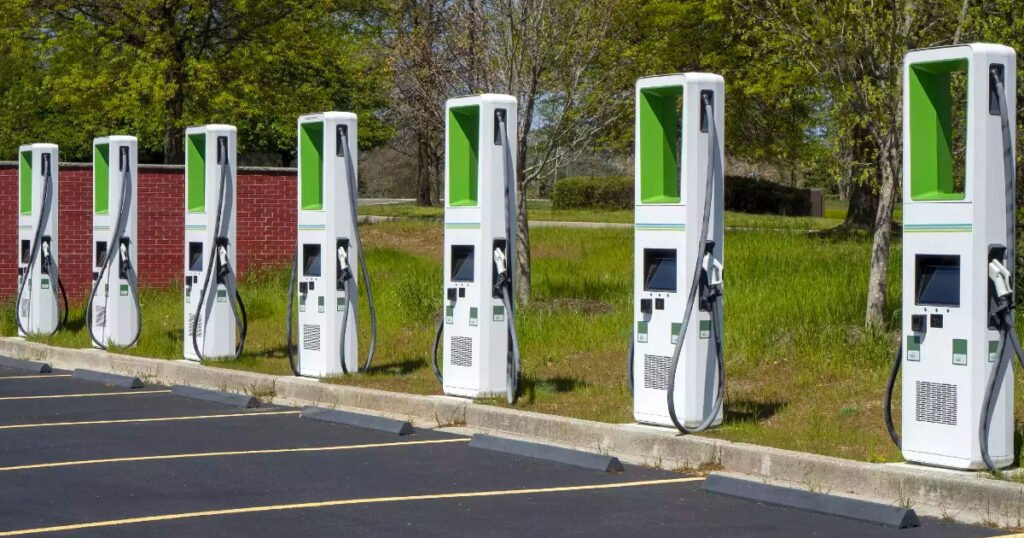
The Auto Policy 2026-31 gives preferential treatment to New Energy Vehicles (NEVs) over conventional petrol and diesel vehicles. The proposed sales tax rates are 1 percent on battery electric vehicles (BEVs), 6 percent on range-extended electric vehicles (REEVs) and 9 percent on plug-in hybrid electric vehicles (PHEVs) — applying to both locally assembled and imported vehicles. Hybrid and conventional internal-combustion vehicles will remain at 18 percent.
Crucially, the government rejected the International Monetary Fund’s proposal to raise the sales tax on electric vehicles to 18 percent, choosing instead to keep EVs affordable to fight climate change. Officials noted that 80 percent of environmental pollution is caused by vehicular emissions, and encouraging EVs and hybrids is central to the government’s climate strategy.
The policy also proposes a 10 percent federal excise duty on electric vehicles valued above $75,000, along with higher FED rates on ICE vehicles above 2,000cc to discourage their use.
Small Electric Cars Under $15,000 to Get 5% Import Duty
To make electric mobility accessible to ordinary buyers, the Auto Policy 2026-31 proposes a reduced 5 percent customs duty for the first two years of the policy on imported small EVs valued under $15,000 CIF. The preferential rate applies in 2026-27 and 2027-28, rising to 25 percent in the following two years before settling at 15 percent in 2030-31, according to PakWheels’ analysis of the draft.
The CKD (completely knocked down) tariff structure also encourages local NEV production with lower duties, and EV-specific non-localised parts attract just 1 percent duty.
Financing is being liberalised too: the State Bank of Pakistan is being asked to enhance the credit limit for NEV financing from Rs3 million to Rs10 million, with the loan tenor extended from three to five years.
New Auto Development Levy to Raise Rs232 Billion
The government has proposed an Auto Development Levy with different rates to collect Rs232 billion over the five-year period. The levy will be zero on cars up to 1,000cc; 2 percent on 1,000cc to 2,000cc vehicles; and 10 percent on vehicles above 2,000cc. The same structure applies to imports, while prime movers, buses and trucks face a 2 percent levy.
The Rs232 billion collected will fund the Drawback of Local Taxes and Levies (DLTL) for exporters, directly linking domestic taxation to the policy’s export ambitions.
Mandatory $6 Billion Export Target and Domestic Value Addition
The Auto Policy 2026-31 sets mandatory export targets for auto manufacturers: $6 billion in vehicle and parts exports over five years. The breakdown targets $2.078 billion from cars, jeeps, SUVs and double-cabins; $233.4 million from tractors; $409.4 million from bikes and rickshaws; and $3.29 billion from auto-parts manufacturers.
Under the export framework, companies will receive compensation equal to 5 percent of their export value, plus a further 10 percent incentive on exports above the previous year’s level, as reported by TechJuice.
The policy also proposes establishing a Pakistan Automotive Testing Institute, enforcing international vehicle-safety requirements, adding buyer-protection clauses to manufacturer contracts, and conducting twice-yearly audits of manufacturer import-quota allocations.
What Happens Next: IMF, ECC and Cabinet Approval
The Auto Policy 2026-31 will now be forwarded to the Prime Minister for formal approval and then to the International Monetary Fund for final endorsement, where heated debate is expected on the government’s NEV promotion measures. It must then clear the Economic Coordination Committee, the Federal Cabinet and the parliamentary process, with the FBR issuing legal notifications before any tariff change takes effect.
Until then, buyers should not expect immediate changes in showroom prices — actual vehicle prices will depend on the final tax package, exchange rates, production costs and manufacturers’ pricing decisions.
Related on UrduPro: BYD Pakistan Plant to Start Operations by Mid-December, Hubco Confirms · Pakistan’s Mobile Phone Industry Misses Localisation Target
Related Posts
 TechnologyBISP Introduces Interoperability in Digital Wallet Payments: Withdraw Funds from Any of 6 Partner Banks
 TechnologyPakistan’s Mobile Phone Industry Misses Localisation Target: Value Addition Stuck at 10-15%
 TechnologyNCCIA Warns Against Fake Social Media Profiles, Online Blackmail of Women in Pakistan
 TechnologyPakistan Sets October 23 as New Date for Mandatory E-Passport Issuance
 TechnologyBYD Pakistan Plant to Start Operations by Mid-December, Hubco Confirms
 TechnologySindh Signs MoU with Huawei to Build Pakistan’s First AI-Powered Digital Province
Most Popular
 How-ToPTA Tax Calculator 2026: Check Mobile Tax on Any Phone142 views
 Canada JobsTech Jobs in Canada: Roles, Salaries, and Skills Needed117 views
 TechnologyTecno Mobile Prices in Pakistan 2026: Spark, Camon and Pova Series Compared109 views
 TechnologyRedmi K100 Launching on 28 October: 10,000mAh Battery, 185Hz Display and Full Specs109 views
 ShowbizWomen’s Fashion in Pakistan 2026: Trends, Brands and Style Guide97 views
 BISPPunjab Driving License Scam Alert: Fake Websites & “Without Test” Fraud | UrduPro94 views