Elon Musk promised a full-length, artificial intelligence-made film of Homer’s Odyssey. What arrived on Friday, 23 October 2026, was something much smaller: a seven-minute first episode, posted in 4K on X by Grok Imagine and shared by Musk himself later that night. It is billed as Episode 1 of an Odyssey series, made in creative collaboration with Wonder Studios and director Dev Walker, and it has restarted a debate that goes far beyond one short video: can AI actually tell a story, or can it only imitate the look of one?
The timing matters. Musk made his original promise in July 2026, saying Grok would produce a historically accurate version of Homer’s epic, true to the ancient poem. Three months later, audiences got a brief, sparsely narrated opening chapter instead of a feature film. That gap between promise and delivery is now the story itself, and it is why the episode has been watched, mocked, praised and picked apart in equal measure since the weekend.
What the episode actually shows

The episode runs for just over seven minutes and presents a cinematic take on Homer’s ancient epic. A bearded lead in a dark cloak, a woman holding an infant, a small carved horse figurine and a fleet of black-sailed ships crossing a grey sea all appear in the short. The horse is the clearest storytelling signal in the piece: a quiet visual hint at the Trojan Horse, the trick at the heart of the Greek victory at Troy.
What the episode does not do is explain itself. There is little narration to carry viewers who do not already know the Odyssey, and only Odysseus is clearly named among the characters. Viewers are left to recognise the imagery rather than follow a plot, which is part of why reactions have split so sharply. Some see striking individual shots; others see a mood reel searching for a story.
Grok Imagine has not said how many episodes are planned, when the next one will arrive, how much of the footage was generated by the AI tool and how much was shaped by the studio, or what the short cost to make. Instead, the Grok Imagine account asked viewers in its post whether they would like a full breakdown of how the episode was made, leaving the production process itself as an open question.
A promise made in July, a short film in October

Musk’s July promise was unusually specific. He said Grok Imagine would remake the Odyssey as a full-length film, historically accurate and faithful to Homer, before the end of 2026. The October release quietly changes the shape of that pledge: a feature film promise has become an open-ended series, with no announced end date and no guarantee that a full-length version will follow.
That reframing is familiar to anyone who follows Musk’s public promises. He has a long record of bold deadlines that slip, and trackers of his pledges put his overall follow-through rate at roughly a quarter. Against that background, even a seven-minute delivery counts as notable, because it shows the tools have reached a point where a public promise can be answered, at least in part, with finished footage rather than words alone.
At the same time, the episode does not settle the bigger claim. A seven-minute short that leans on atmosphere is a very different achievement from a two-hour film that must hold characters, dialogue, pacing and emotion together. Critics who watched the episode closely made exactly that distinction, and it is the test the next episodes, whenever they arrive, will have to pass.
Why Nolan’s Odyssey is part of this story
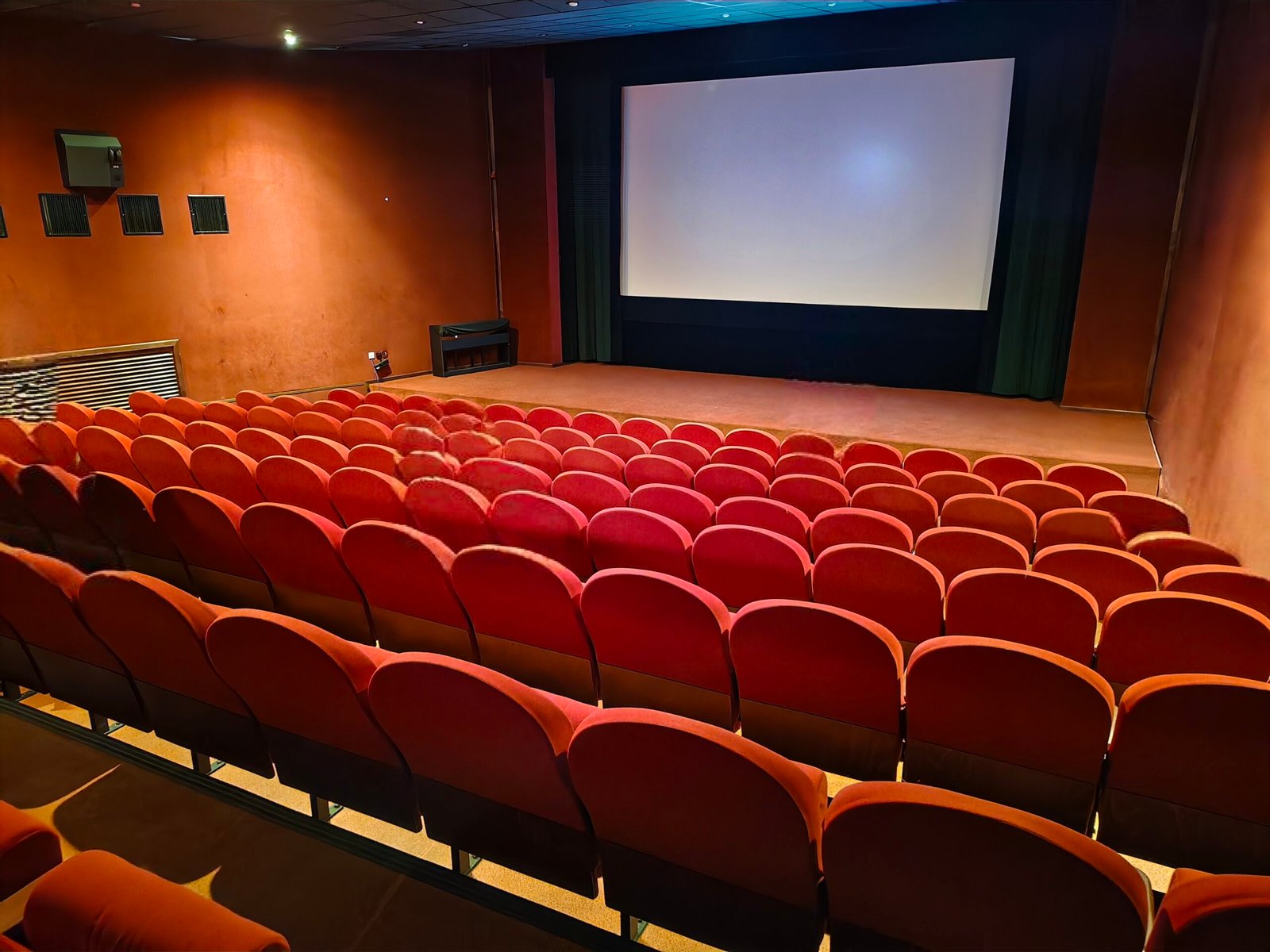
None of this happened in a vacuum. Christopher Nolan’s own Odyssey, a live-action epic shot for IMAX, opened in cinemas in July 2026 and has become one of the defining theatrical hits of the year. Filmed across six countries with thousands of cast and crew members, and leaning heavily on practical filmmaking, it filled IMAX screens for months and is now talked about as an early awards-season favourite, with reported global earnings approaching 1.8 billion dollars.
Musk publicly criticised Nolan’s film over its casting choices, and the Grok project has widely been read as a response to it. The two men also stand on opposite sides of the AI debate. Musk regularly shares AI-generated video and promotes ambitious computing projects, while Nolan has described himself as sceptical about AI and has argued that it has faced unusually strong public rejection.
The contrast between the two projects is therefore about more than technology. Nolan’s film is the product of a huge human production: locations, crews, performances and months of shooting. Grok’s episode is the product of a tool that can generate cinematic-looking images at speed, but must still prove it can sustain a human story. Audiences comparing the two are really comparing two ideas of what film-making is for.
What critics and viewers actually said

The public reaction to the Grok episode has been mixed, with mockery prominent. Many viewers ridiculed the short online, questioning its dialogue, its casting and its claim to historical accuracy. One widely shared complaint asked why characters presented as ancient Greeks were speaking in modern English, while others noted that the cast appeared uniform and that Odysseus was hard to tell apart from the many similar-looking men around him.
Professional reviewers were more measured but reached a similar conclusion. Digital Trends wrote that characters stare towards the horizon while the music insists something important is happening, and that moments which should carry weight pass before anyone gets to inhabit them. Reviewer Anthony Ha wrote that some shots could pass for real actors on a real sea, but that the footage lacked artistry, inspiration and human interest.
Not every response was negative, and it is worth being fair about what the episode achieves. The sea, the ships and the costumes look polished in places, and the short demonstrates how far AI video has come in producing imagery that, frame by frame, can resemble a real production. The criticism is not that the pictures look fake. It is that pictures alone, however polished, do not yet add up to a film.
What this means for AI film-making

The Odyssey episode is best understood as a progress report on AI film-making, not a finished answer. A few years ago, AI video tools could barely hold a character’s face steady from one shot to the next. Now they can produce a seven-minute short with consistent costumes, locations and mood. That is real progress, and it is why studios, advertisers and independent creators are all watching this experiment closely.
But the episode also exposes the current limits clearly. Storytelling needs more than consistent visuals. It needs characters who change, dialogue that reveals something, scenes that build on each other and an ending that earns its emotion. On that measure, the Grok episode is still a sketch: impressive in parts, thin as a whole, and heavily dependent on the audience already knowing the story it is trying to tell.
There is a practical consequence too. If AI tools can produce passable short-form video cheaply, they will change how trailers, adverts, background scenes and low-budget productions are made long before they replace feature films. The question for film-makers is not whether AI will be used, but where its speed is an advantage and where human craft still matters most.
What to watch for next

Three questions will decide whether the Grok Odyssey becomes more than a weekend talking point. The first is simple: will there be an Episode 2, and when? Grok Imagine has given no date, and an open-ended series that stalls after one short chapter will confirm the sceptics rather than silence them.
The second is about honesty in the production. Viewers have asked for the breakdown Grok Imagine offered: how much was generated, how much was directed and edited by people, and what the human contribution actually was. A clear answer would help audiences judge the tool fairly, instead of guessing from the finished footage.
The third is about the story itself. The next episode will need to show that AI film-making can do more than stage beautiful images: it must introduce characters, create tension and make viewers care what happens next. If it can do that, the conversation will change. If it cannot, the seven-minute Odyssey will be remembered as a curiosity from the year AI learned to look like cinema, but had not yet learned to tell a story.
Related Posts
 TechnologyOpenAI Launches GPT-6.1 Terra at Half the Price for Faster Computer Work
 TechnologyPhantom Blade Zero Reviews Hit 88 on Metacritic Ahead of 29 October Launch
 TechnologyPakistan’s National CERT Issues High Alert Over WhatsApp Web Attacks Targeting Officials
 TechnologySmartphone Prices in Pakistan Jump by Up to Rs 30,000 as Chip Costs Bite
 TechnologyPakistan’s Largest AI Hackathon Ends in Islamabad: 16,000 Applications, 300 Projects and What Comes Next
 TechnologyVivo Y32 Arrives in Pakistan With a Huge 8000mAh Battery and Pre-Orders Open This Week
Most Popular
 SportsBallon d’Or 2026: London Ceremony, Nominees and All-Time Records Ahead of 70th Anniversary279 views
 How-ToPTA Tax Calculator 2026: Check Mobile Tax on Any Phone277 views
 TechnologyAround 20 Pakistani Tech Companies Showcase Innovation at TechCrunch Disrupt 2026 in San Francisco256 views
 TechnologyRedmi K100 Launching on 28 October: 10,000mAh Battery, 185Hz Display and Full Specs250 views
 SportsUEFA Champions League 2026-27: Format, Teams and Schedule248 views
 Canada JobsTech Jobs in Canada: Roles, Salaries, and Skills Needed245 views