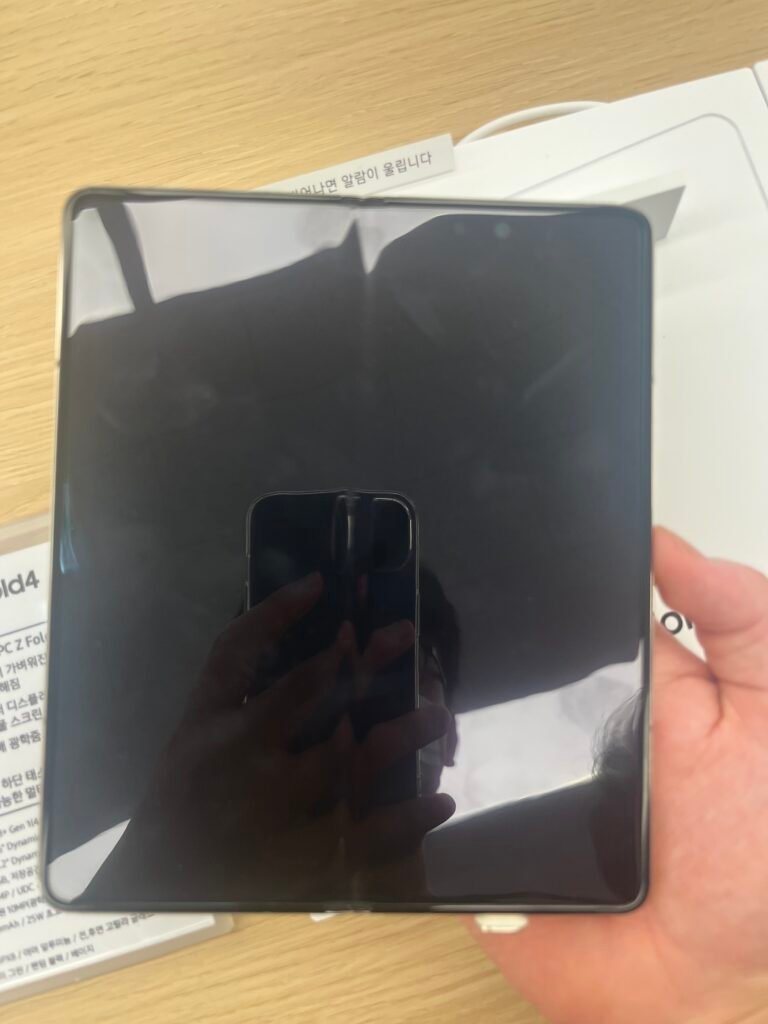
Apple Raises iPhone Duo Orders by 44% as Hinge-Crack Reports Cloud Its Foldable Launch
Apple has reportedly raised its iPhone Duo shipment target by 44 percent, from 9.7 million to 14 million units over twelve months, even as fresh reports of hinge-related screen damage raise questions about its first foldable phone. Demand is running far ahead of supply, and the phone’s most complicated part is also its most closely watched.
The higher target comes from supply-chain reporting, not from Apple itself. According to DigiTimes, cited by MacRumors and GSMArena, Foxconn and component suppliers have received revised instructions reflecting the increase, which covers a full twelve-month period rather than the remainder of 2026. Apple has described pre-order demand as “nothing short of extraordinary”, but it has not confirmed the 14 million figure, and that distinction matters: an order target is not the same as phones shipped.
The 44% jump: from 9.7 million to 14 million

Supply-chain sources say Apple raised its iPhone Duo shipment target by roughly 44 percent, from 9.7 million devices to 14 million over the first twelve months of production. The revision follows strong pre-orders for Apple’s first foldable iPhone, which went on sale on 23 October 2026 starting at $1,999 in the United States.
Context helps put the jump in perspective. In July, Nikkei Asia reported that Apple had asked suppliers to make around 10 million foldable phones in 2026. By September, analyst Jeff Pu was reported as saying only about 6 million units would actually be produced this year because of hinge production constraints. The new 14 million target is therefore best read as a twelve-month ambition, not a promise about how many phones will be built before the end of this year.
There is also a second reason for the increase, reported by NewsPim and carried by TrendForce on 27 October: component stockpiling. Industry sources suggest part of the extra ordering is preparation for potential assembly defects, including a higher need for replacement OLED panels. Apple may be ordering more parts partly because some of them will not make it into finished, fault-free phones.
Why demand surged: extraordinary pre-orders and January shipping dates

The demand side of the story is not in doubt. Pre-orders opened on 16 October, and within 30 minutes, shipping estimates in the United States had slipped to 25 January across all configurations. Apple retail staff were even reported to have been told to warn customers against visiting stores to buy an iPhone Duo without a pre-order on launch day, because walk-in stock was expected to be almost non-existent, with purchases capped at two per person.
That rush is also good news for the wider foldable market. DigiTimes forecasts that global foldable smartphone shipments will grow by 25.7 percent in 2026 and by 59.1 percent in 2027, compared with just 7.4 percent growth in 2025, with Apple’s entry expected to drive much of the expansion. One report even noted that Google searches for Samsung’s Galaxy Z foldable phones jumped by 300 percent in September after the iPhone Duo was unveiled. Readers weighing the wider market can compare the current Samsung Galaxy phones available in 2026 before deciding whether a foldable is right for them.
For a sense of how the launch itself played out, our earlier coverage looked at Pakistan’s first official iPhone Duo unboxing on launch day as Apple’s foldable went on sale. The new order figures do not change that launch story, but they do explain why getting hold of one has remained difficult in the days since.
The hinge problem: cracks along the fold

Almost as soon as the first phones reached buyers, reports of screen damage began to appear. MacRumors reported on 23 October that some owners were already seeing hinge-related faults, with photos shared on Reddit and its own forums showing display faults concentrated right along the hinge, often as a line of bright pixels across one side of the screen. One owner in Australia was reported as saying his device cracked after being opened fewer than twenty times.
TrendForce’s 27 October report pulls the technical explanation together. Citing ZDNet and MacRumors, it says persistent hinge problems during development prompted changes to the phone’s primary and secondary hinge suppliers. A teardown-based analysis by iFixit, cited via Reuters, used a 3D hinge simulation built from teardown footage, patents and CT scans, and suggested a possible cause: a central support bar may fail to retract properly during folding, placing pressure on the inner display.
The engineering point explains why a foldable hinge is harder than an ordinary phone hinge. TrendForce notes that a foldable phone’s waterdrop hinge must do two jobs at once: provide rigid, stable support when the phone is unfolded, and retract to give the display enough clearance to bend smoothly when it folds. If the support structure fails to retract properly, it can create localised stress that damages the display.
What Apple has said — and what it has not confirmed

Apple’s public position, as reported, is narrow. MacRumors reported on 26 October that Apple acknowledged an issue affecting the inner displays of a small number of iPhone Duo units. The company did not disclose the cause of the cracking, nor whether a fix is planned, according to that report. Affected customers have been able to obtain in-store replacements, although limited inventory has left some waiting.
That leaves three important questions unanswered. First, how widespread is the problem: a small number of early units, or a design weakness that will affect more phones over time? Second, will Apple redesign the hinge, as industry sources cited by TrendForce suggest it may need to? Third, does the 14 million target already assume a certain level of defects and replacements? None of those questions has a confirmed answer yet.
TrendForce itself makes the same caution: early reports of screen failures could undermine consumer confidence in a high-profile launch, particularly among first-time foldable buyers, but the long-term impact will depend on how widespread the issue is and how quickly Apple identifies the root cause and repairs or replaces affected units. Buyers should watch the fix, not just the headline order number.
Why more orders do not mean more phones in shops yet
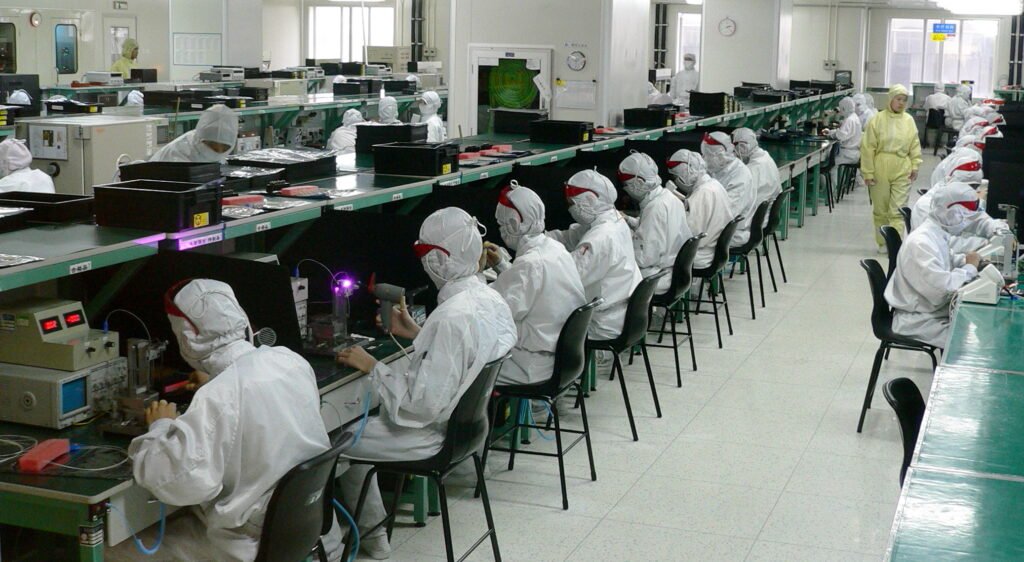
A higher order target does not automatically become higher output. According to ZDNet, United States-based Amphenol was initially the primary hinge supplier, with Taiwan’s Shin Zu Shing as the secondary supplier. Shin Zu Shing later took over after Amphenol’s production yields fell well below expectations, but it too reportedly struggled, having to select hinge units that met Apple’s quality standards as so-called “golden samples”. Those difficulties delayed production.
Final assembly is another bottleneck. NewsPim reports that Foxconn’s final assembly yield was around 60 percent in September, meaning a substantial share of finished units did not pass inspection. Ordering parts for 14 million phones would not yield 14 million saleable phones unless yields improve.
There is a further constraint further up the supply chain. TrendForce cites ZDNet on T-glass, a high-end fibreglass yarn used in copper-clad laminates for printed circuit boards. Japan’s Nittobo is reported to hold a near-monopoly on T-glass production and to be prioritising shipments for AI chips made by companies such as NVIDIA, potentially adding pressure to Apple’s supply chain. Together, these constraints explain why shipping dates slipped to January within half an hour of pre-orders opening.
What this means for buyers in Pakistan

For buyers in Pakistan, the honest position is that the reports covered here do not announce an official Pakistan price or a local availability date for the iPhone Duo. Anyone quoting a firm Pakistan price for this phone from these supply-chain reports alone would be inventing it. What is certain is that phone prices in Pakistan are already under pressure: our recent coverage explained how smartphone prices in Pakistan have jumped by up to Rs 30,000 as chip costs bite, so imported flagship pricing deserves extra care rather than a rushed decision.
The practical advice follows from the facts above. If you are buying early, check the hinge and inner display carefully in the first days, and keep your purchase proof and warranty route clear, since replacements depend on available stock. Do not treat a higher order target as a guarantee of faster delivery: yields and hinge quality, not the headline number, will decide when waiting lists shorten. If you do not need to be first, waiting for clearer news on whether Apple redesigns the hinge or confirms a fix is the lower-risk choice, particularly at a $1,999 starting price in the United States before any import costs.
The iPhone Duo remains a turning point for foldable phones: a first foldable from Apple, extraordinary early demand, and a forecast surge for the whole category. But its launch story is now two stories at once, a demand success and a hinge question, and the second story will decide whether the first one lasts.
Related Posts
 TechnologyAnthropic Files Public IPO Prospectus for Nasdaq Listing Under ‘ANT’
 TechnologyOpenAI Launches GPT-6.1 Terra at Half the Price for Faster Computer Work
 TechnologyPhantom Blade Zero Reviews Hit 88 on Metacritic Ahead of 29 October Launch
 TechnologyPakistan’s National CERT Issues High Alert Over WhatsApp Web Attacks Targeting Officials
 TechnologySmartphone Prices in Pakistan Jump by Up to Rs 30,000 as Chip Costs Bite
 TechnologyElon Musk’s AI Odyssey Arrives as a 7-Minute Episode, Not the Film He Promised
Most Popular
 SportsBallon d’Or 2026: London Ceremony, Nominees and All-Time Records Ahead of 70th Anniversary280 views
 How-ToPTA Tax Calculator 2026: Check Mobile Tax on Any Phone278 views
 TechnologyAround 20 Pakistani Tech Companies Showcase Innovation at TechCrunch Disrupt 2026 in San Francisco256 views
 TechnologyRedmi K100 Launching on 28 October: 10,000mAh Battery, 185Hz Display and Full Specs250 views
 SportsUEFA Champions League 2026-27: Format, Teams and Schedule249 views
 Canada JobsTech Jobs in Canada: Roles, Salaries, and Skills Needed245 views