Anthropic, the artificial intelligence company behind the Claude chatbot, has filed its public prospectus for an initial public offering in the United States. The filing, made public on Monday 26 October 2026, is the first time the company has published audited financial figures — and it confirms both the scale of its growth and the size of the accounting loss that has dominated headlines about the deal.
Anthropic intends to list its Class A common stock on the Nasdaq Global Select Market under the ticker symbol “ANT”. The number of shares to be offered and the price range have not yet been set, and both the company and existing shareholders will sell shares in the offering. Goldman Sachs and Morgan Stanley are named first among 24 underwriters. The filing is a registration statement: it has been filed with the US Securities and Exchange Commission but has not yet become effective, so no shares are on sale yet.
The filing matters because, until now, everything the public knew about Anthropic’s finances came from leaks and private funding announcements. This document replaces rumour with audited numbers, a governance structure, and a list of spending commitments that run into hundreds of billions of dollars. It also sets up what could become one of the largest technology listings ever — although the valuation itself is still to be decided.
What Anthropic actually filed
The document is a Form S-1, the standard registration statement a company files before selling shares to the public in the United States. Anthropic’s filing runs to 335 pages, including 94 pages of risk factors. It follows a confidential draft submitted to the regulator in June 2026, details of which were reported in October. Readers who followed that earlier leak can read our explainer on why Anthropic’s $80.7 billion headline loss is mostly accounting, not cash burn — the new filing confirms those same figures, but now as official, audited disclosures rather than leaked draft numbers.
Anthropic was founded in 2021 by former executives of OpenAI, and it is best known for Claude, its family of AI models and chatbot. The company describes itself in the filing as a public benefit corporation, a legal form that allows it to weigh a stated public purpose alongside shareholder returns. That detail, and the unusual voting arrangement described below, are part of why this filing has drawn attention beyond the usual IPO coverage: Anthropic is going public without giving public shareholders ordinary control.
Reports ahead of the filing had suggested backers hoped for a valuation above $2 trillion, and that the offering could raise up to $100 billion. Those figures are not in the filing itself — the share count and price range are blank — so they remain reports, not confirmed terms. In May 2026 Anthropic raised $65 billion at a $965 billion valuation, which gives a sense of the scale private investors were already placing on the business. One report has suggested the listing itself could come as early as mid-November, but the company has not confirmed a date.
The numbers that matter — and the $80.7 billion explained

The headline numbers are striking in both directions. Revenue for the six months to 30 June 2026 was $16.29 billion, compared with $1.16 billion in the same period a year earlier — roughly a fourteen-fold jump. Full-year revenue was $4.59 billion in 2025, up from $386 million in 2024 and $41 million in 2023. Growth on that scale, sustained over three years, is the core of the investment case: Anthropic is no longer a research project with revenue attached, but a business generating billions of dollars every quarter.
The loss figure needs more care. The net loss for the first half of 2026 was $80.75 billion, up from a $41.97 billion net loss for full-year 2025. But $72.39 billion of that first-half loss was a non-cash charge for changes in the fair value of convertible notes, derivative liabilities and similar financing instruments. In plain terms, as Anthropic’s own value rose, the accounting value of instruments that can convert into its shares rose too, and that increase is recorded as a loss — even though no cash left the company. The charge grows when the valuation grows, which makes it a side-effect of success on paper rather than money spent running the business.
The operating picture is far less dramatic. Anthropic recorded an operating loss of $693 million in the first half of 2026, much smaller than the $2.14 billion operating loss in the same period a year earlier. In the second quarter alone it made $1.0 billion of operating income, an 8 percent operating margin, on quarterly revenue of $11.6 billion. Operating cash flow for the first half was positive at $3.9 billion, and cash plus short-term investments totalled about $131.7 billion at 30 June. Anthropic has also told prospective investors that third-quarter revenue reached $16.8 billion, up from $11.5 billion in the second quarter — a figure reported to investors rather than stated in the filing itself, so it should be read as reported, not audited, for now.
The ticker, the listing and the timetable
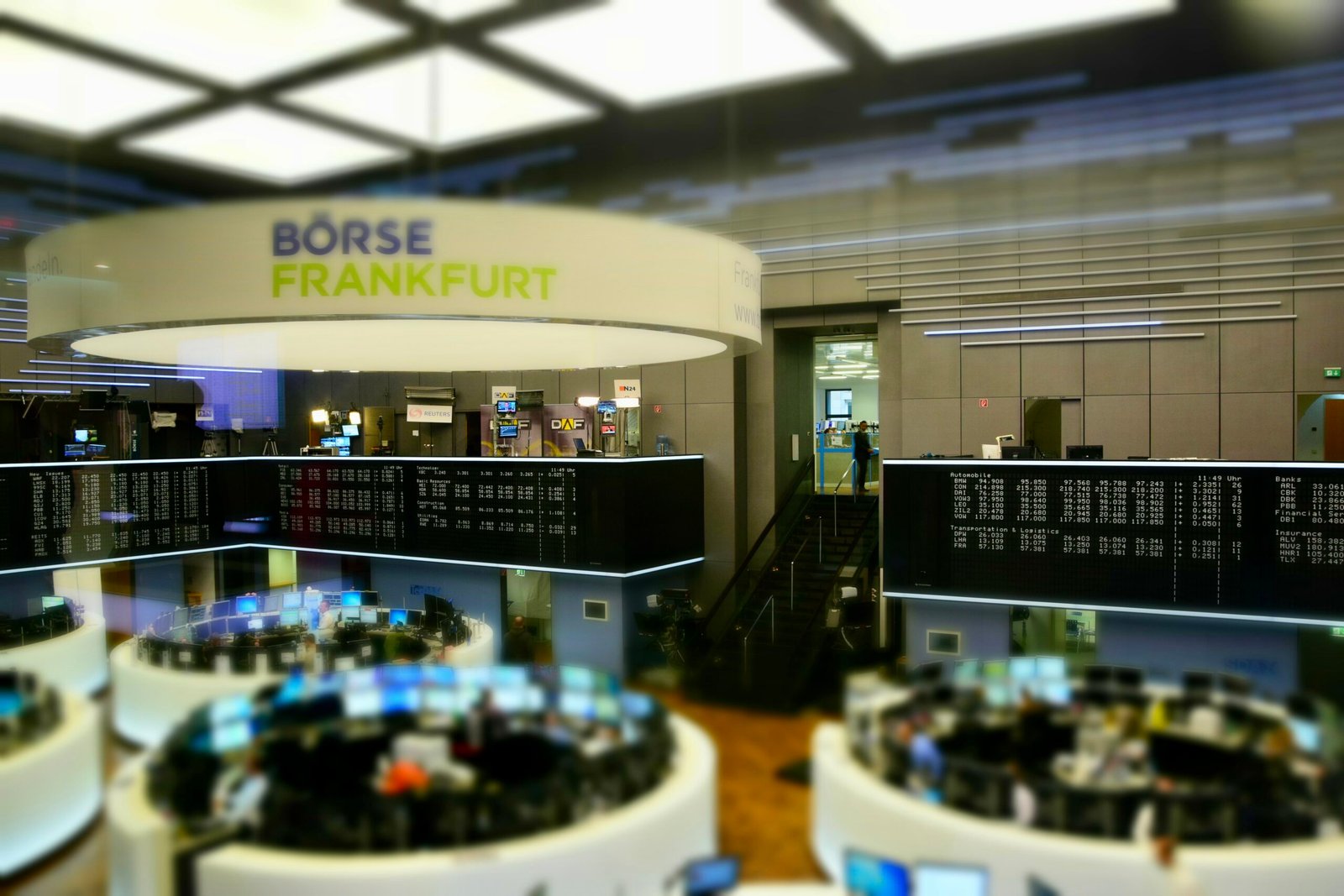
The proposed ticker is “ANT”, and the intended market is the Nasdaq Global Select Market, the top tier of the Nasdaq exchange. The filing does not set a price range or a share count, which means the two numbers investors most want — what the shares will cost, and how much of the company will be sold — are still to come in a later amendment to the filing.
That sequence is normal for a large offering: the public S-1 opens the process, the company then meets investors, and pricing follows. What is unusual here is the scale of the unknowns. With no price range, no share count and no listing date confirmed, the filing answers the question “how big is Anthropic’s business?” while leaving “how much is it worth on the market?” open. Reports pointing to a mid-November listing would make it one of the fastest large IPOs from public filing to trading, but until Anthropic confirms a timetable, that remains speculation.
For context, Anthropic’s public filing comes just as its main rival is also making news: OpenAI launched GPT-6.1 Terra on the same day, 26 October, at half the API price of its predecessor, as covered in our GPT-6.1 Terra launch report. The two events together show how fast the leading AI companies are moving — one cutting prices to win developers, the other opening its books to win public investors. Readers wanting the wider chatbot picture can start with our ChatGPT 2026 guide.
Who keeps control: the governance structure

The most unusual part of the filing is who holds power after the listing. Anthropic will issue a share of a special class of common stock to a limited liability company made up of its seven co-founders, including chief executive Dario Amodei and president and chair Daniela Amodei. That single share will hold 50.1 percent of total voting power on matters submitted to stockholders. In other words, the co-founders keep majority voting control even after public investors buy in.
Separately, a trust will elect a majority of Anthropic’s board. The filing describes this as part of a novel capital and governance structure, designed to keep the company’s long-term direction in the hands of its founders and trustees rather than short-term market pressure. Public shareholders will own an economic stake and receive disclosures, but they will not be able to outvote the founders’ bloc on matters put to stockholders.
Investors will have to decide whether that trade-off is acceptable. Supporters of the structure argue it protects a company working on powerful AI technology from being pushed into short-term decisions by the market. Critics will argue that majority control held by a small group, however well-intentioned, limits the accountability that normally comes with a public listing. Either way, it is now a matter of public record, and it will be one of the most debated parts of the offering.
The spending commitments behind the filing
The filing also reveals the scale of Anthropic’s future spending. Long-term commitments total at least $518 billion over ten years on infrastructure, computing power and cloud services. Within that total, the filing records at least $110 billion in spending commitments to Amazon from May 2026 through April 2036, at least $114.5 billion to Google through July 2033, and approximately $161.2 billion in equipment lease rent payments to Broadcom, excluding interest.
Those commitments explain both the revenue growth and the infrastructure race behind it. Training and running frontier AI models requires enormous computing capacity, and Anthropic is locking in that capacity years in advance through its largest suppliers. Compute spending was already close to $9 billion in the first six months of 2026, against $2.3 billion a year earlier, according to reports of the draft filing — a four-fold rise that tracks the revenue jump.
The customer base is growing with it. By 30 September, more than 1,900 customers each generated at least $1 million in trailing annual revenue for Anthropic. That breadth matters for the IPO story: the business is not dependent on a handful of deals, but spread across a large number of paying customers, which makes the revenue less fragile than a single-contract business would be.
What the IPO means for AI users and developers in Pakistan

A public listing does not change Claude’s price or availability overnight, and nothing in the filing announces a Pakistan-specific price, plan or launch. What it does change is transparency. Pakistani software houses, freelancers and startups that build products on AI models will now be able to read audited figures, customer counts and spending plans for one of the two leading AI companies, rather than relying on leaks. That makes it easier to judge how stable a supplier is, and how seriously to take its long-term roadmap.
It also sharpens the competition that benefits users. With Anthropic heading for the public markets and OpenAI cutting API prices the same week, the two leading model makers are competing openly on price, capability and trust. For developers choosing between models, the practical question stays the same — which model does the job, at what cost, with what reliability — but the information available to answer it has just improved considerably.
The next steps to watch are concrete: the amended filing with a price range and share count, confirmation of a listing date, and the market’s first verdict when trading begins. Until then, the filing itself is the story — a company that went from $41 million of revenue in 2023 to $16.3 billion in six months, asking public investors to buy into its future while its founders keep control of its direction.
Related Posts
 TechnologyOpenAI Launches GPT-6.1 Terra at Half the Price for Faster Computer Work
 TechnologyPhantom Blade Zero Reviews Hit 88 on Metacritic Ahead of 29 October Launch
 TechnologyPakistan’s National CERT Issues High Alert Over WhatsApp Web Attacks Targeting Officials
 TechnologySmartphone Prices in Pakistan Jump by Up to Rs 30,000 as Chip Costs Bite
 TechnologyElon Musk’s AI Odyssey Arrives as a 7-Minute Episode, Not the Film He Promised
 TechnologyPakistan’s Largest AI Hackathon Ends in Islamabad: 16,000 Applications, 300 Projects and What Comes Next
Most Popular
 SportsBallon d’Or 2026: London Ceremony, Nominees and All-Time Records Ahead of 70th Anniversary279 views
 How-ToPTA Tax Calculator 2026: Check Mobile Tax on Any Phone277 views
 TechnologyAround 20 Pakistani Tech Companies Showcase Innovation at TechCrunch Disrupt 2026 in San Francisco256 views
 TechnologyRedmi K100 Launching on 28 October: 10,000mAh Battery, 185Hz Display and Full Specs250 views
 SportsUEFA Champions League 2026-27: Format, Teams and Schedule248 views
 Canada JobsTech Jobs in Canada: Roles, Salaries, and Skills Needed245 views