Pakistan has moved to restrict the import of camera-enabled smart glasses, after the federal cabinet’s Economic Coordination Committee approved new controls on the devices over growing privacy and security concerns.
The decision, taken at a meeting of the committee on Wednesday, 4 November, is the strongest federal step yet against wearable cameras that can record people without them knowing. It follows weeks of court hearings and a provincial crackdown, but several important questions — including when the restrictions take effect and what happens to people who already own the glasses — remain unanswered.
What the ECC decided

The Economic Coordination Committee (ECC), chaired by Finance Minister Muhammad Aurangzeb at the Finance Division in Islamabad, approved restrictions on the import of camera-enabled smart glasses. The proposal had been submitted by the Commerce Division, and the committee considered it among eleven agenda items at the meeting.
Alongside the import controls, the committee recommended that provincial governments and the Islamabad Capital Territory draw up workplace regulations governing the use of such devices. Those rules are expected to set out how employees and visitors may use camera-equipped glasses in offices and other professional settings, particularly where confidential information is handled.
247News reported that the decision was driven by concerns about the misuse of wearable devices capable of secretly recording video, capturing photographs and collecting sensitive information without the knowledge or consent of others. Mettis Global reported that the same meeting also approved supplementary grants worth Rs358 billion for defence services and water sector projects.
It is important to be precise about what was actually announced. The official description refers to camera-enabled smart glasses in general. It does not name Meta, Ray-Ban or any particular manufacturer, and it does not by itself amount to a nationwide ban on owning or wearing every type of smart glasses.
Why regulators are worried

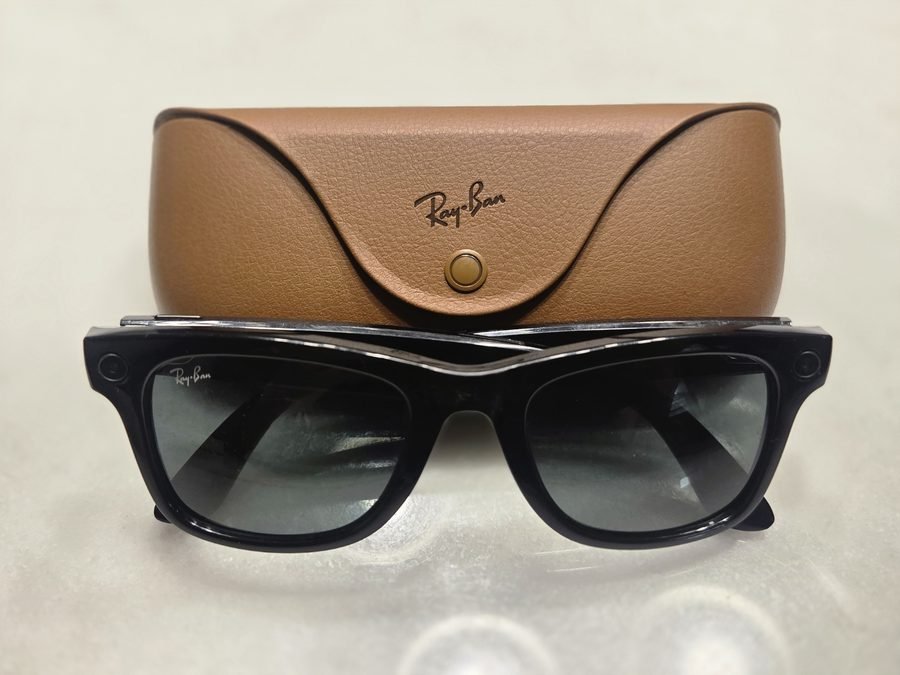
Smart glasses look like ordinary spectacles, but the camera and microphone built into the frame can photograph, record video and live-stream whatever the wearer is looking at — often without anyone nearby realising they are being filmed. That discreet design is exactly what worries regulators.
Officials have pointed to the risk of secret recording in workplaces, meetings and restricted environments, where sensitive conversations and documents could be captured and shared. The concerns extend to the privacy and dignity of women and children, the security of sensitive data and installations, and the integrity of institutions such as examination centres and courts.
Places repeatedly named as areas of particular concern include airports, examination centres, government buildings, healthcare facilities, shopping malls and court premises. Regulators in other countries, including Ireland, Italy and Germany, have raised similar concerns, and some pubs, theatres, schools and courts abroad have already barred the devices.
Meta’s smart glasses, developed with eyewear maker Ray-Ban and first launched in 2023, are the best-known product in this category. Although Meta has not officially listed Pakistan as a market, the glasses are openly sold through online platforms and in shops in Lahore, including at Hafeez Centre. That grey-market availability is one reason the issue reached the courts in the first place.
From the Lahore High Court to the federal cabinet

The federal decision did not come out of nowhere. It is the latest step in a case that has been building for more than a month.
In late September, the Lahore High Court took up a public interest petition challenging the unregulated import and sale of smart glasses fitted with cameras and microphones. The petitioner, citizen Husnainul Abideen, argued that the devices threaten privacy, dignity and national security, and asked the court to declare their unrestricted use incompatible with the Constitution.
Chief Justice Aalia Neelum issued notices to the federal government, the Pakistan Telecommunication Authority, the commerce ministry and other authorities, and directed them to submit replies. At a hearing on 15 October, the court directed the federal government to forward a summary on the issue to the federal cabinet. The next hearing in the case is scheduled for 12 November.
Meanwhile, Punjab banned the use and sale of camera-enabled smart glasses and miniature cameras disguised as everyday objects for 30 days, under a Section 144 order issued by the Home Department on 20 October. That provincial order, which also covers hidden cameras built into pens and keychains, remains a separate measure from the federal import decision, and it expressly excludes mobile phones, laptops, tablets and PTA-approved terminal equipment.
What is still unclear
For all the headlines, the ECC announcement leaves several practical questions open. It has not been made public whether imports will be completely prohibited or allowed under specific conditions, when the restrictions will actually take effect, or how customs officials are meant to apply them.
There is also no public word yet on what happens to people who already own camera-enabled smart glasses, or to retailers holding stock. Sellers in Punjab are already barred from selling the devices under the provincial order, but the federal announcement does not by itself settle the position of existing owners elsewhere in the country.
The workplace regulations the ECC recommended will also matter a great deal. Until provinces and the capital territory publish their rules, employees, employers and visitors will have little clarity on where the glasses may be worn and where they must stay in a pocket.
The direction of travel is clear enough: Pakistan is joining a growing list of countries treating discreet wearable cameras as a regulatory problem rather than a harmless gadget. But until the implementation framework is published, the decision should be read for what it is — an approved import restriction with the details still to come — not as a final, blanket ban. The coming weeks, including the Lahore High Court hearing on 12 November, should show how far the controls will actually reach.
For now, anyone considering buying a pair of camera-enabled smart glasses should think twice: the devices may soon be much harder to import, and wearing one into an office, a court or an examination hall is already a risk. The technology arrived quietly. The rules are now catching up.
Related Posts
 TechnologyPakistan and Mastercard Push Digital Payments Forward in Cashless Economy Talks
 TechnologyPunjab Starts Distributing 100,000 Electric Bikes to Students Today — Phase 2 Begins 5 November
 TechnologyTaurid Meteor Shower 2026: Peak Tonight — Fireballs, Viewing Times and Pakistan Guide
 TechnologyPakistan Super App: Shaza Fatima Announces One App for All Government Services and Digital IDs
 TechnologyiOS 27.3 Beta Released: New Health App, Siri AI Upgrades and Release Date
 TechnologyKPITB AI Innovation Challenge 2026: Rs1 Million Prizes — Apply by 10 November
Most Popular
 How-ToPTA Tax Calculator 2026: Check Mobile Tax on Any Phone416 views
 Pakistan NewsPIA Boeing 787 Lease Deal: What It Means for the Airline388 views
 SportsUEFA Champions League 2026-27: Format, Teams and Schedule381 views
 Canada JobsTech Jobs in Canada: Roles, Salaries, and Skills Needed377 views
 TechnologyPM Shehbaz Sets November Deadline for Alibaba AI and Digitalisation Projects in Pakistan360 views
 ShowbizWomen’s Fashion in Pakistan 2026: Trends, Brands and Style Guide350 views