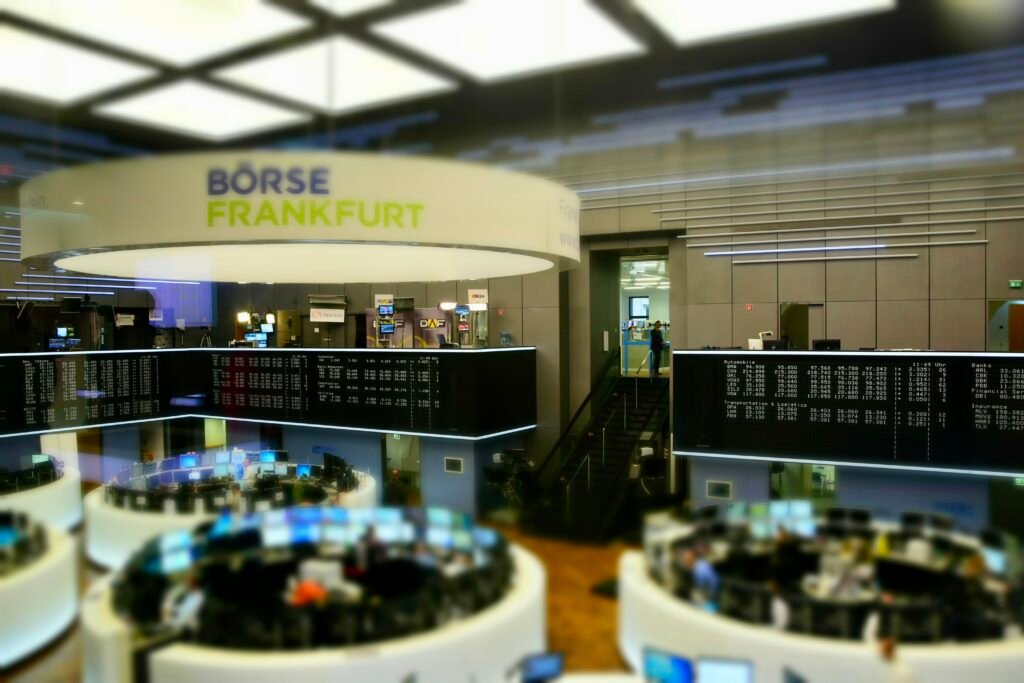
Wall Street suffered its worst trading day since April 2025 on Thursday as the technology-heavy Nasdaq Composite plunged 5.5 per cent into correction territory, wiping trillions of dollars off the value of the world’s biggest companies and sending shockwaves through stock markets from Seoul to Karachi.
The sell-off was driven by a sudden loss of confidence in the artificial intelligence boom. Investors who had poured money into AI chipmakers, data-centre builders and software companies for three years began asking whether the enormous spending on AI infrastructure will ever pay off — and whether a new political mood in Washington will slow the data-centre building spree that powers it.
By the closing bell, the Nasdaq had fallen 1,421.52 points to 24,315.00. The S&P 500 dropped 4.36 per cent to 7,353.73, losing around $3 trillion in market value in a single session, while the Dow Jones Industrial Average fell 1,833.06 points, or 3.44 per cent, to 51,523.06. All three major American indexes recorded their worst day since President Donald Trump’s tariff announcements in April 2025, according to CNBC’s closing report.
The damage did not stop at Wall Street. Asian markets opened sharply lower on Friday: South Korea’s KOSPI plunged more than 8 per cent, triggering a circuit breaker, Japan’s Nikkei fell 6 per cent and Taiwan’s market dropped more than 8 per cent. In Pakistan, the benchmark KSE-100 Index lost more than 2,200 points in early trading on Friday, falling to 173,146.07 by 9:40am, down 2,233.79 points or 1.27 per cent, after closing at 175,379.87 on Thursday.
What happened on Wall Street
The scale of Thursday’s fall was remarkable even by the standards of a market that has grown used to sharp swings. The Nasdaq Composite ended 11.9 per cent below its record close of 27,599.79 on 6 October, which meets the formal definition of a market correction — a fall of 10 per cent or more from a recent peak. It was the index’s second correction of the year and its biggest single-day fall in about a year and a half.
The broader Nasdaq 100, which tracks the largest non-financial companies on the exchange, fell even further, dropping 6.4 per cent to 26,629.81. The Philadelphia Semiconductor Index, which follows the chip industry, plunged 12.3 per cent in a single session.
The S&P 500’s 4.36 per cent fall was its worst since April, and the Dow’s 1,833-point drop erased all the gains the market had made the day before, when stocks rallied after the US midterm elections. The Russell 2000 index of smaller American companies lost 4.5 per cent.
Trading was heavy and panicky. Goldman Sachs equity traders told Bloomberg they were flooded with calls from investors asking how deep the rout might go, as big institutional investors dumped shares and few traders were willing to buy the dip. Futures trading after the close pointed to further falls, with S&P 500 futures down 0.8 per cent and Nasdaq 100 futures down 1.3 per cent.
Why AI stocks led the sell-off
The trigger was politics. On Tuesday, the Democratic Party completed a sweep of the United States midterm elections, winning majorities in both the Senate and the House of Representatives. Many Democratic campaigns had run on platforms of slowing the growth of artificial intelligence, and several newly elected leaders have promised to restrict the construction of the giant data centres that AI depends on.
In Texas, governor-elect Gina Hinojosa has pledged a moratorium on new data-centre construction. Senator Bernie Sanders renewed his call for a national moratorium on AI data centres, saying on social media that Americans do not want big technology companies “wrecking the environment, gutting jobs and threatening humanity’s future”. The prospect of a Democratic Congress tightening AI regulations — and of newly elected Democratic governors pausing data-centre construction in hubs such as Texas and Georgia — added to investors’ existing doubts about the AI trade.
Those doubts were already there before the election. For months, analysts have questioned whether the hundreds of billions of dollars being spent on data centres, chips and power will generate enough revenue to justify the investment. Some companies have funded the build-out with large amounts of debt, raising fears that the AI boom could turn into a bust if the returns disappoint. “Investors are stepping away until they get a better sense of the implications of the midterms around the AI capex cycle in particular, which is the biggest economic tailwind we’ve had going for us for the last, call it, three years,” Tim Holland, chief investment officer at Orion, told CNBC.
Underwhelming earnings projections from chipmaker Qualcomm added to the gloom, and the selling spread from chipmakers to almost every company that had ridden the AI wave, including software firms and cybersecurity providers.
Chipmakers hit hardest
The companies at the heart of the AI boom suffered the heaviest losses. Nvidia, the world’s most valuable chipmaker and the biggest supplier of the processors that train AI models, fell 9.26 per cent to $181.60. Advanced Micro Devices plunged 17.26 per cent, memory-chip maker Micron tumbled 17.46 per cent and SanDisk sank 22.26 per cent.
Palantir, which supplies AI software to the US government, and cybersecurity provider CrowdStrike both fell by nearly 10 per cent. Financial, manufacturing and pharmaceutical stocks also dropped sharply as the selling spread beyond technology.
There were a few exceptions. AppLovin surged 31.04 per cent after reporting strong quarterly results and expanding its share buyback programme. But the exceptions were rare on a day when almost everything fell.
Panic gauge spikes as investors seek safety

The market’s fear gauge told the story of the day. The VIX index, which measures expected volatility in US stocks and is known as Wall Street’s “fear index”, soared 69 per cent in a single session — one of its biggest one-day jumps on record.
Money flowed into assets seen as safe. Gold rose more than 0.6 per cent, US Treasury bonds climbed, and the Swiss franc jumped to nearly a two-month high against the dollar. The rush for safety underlined how quickly the mood had changed from the optimism that followed the election just a day earlier.
The sell-off also raised fresh questions about whether the AI boom has become a bubble. Some analysts argue the fall is an overreaction — a knee-jerk response to an election result whose policies have not yet been written, let alone passed. Ed Yardeni of Yardeni Research told CNBC that slowing the pace of the data-centre build-out could actually help prevent an even bigger AI crash further down the road, by bringing spending back in line with demand.
Others are less sure. The concern is that if data-centre construction slows, the chipmakers that supply it will see their orders shrink, and the companies that borrowed heavily to build AI capacity will struggle to repay their debts. For now, the market is waiting for clarity — and for the US jobs report due on Friday, which could set the tone for the next move.
Rout spreads across Asia
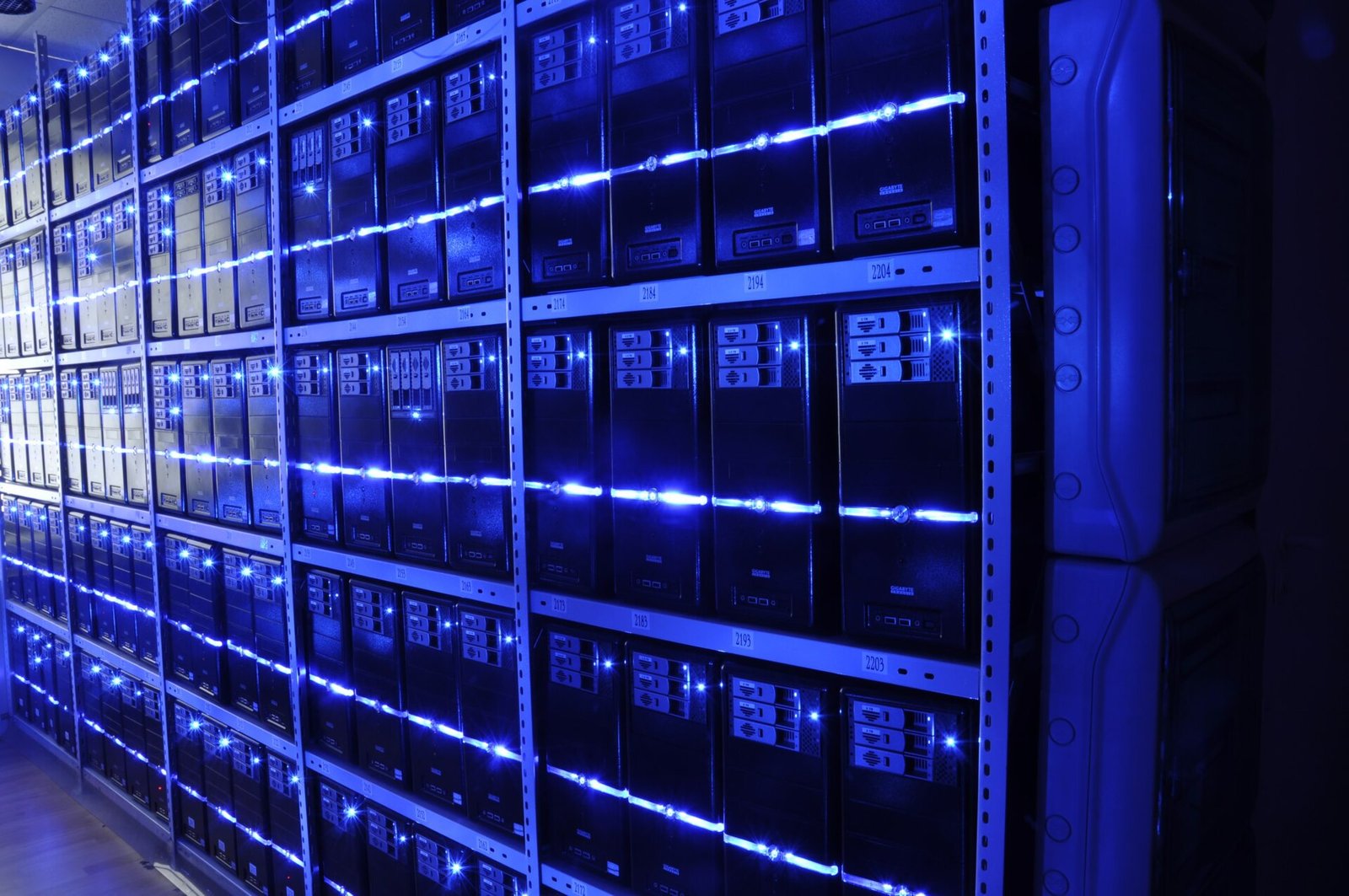
The damage spread quickly to Asia, which sits at the centre of the global chip supply chain. South Korea’s KOSPI dropped more than 8 per cent in early trading on Friday, triggering a circuit breaker that briefly halted trading; the index later resumed trading around 7 per cent lower. Samsung Electronics shares fell nearly 10 per cent, while SK Hynix dropped 11.7 per cent.
Japan’s Nikkei fell 6 per cent, Taiwan’s market declined more than 8 per cent, and European stock futures fell 1 per cent on Friday, signalling further pressure when European markets opened. The sell-off showed how the AI trade has become a global financial story, not just a Silicon Valley one: the same companies that build the chips, memory and servers for AI are listed in Seoul, Taipei and Tokyo, and their shares fell in step with Wall Street.
What it means for Pakistan
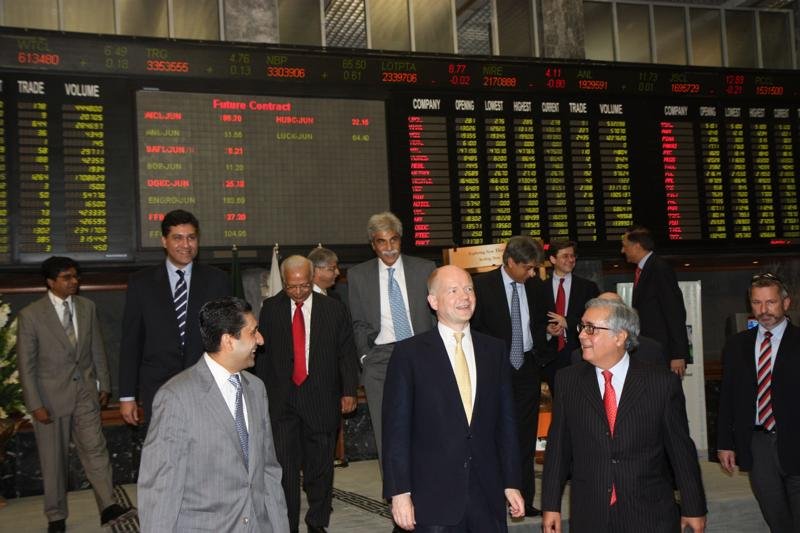
Pakistan has little direct exposure to the Nasdaq-listed companies at the centre of the sell-off. Its stock market, currency and banking system are not plugged into the AI trade in the way South Korea’s or Taiwan’s are. The transmission to Pakistan is therefore indirect, working through global risk appetite, the cost of capital and the mood of investors who also hold Pakistani assets.
Even so, the Pakistan Stock Exchange felt the impact on Friday morning. The benchmark KSE-100 Index lost more than 2,200 points in the opening minutes as investors booked profits after several sessions of strong gains. At 9:40am the index stood at 173,146.07, down 2,233.79 points or 1.27 per cent. Ismail Iqbal Securities had expected investors to take profits following the recent rally: the index had gained 3,366.38 points, or 1.96 per cent, to close at 175,379.87 on Thursday, and had jumped 3,995 points on Wednesday on hopes that the US midterm results would produce a less volatile American policy environment.
A sustained global technology sell-off could test that rally by weakening appetite for risk across emerging markets. But the KSE-100’s fall is also partly simple profit-taking after a sharp run, and Pakistan’s market moves far more on local factors — interest rates, the rupee, politics and company earnings — than on the price of Nvidia shares.
For Pakistani savers and investors, the lesson of Thursday’s rout is a familiar one: markets that rise on a single story can fall just as fast when that story is questioned. The AI boom has delivered extraordinary gains, but it has also concentrated extraordinary risk in a small number of companies. Whether Thursday was the start of a longer correction or a one-day panic will depend on what Washington does next — and on whether the companies spending hundreds of billions on AI can show that the money is coming back.
What to watch next
Investors will be watching three things in the coming days. First, the US employment report due on Friday, which could influence whether the Federal Reserve cuts interest rates again. Second, any concrete proposals from the new Democratic majorities in Congress on AI regulation and data-centre construction. And third, the next round of earnings from the chipmakers and cloud companies at the centre of the AI build-out — the numbers that will show whether the spending is paying off or not.
Until then, the world’s biggest market has given a sharp reminder: even the most powerful rally in history can reverse in a single day.
Related Posts
 TechnologyGPT-6.2 Astra: OpenAI’s Next Model May Launch Today
 Technology5 Cyber Threats Targeting Pakistan Right Now — 760,000 Stolen Passwords, Spyware Ads and Hospital Ransomware
 TechnologyGTA 6 Drops 39 New Screenshots as Pre-Orders Hit an Estimated $751 Million Ahead of November 19 Launch
 TechnologyGhandhara Delays T9 Hunter PHEV Launch in Pakistan Until New Auto Policy Is Finalised — Isuzu D-Max to Get ADAS Upgrade
 TechnologyPakistan’s IST Wins Three Honours at International Space Games 2026 in Moscow
 TechnologyFree AI Training for 100 Women Project Managers in Pakistan Starts Today
Most Popular
 How-ToPTA Tax Calculator 2026: Check Mobile Tax on Any Phone417 views
 Pakistan NewsPIA Boeing 787 Lease Deal: What It Means for the Airline389 views
 Canada JobsTech Jobs in Canada: Roles, Salaries, and Skills Needed387 views
 SportsUEFA Champions League 2026-27: Format, Teams and Schedule384 views
 TechnologyPM Shehbaz Sets November Deadline for Alibaba AI and Digitalisation Projects in Pakistan364 views
 ShowbizWomen’s Fashion in Pakistan 2026: Trends, Brands and Style Guide360 views




One comment