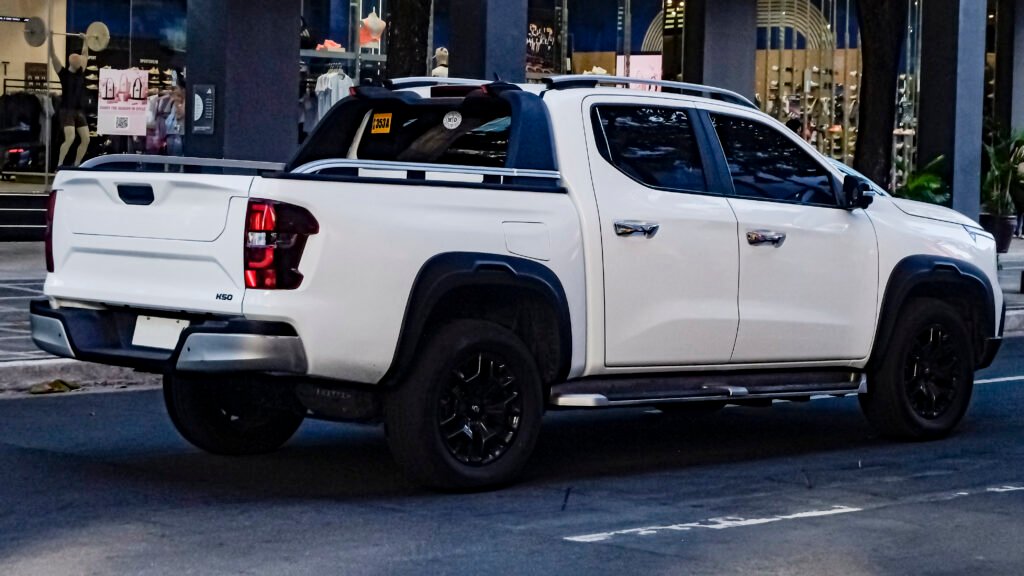
Pakistani pickup buyers will have to wait longer for the country’s first plug-in hybrid ute. Ghandhara Automobiles Limited (GAL) has postponed the launch of its T9 Hunter plug-in hybrid electric vehicle (PHEV) — along with other upcoming models — until the government finalises Pakistan’s new automobile policy. The delay was disclosed by the managements of Ghandhara Automobiles and Ghandhara Industries during corporate briefing sessions held on Wednesday, according to a report published by Topline Securities on Thursday.
The announcement is a setback for buyers who have been waiting for a hybrid pickup since the T9 PHEV was first tipped for an early-2026 debut. It also shows how much of Pakistan’s auto industry is now waiting on the new policy, with manufacturers holding back launches until the rules on duties, levies and incentives for new-energy vehicles are clear.
T9 Hunter PHEV Launch Put on Hold

GAL’s management confirmed at the briefing that the introduction of the T9 Hunter PHEV and other prospective models would depend on the completion of the new automotive policy. No new launch date was given, which means the plug-in hybrid version of the popular T9 Hunter pickup has no firm timeline for now.
The T9 Hunter PHEV had been one of the most closely watched upcoming launches in Pakistan’s pickup market. The plug-in hybrid version of the JAC T9 was expected to arrive in early 2026 and to compete directly with the BYD Shark 6 PHEV, the plug-in hybrid pickup that has set the benchmark in this new segment. With Ghandhara now waiting for the policy, that contest is on hold — and buyers looking for a hybrid pickup will have to choose from what is already on sale or keep waiting.
The company also indicated that additional products for the heavy commercial vehicle (HCV) and electric vehicle segments are under development, but their introduction is expected to take additional time. In other words, the T9 Hunter PHEV is not the only launch caught in the policy wait.
Why the New Auto Policy Matters for the Launch
The delay is not about the vehicle itself. The T9 Hunter PHEV exists — the international version, sold as the JAC Hunter, has already been shown with a 2.0-litre turbo-petrol engine paired with two electric motors, a 31.2 kWh battery and around 100 kilometres of electric-only driving. The question for Ghandhara is what the new auto policy will mean for pricing, duties and the levies that apply to new-energy vehicles.
That concern is not theoretical. GAL’s own briefing revealed that the company absorbed the New Energy Vehicle (NEV) adoption levy imposed on the T9 Hunter, a decision that weighed on the profitability of its passenger and pickup business even as sales stayed strong. Until the new policy settles the treatment of hybrids and plug-in hybrids, launching a new electrified model means launching into uncertainty over its final price — and in Pakistan’s price-sensitive pickup market, the price is the whole pitch.
The government has been working on the new automobile policy for months, and several manufacturers have linked their launch plans to it. Ghandhara is now the latest to say so openly: the T9 Hunter PHEV and other new models will move only when the policy is complete.
The T9 Hunter Is Ghandhara’s Biggest Money-Maker
The stakes are high because the T9 Hunter is the backbone of Ghandhara Automobiles’ business. During the financial year 2026, the company sold 1,928 units of the T9 Hunter, with its single-cabin 4×2 variant contributing roughly 700 to 800 units to total sales.
The pickup remained GAL’s primary revenue-generating model, contributing nearly Rs12 billion to its standalone revenue of approximately Rs29 billion during FY26. That means the T9 Hunter alone accounted for more than 40 percent of the company’s standalone revenue — a remarkable share for a single model line.
Commercial vehicles, however, delivered a comparatively stronger contribution to profitability. That was partly attributed to the company’s decision to absorb the NEV adoption levy on the T9 Hunter, which squeezed margins on the pickup side even as the model kept selling. The numbers explain both the caution and the ambition: Ghandhara cannot afford to get the PHEV’s pricing wrong, because the Hunter name carries so much of the company’s revenue.
Isuzu D-Max to Get Driver-Assistance Tech Within Six Months

While the PHEV waits, the other half of the Ghandhara group is moving. Ghandhara Industries Limited (GHNI) is preparing to introduce Advanced Driver Assistance Systems (ADAS) in its Isuzu D-Max pickup within the next six months, as part of its product enhancement strategy.
ADAS covers the electronic safety and driver-assistance features that are now standard on premium pickups abroad — systems such as autonomous emergency braking, adaptive cruise control, lane-keeping assistance and blind-spot monitoring. Adding them to the D-Max would bring Pakistan’s long-running Isuzu pickup closer to the safety equipment buyers now expect in this price band, and it would give the D-Max a fresh selling point against newer Chinese rivals.
GHNI is also working on further improvements to its Isuzu D-Max lineup, with new variants currently in development. The company cautioned, however, that introducing new D-Max models could take longer because of the extended development and launch timelines typically associated with Japanese automotive products.
For FY27, GHNI has set a sales target of more than 6,000 units, with the D-Max projected to account for approximately 10 percent of the company’s revenue. The ADAS upgrade is therefore not a side project — it is part of a plan to keep the D-Max relevant while the market shifts toward hybrids and electrified pickups.
What This Means for Pickup Buyers in Pakistan

For buyers, the message is mixed. The bad news is that the T9 Hunter PHEV — the plug-in hybrid pickup many were waiting for — has no launch date until the auto policy is finalised. Anyone holding out for it should expect a wait that could stretch well into next year, depending on how quickly the policy moves.
The better news is that the competition is not standing still. The BYD Shark 6 PHEV is already on sale, JETOUR has begun T2 i-DM deliveries with T1 i-DM deliveries starting this month, and the Isuzu D-Max will gain modern driver-assistance technology within six months. The pickup segment is changing fast, even if Ghandhara’s headline launch is paused.
The delay also underlines a wider truth about Pakistan’s auto industry in 2026: manufacturers are ready with electrified products, but launches now depend on policy as much as on engineering. Until the new auto policy is finalised, the T9 Hunter PHEV will stay on the shelf — and Ghandhara’s Rs12 billion pickup will have to keep carrying the business on its diesel engine alone.
Related Posts
 TechnologyPakistan’s IST Wins Three Honours at International Space Games 2026 in Moscow
 TechnologyFree AI Training for 100 Women Project Managers in Pakistan Starts Today
 TechnologyNCCIA Karachi Call Centre Raid: 273 Arrested Including 42 Minors in Alleged Scam Targeting Foreigners
 TechnologyIslamabad Surgeon Removes Patient’s Gallbladder Remotely in Capital’s First Robotic Telesurgery
 TechnologyMercedes-Benz CLA 200 EV Launches in Pakistan Today: 528 km Range, 224 hp Electric Coupe
 TechnologyPTA Registers BIGO LIVE and Likee in Pakistan: What the Registration Means for Users
Most Popular
 How-ToPTA Tax Calculator 2026: Check Mobile Tax on Any Phone417 views
 Pakistan NewsPIA Boeing 787 Lease Deal: What It Means for the Airline389 views
 Canada JobsTech Jobs in Canada: Roles, Salaries, and Skills Needed387 views
 SportsUEFA Champions League 2026-27: Format, Teams and Schedule384 views
 TechnologyPM Shehbaz Sets November Deadline for Alibaba AI and Digitalisation Projects in Pakistan364 views
 ShowbizWomen’s Fashion in Pakistan 2026: Trends, Brands and Style Guide360 views