
Google is removing the emSign ECC Root CA – G3 certificate from the Chrome Root Store today, Tuesday 27 October 2026. Google said the change is expected to reach devices that rely on the Chrome Root Store on Tuesday morning Pacific Time, which is Tuesday evening in Pakistan, with preview versions of Chrome receiving it sooner. Any website whose security certificate still chains to that root may stop loading properly in Chrome once the change reaches its visitors. This is the follow-up to the warning Pakistan’s National CERT issued last week: the deadline has now arrived, and the question for site owners is no longer what to prepare, but what to check tonight.
The change is a deliberate safety step, not a Chrome fault. It follows the discovery on 17 October that eight intermediate certificates issued by eMudhra, which operates the emSign certificate authority, had private keys so weak that they could be recovered from the public certificates. Browsers blocked those eight certificates within hours. Removing the root that signed them goes further, protecting software that cannot check whether individual certificates have been revoked — at the cost of breaking legitimate certificates chained to the same root until their owners replace them.
What changes in Chrome tonight

Chrome, and the many apps and devices that use the Chrome Root Store, will no longer trust the emSign ECC Root CA – G3 root certificate. Google announced the removal in its security blog on 20 October, saying it was needed to protect consumers of the Chrome Root Store that do not receive the CRLSet updates Chrome itself uses to block individual certificates. The removal was described as expected to be released for all devices relying on the Chrome Root Store on Tuesday morning, 27 October 2026, Pacific Time, and sooner on preview channels such as Chrome Canary and Chrome Beta.
That wording matters. Google gave a rollout expectation, not a single switch-on moment, so the change reaches different devices at different times through the evening in Pakistan. A site that loads fine for one visitor may already fail for another. Site owners should therefore check their own certificates now rather than waiting for visitor complaints.
Why Google is removing the root

The eMudhra certificate compromise came to light on 17 October, when a researcher reported that eight eMudhra intermediate certificates had been generated with far too little randomness. Their private keys were integers smaller than 256, when a key of this type should be a random number more than 100 digits long. One of the keys was literally the number 4. The certificates were created at a key ceremony on 30 April 2025, and eMudhra later said a flawed script produced a second, weaker set of keys that staff used by mistake because the labels looked similar.
Chrome responded within about 100 minutes, blocking the compromised certificates through a CRLSet update that reaches users without a browser update or restart. Firefox blocked them through its OneCRL mechanism within about three hours, and shipped Firefox 158.0.1 on 20 October and an Android update on 21 October. eMudhra revoked all eight certificates on 18 October and says only one of them entered production, and that it issued no customer certificates. No fraudulent certificates have appeared in Certificate Transparency logs, and no exploitation has been publicly established.
The root removal is the second layer of defence. Blocking the eight intermediates protects Chrome and Firefox users directly, but other software that does not check revocation lists could still trust a forged certificate signed with a recovered key. Dropping the whole root closes that gap, at the cost of breaking legitimate certificates that also chain to it. eMudhra has said it stopped issuing certificates under the root and estimates that around 30,000 certificates need to be migrated, most of them issued automatically through the ACME protocol.
What happens if a site still uses the affected root
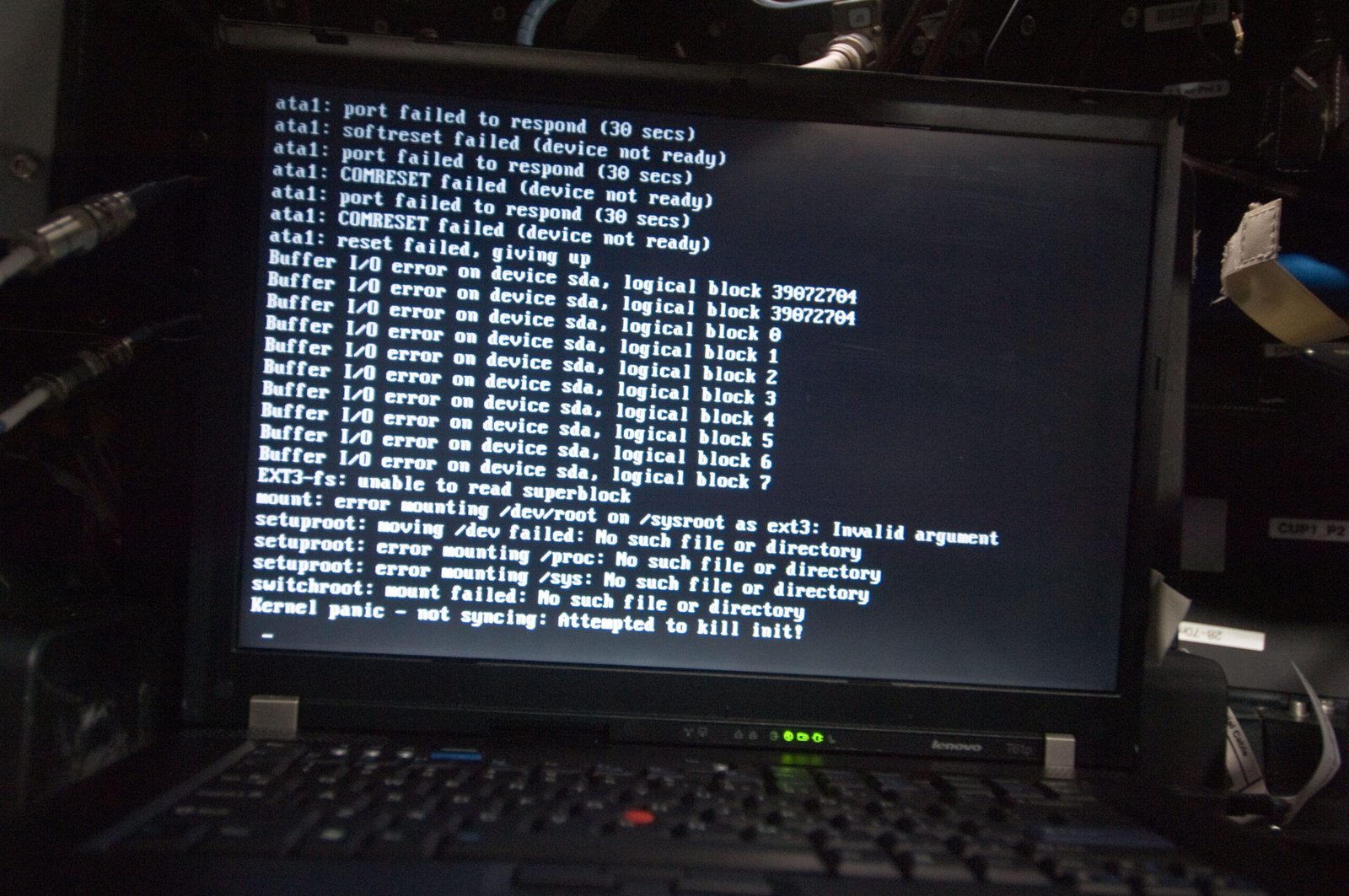
Visitors to an affected site in Chrome will see the browser refuse the connection, typically with a “Your connection is not private” warning and a certificate authority error, rather than the site itself. The site has not necessarily been hacked: the browser simply no longer trusts the chain of certificates that vouches for it. The same site may still load in another browser or on a device that has not yet received the change, which can make the problem look intermittent at first.
Most websites in Pakistan should be unaffected. National CERT’s advisory noted that most Pakistani sites use other certificate issuers, and the affected root belongs to one authority. But “most” is not “all”, and the sites at risk are exactly the ones whose owners never checked their issuer. Businesses that handle logins, payments or official data carry the most risk if their certificate breaks, because visitors who see a Chrome certificate error in October 2026 will usually leave rather than proceed.
What website owners in Pakistan should do now

First, check the certificate your site actually presents. In Chrome, click the icon to the left of the address bar, open the connection details, and view the certificate. Read the “Issued By” line and the top of the certification path. If you see “emSign” or “eMudhra” anywhere in the chain, and especially the root name emSign ECC Root CA G3, your site depends on the affected root and needs a replacement certificate from another authority that is included in the Chrome Root Store. If the chain names a different authority, the advisory does not require action for this incident.
Second, if a replacement is needed, obtain and install it immediately, and confirm the new chain in a fresh browser session before announcing that the site is fixed. Certificates obtained through automated ACME issuance can usually be replaced quickly, but the replacement must chain to a different, trusted root, not back to the same one. eMudhra has committed to working with affected subscribers to migrate them, so customers of the authority should also ask it directly about their migration path.
Third, check more than the homepage. Certificates also protect login pages, payment pages, mobile apps and background services, and some of those may use different certificates from the main site.
This deadline follows the PKCERT emSign advisory covered in our earlier report on National CERT’s warning, and it comes as Pakistan’s wider cybersecurity work continues, including the recent PTA zero-trust workshop with Ufone and Telenor.
What ordinary users need to do

For most readers, the only action is to keep software up to date. Make sure Chrome is updated, and let Android’s Google Play Services update install, since Android received an equivalent protection through Play Services. Firefox users should be on version 158.0.1 or later on desktop, or the corresponding Android update. No special setting needs changing, and no action is needed for sites that use other certificate issuers.
If a familiar site suddenly shows a certificate warning tonight, do not enter passwords or payment details on it, and do not bypass the warning or switch off certificate verification to get around it. The site’s owner needs to replace its certificate, and the warning is doing its job. Try the site again later, or contact the site owner through another channel. For wider online safety, readers should also watch out for fake profiles and online blackmail, as covered in NCCIA’s warning. Readers who run into a suspected security problem can report it to National CERT, which lists cert@pkcert.gov.pk and its incident portal for reports.
What is not affected, and what we are still watching

Several things are explicitly not part of this incident. India’s CERT-In and its electronics ministry have said eMudhra’s regulated Indian digital signature and eSign services are unaffected, and that the incident concerns its internationally audited website and software certificates. Firefox, Apple and Microsoft have taken their own steps on their own timetables, so a site’s behaviour in one browser does not predict its behaviour in another. Software libraries have also moved: Go, NSS, Python’s certifi bundle and Rust’s webpki-roots have removed the root from their trust lists, which matters for apps and servers rather than browsers.
What remains uncertain is the pace of the rollout itself. Google’s date is an expectation, and the change reaching devices through the evening in Pakistan means reports of broken sites may arrive gradually rather than all at once. We will update this story if National CERT issues fresh guidance, if Google confirms the rollout is complete, or if specific widely used Pakistani sites are reported affected. For now, the practical message is simple: check your issuer tonight, replace the certificate if it chains to emSign ECC Root CA – G3, and keep your browser updated.
Related Posts
 TechnologyApple’s New OLED iPad Mini Is Here: A20 Pro Power, 8.5-Inch Display and a $699 Price Tag
 TechnologyApple Raises iPhone Duo Orders by 44% as Hinge-Crack Reports Cloud Its Foldable Launch
 TechnologyAnthropic Files Public IPO Prospectus for Nasdaq Listing Under ‘ANT’
 TechnologyOpenAI Launches GPT-6.1 Terra at Half the Price for Faster Computer Work
 TechnologyPhantom Blade Zero Reviews Hit 88 on Metacritic Ahead of 29 October Launch
 TechnologyPakistan’s National CERT Issues High Alert Over WhatsApp Web Attacks Targeting Officials
Most Popular
 SportsBallon d’Or 2026: London Ceremony, Nominees and All-Time Records Ahead of 70th Anniversary284 views
 How-ToPTA Tax Calculator 2026: Check Mobile Tax on Any Phone281 views
 TechnologyAround 20 Pakistani Tech Companies Showcase Innovation at TechCrunch Disrupt 2026 in San Francisco258 views
 TechnologyRedmi K100 Launching on 28 October: 10,000mAh Battery, 185Hz Display and Full Specs254 views
 SportsUEFA Champions League 2026-27: Format, Teams and Schedule254 views
 Canada JobsTech Jobs in Canada: Roles, Salaries, and Skills Needed250 views