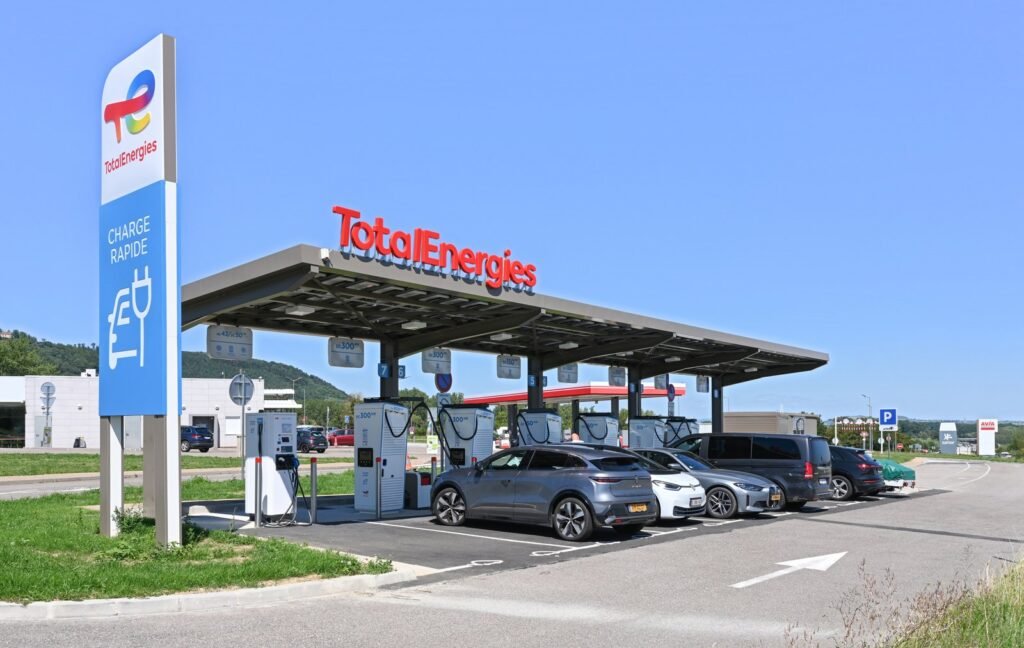
NA Told: Pakistan to Build 3,000 EV Charging Stations by 2030
Pakistan will set up around 3,000 public electric vehicle charging stations across the country by 2030, the Ministry of Industries and Production told the National Assembly on Thursday, laying out the most detailed rollout map yet for EV charging stations under the New Energy Vehicle (NEV) Policy 2025-30.
In a written reply to a question by member Malik Shakir Bashir Awan, the ministry said the network would begin with 40 fast-charging stations in the first phase, placed along motorways and selected sections of the N-5 national highway, with charging points planned at intervals of about 50 kilometres on major highways.
The announcement puts concrete numbers and timelines on a policy that has lived mostly in planning documents until now. The NEV Policy 2025-30 was approved by the federal cabinet in August 2025, carrying a headline target of 30 per cent of new vehicle sales as new energy vehicles by 2030 — roughly 2.2 million vehicles. Thursday’s briefing turned that ambition into a build-out plan for the EV charging stations drivers will actually need.
Phase one: 40 fast EV charging stations on motorways and the N-5
The first wave is deliberately aimed at the routes where range anxiety bites hardest. The 40 fast-charging stations of phase one will go up on motorways and selected stretches of the N-5, so drivers on long-distance journeys have a dependable place to top up. From there, the ministry plans to fill in the network of fast, Level 2 and Level 1 EV charging stations at roughly 50-kilometre intervals on major highways.
Petrol pumps are being brought into the picture too. Fuel stations will be encouraged to install charging units on their forecourts, which would instantly widen the network by using sites motorists already know. And for the two-wheelers and three-wheelers that make up the bulk of Pakistan’s electric fleet, battery-swapping facilities are planned — a practical answer in cities where parking a rickshaw for a full charge simply is not an option.
A special power tariff to pull in private money
To get investors on board, the government is offering a dedicated commercial electricity tariff for charging stations along with expedited electricity connections. Public-private partnerships are part of the plan, including viability gap funding arrangements that help make early projects financially workable while demand is still building.
The ministry was upfront about the biggest obstacle: the high upfront price of electric vehicles remains the main reason adoption is slow. Targeted subsidies are meant to close that gap — Rs80,000 for electric two-wheelers and up to Rs400,000 for electric three-wheelers under the NEV Policy and the Pakistan Accelerated Vehicle Electrification (PAVE) programme. The government is also working with banks and financial institutions to improve access to financing, betting that local production, economies of scale and stronger domestic supply chains will gradually push prices and ownership costs down.
Key numbers at a glance
- 3,000 public EV charging stations planned nationwide by 2030
- 40 fast-charging stations in the first phase, on motorways and the N-5
- ~50 km spacing planned for charging points on major highways
- Rs80,000 subsidy planned for electric two-wheelers
- Rs400,000 subsidy planned for electric three-wheelers
- 30% of new vehicle sales targeted as new energy vehicles by 2030
Old batteries and making it in Pakistan
The plan looks beyond the chargers themselves. The ministry said the policy covers the full life of an EV battery — collection, transportation, reuse, dismantling and recycling of end-of-life batteries, particularly lithium-ion ones. A regulatory framework is being developed, along with a nationwide network of battery collection and recycling facilities, to recover valuable materials, limit environmental harm and push the industry towards a circular economy.
There is also a manufacturing angle. The government wants to cut reliance on imported components by promoting domestic production, technology transfer, joint ventures and local supply chains. Electric motors, battery packs, power electronics, chargers and wiring systems are all flagged as areas for local production, with the Engineering Development Board providing regulatory support and keeping track of the industry’s commitments on domestic value addition.
What it means for drivers
If the plan lands, the biggest headache of going electric in Pakistan — the fear of running out of charge on a highway — starts to fade. Two-wheelers and three-wheelers stand to gain first, with subsidies, financing and battery-swapping aimed squarely at them. But the honest caveat sits inside the announcement itself: nearly 3,000 EV charging stations in about four years is a demanding build, and almost every phase depends on private investors deciding the numbers add up. The policy now has a map; the test is who shows up to build it.
Sources: National Assembly proceedings, Ministry of Industries and Production
Related Posts
 TechnologyApple’s New OLED iPad Mini Is Here: A20 Pro Power, 8.5-Inch Display and a $699 Price Tag
 TechnologyApple Raises iPhone Duo Orders by 44% as Hinge-Crack Reports Cloud Its Foldable Launch
 TechnologyAnthropic Files Public IPO Prospectus for Nasdaq Listing Under ‘ANT’
 TechnologyOpenAI Launches GPT-6.1 Terra at Half the Price for Faster Computer Work
 TechnologyPhantom Blade Zero Reviews Hit 88 on Metacritic Ahead of 29 October Launch
 TechnologyPakistan’s National CERT Issues High Alert Over WhatsApp Web Attacks Targeting Officials
Most Popular
 SportsBallon d’Or 2026: London Ceremony, Nominees and All-Time Records Ahead of 70th Anniversary283 views
 How-ToPTA Tax Calculator 2026: Check Mobile Tax on Any Phone280 views
 TechnologyAround 20 Pakistani Tech Companies Showcase Innovation at TechCrunch Disrupt 2026 in San Francisco257 views
 SportsUEFA Champions League 2026-27: Format, Teams and Schedule253 views
 TechnologyRedmi K100 Launching on 28 October: 10,000mAh Battery, 185Hz Display and Full Specs252 views
 Canada JobsTech Jobs in Canada: Roles, Salaries, and Skills Needed248 views




One comment