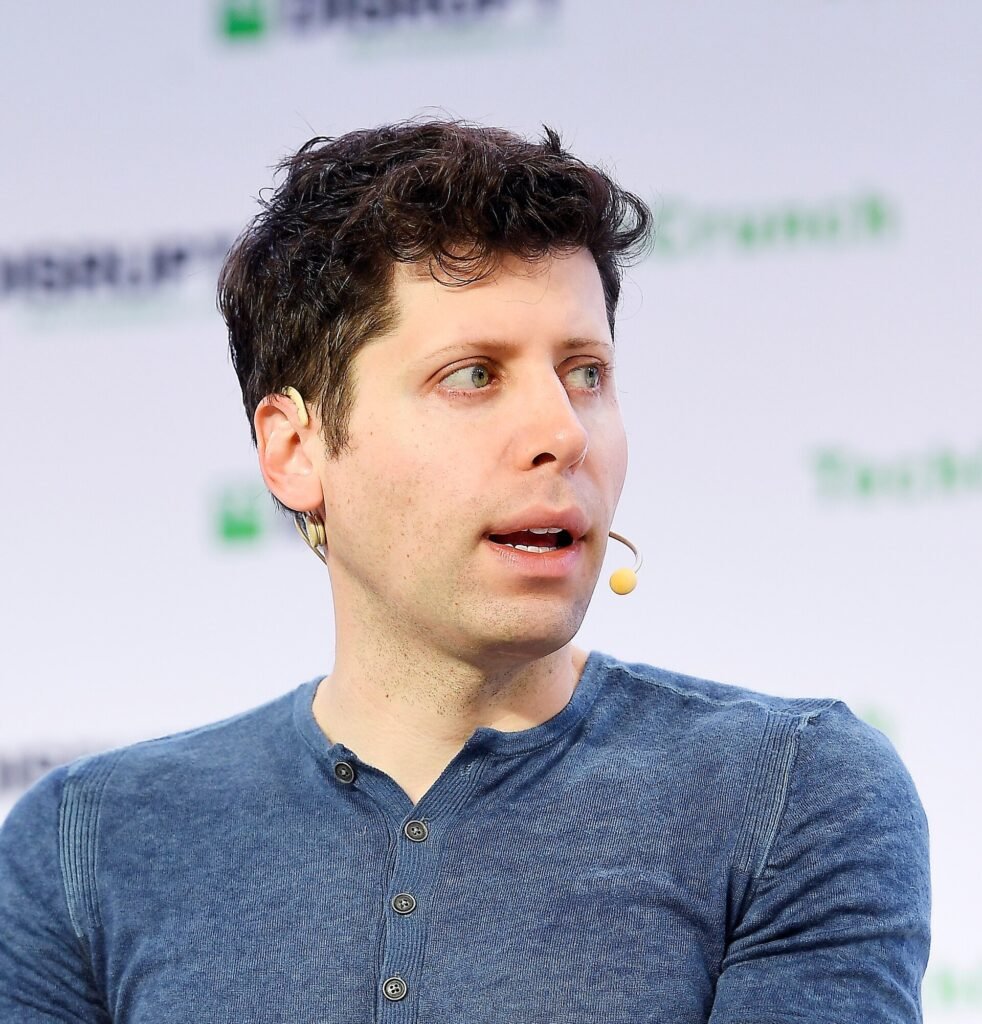
OpenAI chief executive Sam Altman says artificial intelligence has crossed a line he could barely have imagined at the start of the year. Addressing the Abu Dhabi International Petroleum Exhibition and Conference (ADIPEC 2026) in the UAE capital on Monday, Altman told delegates that advanced AI models are now, in his words, “mostly smarter than top scientists”.
The OpenAI boss — the man behind ChatGPT — said that at the beginning of 2026, AI was not even equal to the world’s most intelligent scientists. It has now, he claimed, surpassed them in most areas. Altman added that AI systems can now perform many components of white-collar, office-based work, a shift he says is already reshaping how people do their jobs.
But the headline claim came wrapped in a sharp warning. According to Altman, control over decisions about the future should never be entrusted to artificial intelligence — nor should AI gradually be allowed to decide what is best for humans.
What Altman actually said about AI’s capabilities
Altman’s central claim was deliberately qualified, and the qualification matters. He said AI was now “mostly smarter than the most skilled scientists” — “mostly”, not in every field or at every task, and able to take on many components of jobs rather than whole professions.
He compared the present moment with the start of the year, when, by his own description, AI was “mostly not as smart as our smartest scientist” and unable to perform many office-based tasks. Today, he said, a large proportion of that work is within the reach of AI systems.
Altman also put numbers on how heavily the technology is being used. He said average monthly consumption has climbed to roughly one hundred thousand tokens per person, while the heaviest institutional users now burn through around five hundred billion tokens a month — a scale of use he framed as evidence of how deeply AI has entered everyday work.
It is worth noting where the claim comes from: the chief executive of a company that sells access to these models. No independent, peer-reviewed benchmark was published alongside the remarks to measure “smarter than scientists” in any formal sense. The statement should be read as Altman’s own assessment of the technology’s trajectory, not as a scientific finding.

The warning: humans must stay in control
The most forceful part of Altman’s remarks was not about capability at all — it was about control. He warned that human decision-making, creativity and accountability must remain central to the use of technology, even as AI’s impact on the global economy and employment deepens.
According to Altman, AI should be developed as a tool to assist and serve humans, rather than humans becoming subordinate to the technology. The future, he said, must not be handed over to machines, even ones smarter than the people who built them.
On jobs, Altman said the technology is already capable of performing parts of white-collar roles — something AI tools like ChatGPT are doing today — but expressed confidence that societies would be able to adapt to the change. What excites him most, he added, is AI’s role in scientific discovery: over recent months, he said, AI systems have begun tackling mathematical problems that people had been unable to solve, a capability he believes can extend across scientific fields and into the complex challenges facing energy production.
OpenAI-ADNOC-G42 deal announced at ADIPEC
Altman used the ADIPEC stage to announce a multi-year partnership between OpenAI, the Abu Dhabi National Oil Company (ADNOC) and Abu Dhabi-based AI firm G42, aimed at deploying advanced AI capabilities across the state energy firm’s operations.
The agreement makes ADNOC the first company in the energy sector to deploy OpenAI’s frontier technology, according to ADNOC chief executive Sultan Al Jaber. Altman said the company’s most advanced models would be used to take on the hardest, most valuable problems ADNOC faces, calling the agreement another step in the deepening relationship between OpenAI and the UAE.
Altman also described the UAE as the world’s most forward-looking country for AI adoption, and met Abu Dhabi’s Crown Prince, Sheikh Khaled bin Mohamed bin Zayed Al Nahyan, during his visit to the emirate’s largest oil and gas gathering.
The conference carried one notable absence: executives from US oil firms ExxonMobil and Chevron cancelled their travel plans to the Gulf event last week, citing security concerns, Reuters reported.

Energy is AI’s biggest bottleneck
Beyond the headlines about intelligence, Altman’s most repeated theme was far more physical: power. He told delegates that energy supply is the biggest obstacle to the sector’s development, arguing that while progress was possible in almost every dimension of AI, the physical resources required to generate electricity would remain the dominant constraint in cost and availability.
“Atoms are still atoms,” he said, in remarks quoted by Reuters — the physical world that has to power AI will determine how much can be created. Altman claimed that the energy required for a single AI query has fallen by thousands or even hundreds of thousands of times over the past three to four years, thanks to more efficient models — though he delivered the figures with a hedge, and no detailed breakdown of how they were calculated accompanied the claim. Until such data is published in a consistent way, the figure is best read as directional rather than as a benchmark.
He added that cheaper usage is encouraging people to use AI more — meaning efficiency gains are being absorbed by growing demand. Still, Altman said he hoped advances in AI would deliver benefits to the energy sector sufficient to offset the technology’s own appetite for power, and ultimately help increase global energy availability.
Read also: OpenAI’s recent model launch cut prices in half for faster computing, while ChatGPT’s expansion into Pakistan brought ads to 89 countries.

Related Posts
 TechnologyNEVO Hunter REEV 4×4: Pakistan’s First Locally Assembled Electric Truck Enters Deliveries
 TechnologyPakistan Digital Transformation Master Plan: Three-Pillar Strategy Unveiled by PDA
 TechnologyEasypaisa Reportedly Fires Around 30 Employees Over Aggregator Account Irregularities
 TechnologyPakistan Mobile Phone Production Falls 20% in September Despite Strong Monthly Recovery, PTA Data Shows
 TechnologyLUMS Is Building an Industrial AI Lab to Train Engineers for the Factories of the Future
 TechnologyPTCL Appoints Amad Khan as Chief Marketing Officer — Who He Is and What He Will Lead
Most Popular
 How-ToPTA Tax Calculator 2026: Check Mobile Tax on Any Phone396 views
 Pakistan NewsPIA Boeing 787 Lease Deal: What It Means for the Airline380 views
 SportsUEFA Champions League 2026-27: Format, Teams and Schedule373 views
 Canada JobsTech Jobs in Canada: Roles, Salaries, and Skills Needed354 views
 SportsBallon d’Or 2026: London Ceremony, Nominees and All-Time Records Ahead of 70th Anniversary336 views
 ShowbizWomen’s Fashion in Pakistan 2026: Trends, Brands and Style Guide332 views