
The Vera C. Rubin Observatory in Chile has found what may become the solar system’s sixth recognised dwarf planet. The object, given the provisional name 2026 ED138, orbits the Sun beyond Pluto and could be among the largest and brightest worlds ever found in that distant region. Announced on 27 October 2026, it has since become one of the most searched science stories in Pakistan.
If follow-up observations confirm the size of 2026 ED138, this dwarf planet beyond Pluto would join Pluto, Ceres, Eris, Haumea and Makemake as only the sixth world ever formally recognised — and only the second new addition since 2008.
A hidden world beyond Pluto: what the object actually is

The telescope mount assembly of the Vera C. Rubin Observatory in Chile. (File photo)
2026 ED138 is a trans-Neptunian object: a body that orbits the Sun beyond the planet Neptune. It currently sits about 46 times farther from the Sun than Earth — well beyond Pluto’s average of around 40.
What makes 2026 ED138 exciting is its estimated size. From its brightness and distance, astronomers estimate a diameter of roughly 600 to 1,500 kilometres — a wide range, since the exact figure depends on surface reflectivity, which only infrared observations can settle. Even at the lower end it would be a seriously large body; at the upper end it would rival Makemake and Haumea, two of the five dwarf planets the IAU recognises.
Its orbit is also unusual: tilted about 25 degrees from the plane of the solar system, marking it as a “hot-classical” trans-Neptunian object with a history of gravitational encounters with Neptune.
Lost in a crowd of stars: how the new world was found
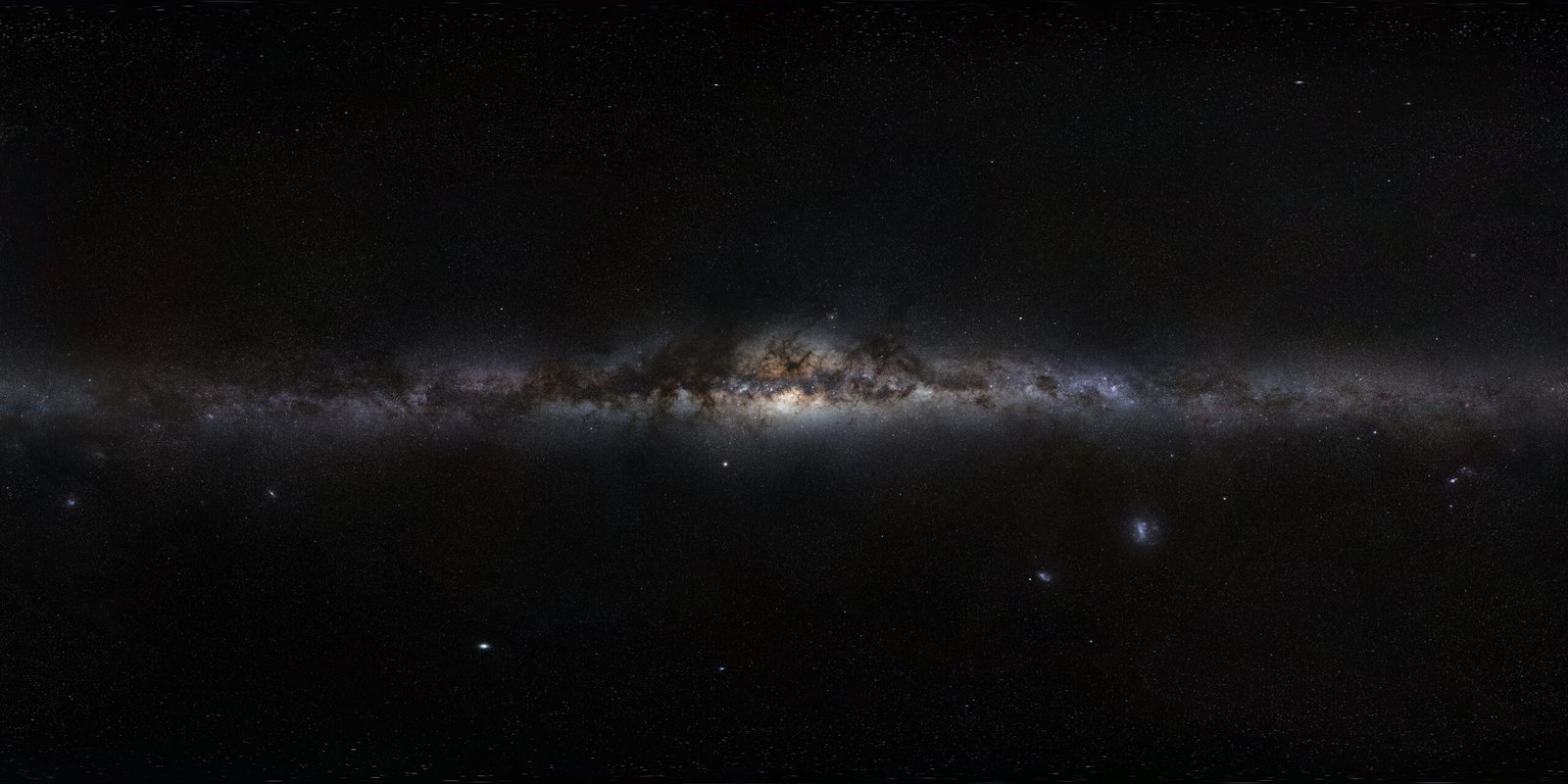
A crowded Milky Way star field. The candidate hid for years against exactly this kind of star-dense background. (File photo)
The most surprising part: the object had been hiding in telescope data for years — quite literally lost in a crowd of stars. It sits close to the plane of the Milky Way, where the sky is so packed with stars that most telescopes cannot pick out a faint, slowly moving dot among them.
The discovery of 2026 ED138 came from Matthew Holman of the Center for Astrophysics at Harvard & Smithsonian, a member of the Rubin operations team. On 13 October 2026, he ran Rubin data collected earlier in the year through a search code he developed with colleague Kevin Napier — software that compares billions of detections of moving objects to work out which ones belong to the same body. It flagged the candidate.
“My first reaction was one of excited disbelief,” Holman said. Mario Jurić of the University of Washington, Rubin’s solar system lead scientist, then found 20 more observations stretching back to March 2026, and called it the largest trans-Neptunian object found in roughly 20 years — “just the beginning” of what Rubin can do.
A decade of data behind one announcement

Cerro Tololo Inter-American Observatory at sunset in Chile, home of the Blanco telescope whose archival images helped confirm the orbit. (File photo)
Once the team knew where to look, they traced 2026 ED138 through archival images stretching far beyond its first detection.
The Simonyi Survey Telescope recorded 2026 ED138 30 times on 20 nights between 4 March and 11 July 2026, during the run-up to the Legacy Survey of Space and Time. The Asteroid Institute’s ADAM precovery service then found it in decade-old Dark Energy Camera images from the Blanco 4-metre telescope at Cerro Tololo — pushing its measured orbit back to 2016.
A reliable orbit is what turns a one-off sighting into a confirmed new world — and it allowed the IAU’s Minor Planet Center to accept the provisional designation.
How the candidate stacks up against Pluto
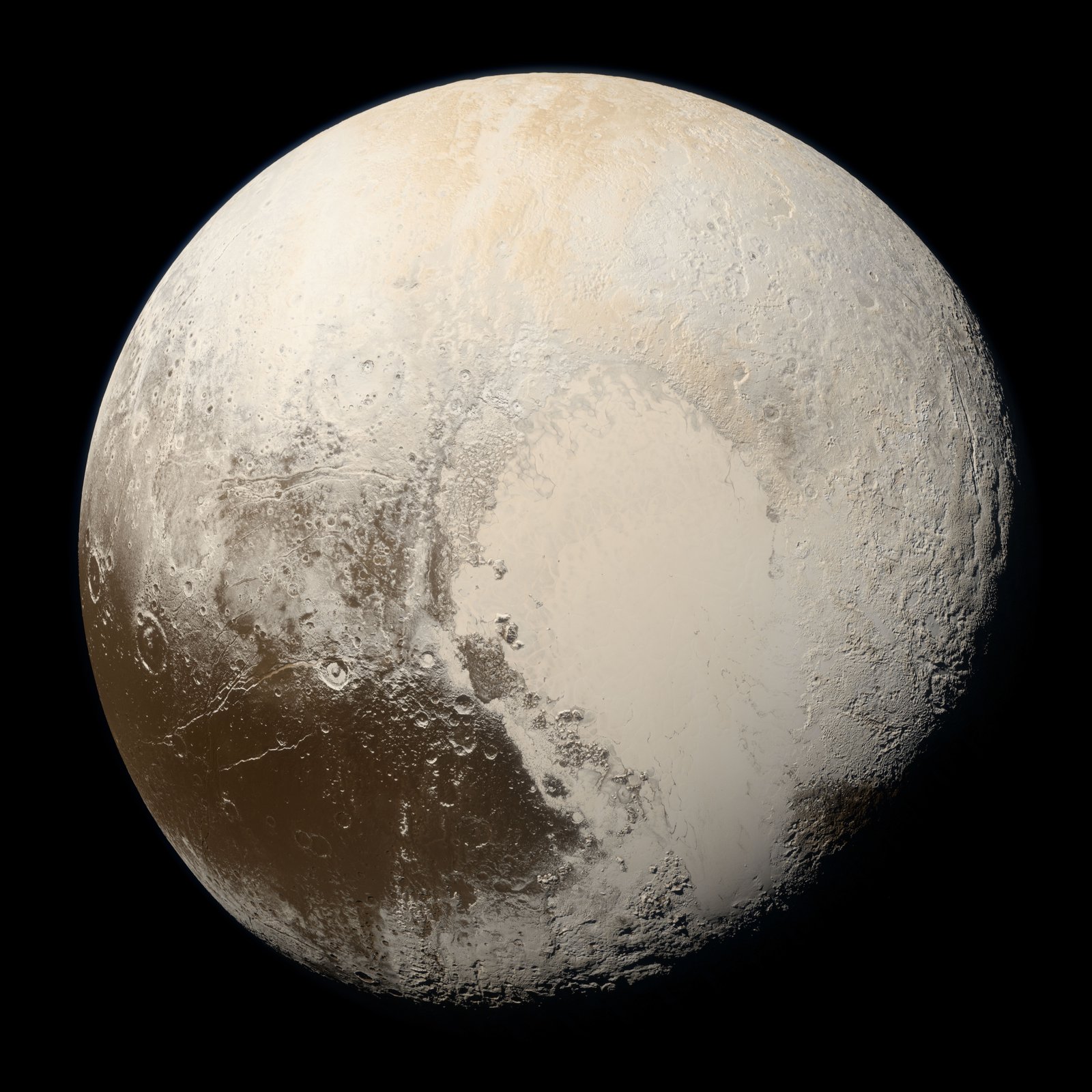
Pluto in true colour, photographed by NASA’s New Horizons. The new candidate orbits even farther from the Sun than Pluto. (File photo)
For perspective: Pluto measures about 2,377 kilometres across, so the newcomer is smaller — but it may still be the biggest new object found beyond Neptune in two decades, and among the brightest bodies in the region.
The key test is roundness: a dwarf planet must orbit the Sun, be massive enough for gravity to make it round, have failed to clear its orbit of debris, and not be a moon. Icy bodies in the 600 to 1,500 kilometre range are generally expected to be spherical, which is why astronomers call it a dwarf planet candidate — but the official verdict is not in until infrared data confirms the real size and shape.
Edward Ajhar, the National Science Foundation’s programme director for Rubin, said the observatory’s “super power” is capturing movement and change among objects humans have never seen before — greatly extending our ability to discover new things about the solar system.
Could it become the sixth dwarf planet? What happens next
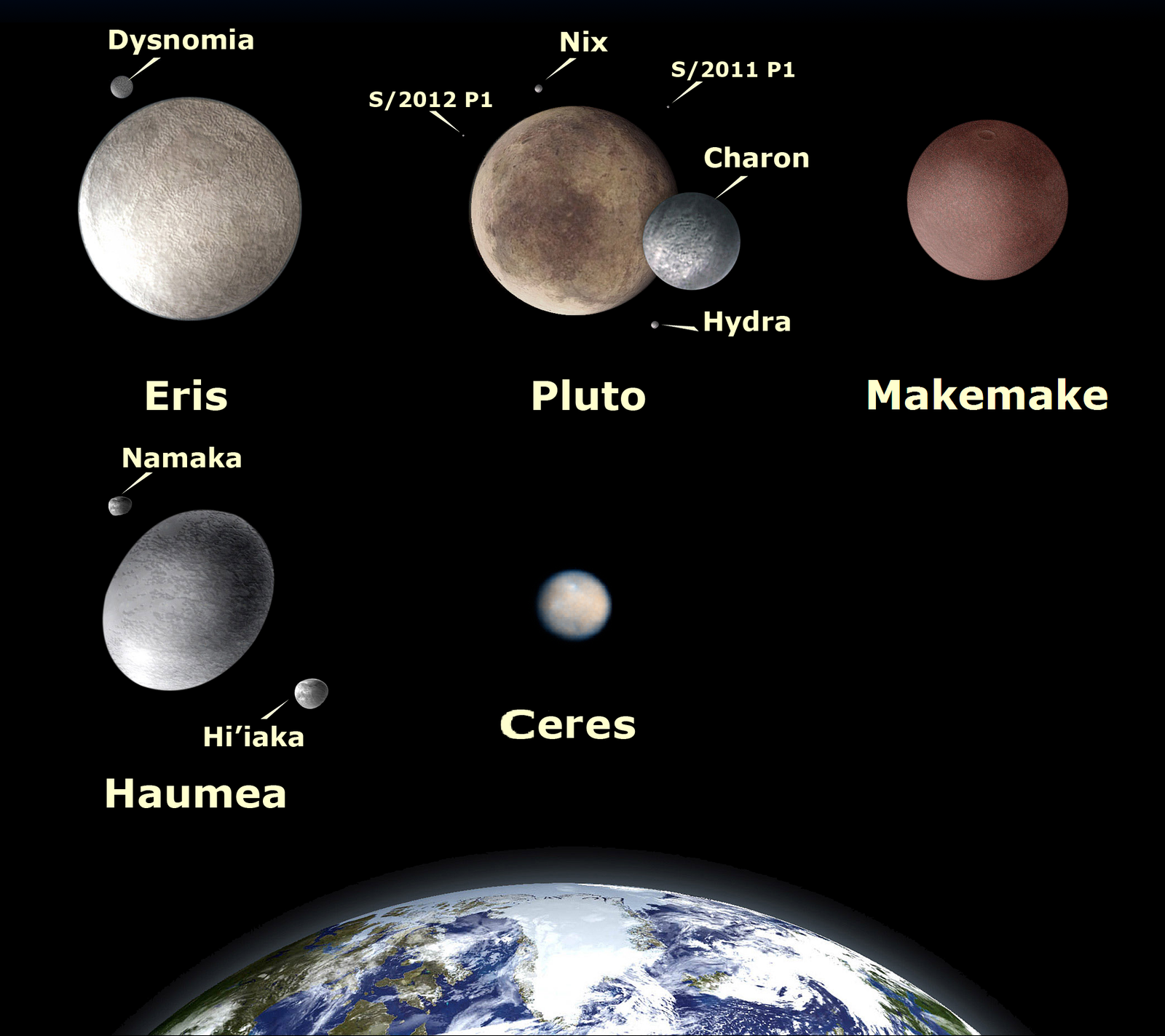
The five worlds the IAU currently recognises as dwarf planets. 2026 ED138 could become the sixth. (File photo)
The honest answer is: probably, but not yet. Official recognition requires infrared observations to nail down its diameter, followed by the IAU’s formal process. If confirmed, it would be only the second new dwarf planet added since Makemake in 2008.
The findings were presented on 27 October at the American Astronomical Society’s Division for Planetary Sciences meeting in Spokane, Washington — a strong early signal for the Legacy Survey of Space and Time, which began full operations in June 2026 with 11,000 new asteroids (about 380 trans-Neptunian objects) already found in pre-survey data.
With nearly a decade of scanning ahead, the dwarf-planet list is expected to grow — the same algorithms can now sweep the rest of the southern sky. For now, 2026 ED138 is the story of a world that was photographed again and again for a decade, until the right software finally noticed it moving. Read more Technology news on UrduPro, including our report on Google’s Gemini 4 Carbon cybersecurity launch.
Related Posts
 TechnologyPakistan Selects 10 Services for Digital Delivery Under $78 Million World Bank-Backed DEEP Project
 TechnologyPakistan Plans Cybersecurity Education in School Curriculum as Online Threats Rise
 TechnologyPakistan Announces $10 Million Clean-Air Startup Fund as Lahore Tops Global Pollution List
 TechnologyPakistan to Activate Social Media Regulator Soon, Says IT Minister Shaza Fatima
 TechnologyPakistan Assembled 20.08 Million Mobile Phones in Nine Months — Local Plants Now Feed Most of the Market
 TechnologyMeta’s Digital Tahafuzz Summit in Islamabad: Digital Dialogues in Real Life Launched for Teen Online Safety
Most Popular
 How-ToPTA Tax Calculator 2026: Check Mobile Tax on Any Phone314 views
 SportsBallon d’Or 2026: London Ceremony, Nominees and All-Time Records Ahead of 70th Anniversary305 views
 SportsUEFA Champions League 2026-27: Format, Teams and Schedule304 views
 Canada JobsTech Jobs in Canada: Roles, Salaries, and Skills Needed288 views
 Pakistan NewsPIA Boeing 787 Lease Deal: What It Means for the Airline286 views
 TechnologyRedmi K100 Launching on 28 October: 10,000mAh Battery, 185Hz Display and Full Specs281 views