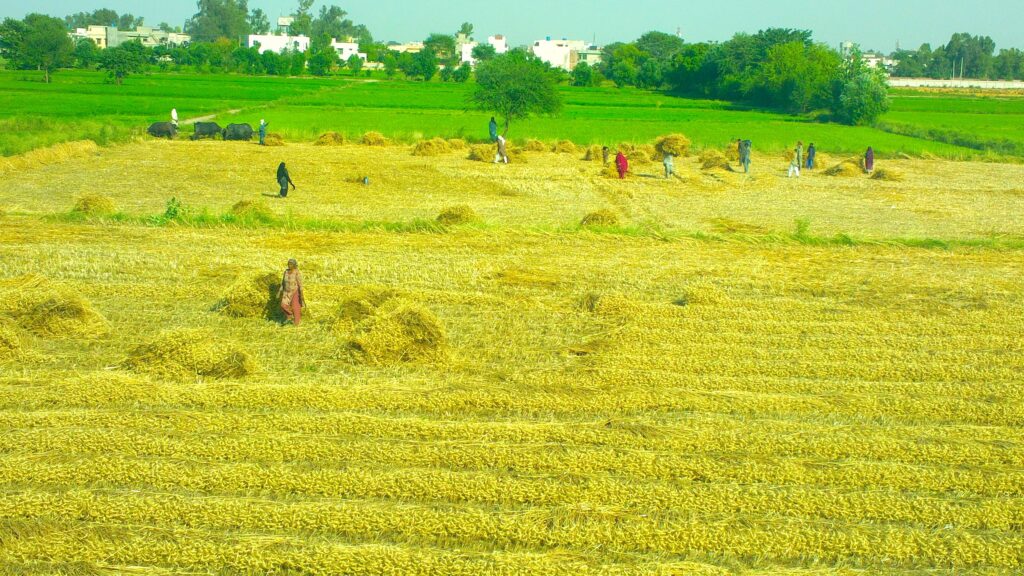
The price of the most basic food on a Punjabi family’s table has gone up from today. Under a new order from the Punjab government, a 10-kilogram bag of wheat flour now costs Rs1,275, up from Rs1,100 — an increase of Rs175 that every household in the province will feel at the shop counter.
The Punjab Wheat Release and Flour Distribution Order, 2026, was issued on Friday 20 November and took effect on Saturday 21 November 2026. It replaces the previous pricing order of 19 October 2026, and it raises both ends of the chain at once: the price the government charges flour mills for wheat, and the price mills may charge the public for flour.
What changes from today

The headline numbers are straightforward. Government wheat supplied to operational flour mills now costs Rs4,500 per 40 kilograms, up from Rs3,800 — a rise of Rs700, or about 18.4 per cent. On a per-kilogram basis, the grain rate moves from Rs95 to Rs112.50.
The retail price of flour follows. A standard 10-kilogram bag of atta, which was priced at Rs1,100 under the October order, will now sell for Rs1,275 — an increase of Rs175, or about 15.9 per cent. Per kilogram, flour rises from Rs110 to Rs127.50.
The order also prescribes how mills must use the government wheat they receive. Under a 70:18:12 extraction ratio, 70 per cent of the wheat must be milled into flour, 18 per cent into fine flour and 12 per cent into bran. The rule is designed to stop mills from diverting subsidised grain into higher-margin products while ordinary flour runs short.
Why the government raised the prices

The increase did not come out of nowhere. Wheat prices in the open market had been climbing for weeks, reaching about Rs5,900 per 40 kilograms in Punjab, far above the official release price of Rs3,800. With that gap so wide, the old official rate had become almost impossible to defend: mills had little reason to buy at the government rate and every reason to chase the open market.
Flour told the same story at the retail end. In recent weeks, flour has been selling at about Rs160 per kilogram in many markets, against the government-notified rate of Rs110. The official 10-kilogram bag at Rs1,100 was hard to find, and the gap between the notified price and the shop price kept growing.
The provincial cabinet approved the new order, and the Food Safety and Consumer Protection Department says it will come into force immediately. Government wheat distribution from PASSCO stocks has been running since 14 July 2026, when the food department began supplying mills at Rs3,800 per 40 kilograms. The October order formalised that arrangement; the new order reprices it.
Digital monitoring, quotas and penalties

This time the government is pairing the price rise with tighter control. The order brings in digital monitoring of wheat stocks and flour distribution, with district quotas, advance payment by mills, daily verification of sales and online reporting of stocks.
The daily release quota of government wheat has been raised to 6,000 tonnes, according to reports of the new arrangement. Government wheat will go only to approved operational flour mills and licensed chakkis, and every consignment is meant to be tracked from the government godown to the mill gate.
Mills that break the rules face severe penalties. Hoarding wheat, milling less than the allocated quota, or charging more than the newly set price of Rs1,275 for a 10-kilogram bag can all draw action under the order. District food controllers are responsible for checking stocks and prices in their areas.
What it means for your kitchen budget

For households, the maths is simple and unwelcome. A family that buys one 10-kilogram bag of flour a week will now pay Rs175 more per bag. Over a month, that is roughly Rs700 extra for the same flour — and for families that buy two bags a week, the added cost doubles.
Flour is not a luxury item that can be cut back. It is the base of roti, the food every meal in Punjab is built around, so a rise in the atta price reaches every home, including those with the least room in the budget. The government argues the new order will keep flour available at the notified price instead of disappearing into the open market, where it has been selling far above the official rate.
Whether that promise holds will be decided at the shop counter in the coming days. Buyers should check that the bag they are sold is priced at Rs1,275, and district food offices are the place to raise it if a shop charges more. The order is now in force across Punjab — and from today, the price on the bag is the price the government has set.
Sources: The News | AgriInsite
Related Posts
 BusinessPakistan and Türkiye Sign Three Mining Deals for Gold, Copper and Antimony in Balochistan
 BusinessPakistan to Replace 16.2 Million Electricity Meters with Smart Meters in Five DISCOs
 BusinessPakistan Secures $5.89 Billion in Foreign Loans and Grants in Four Months
 BusinessPakistan Hires EY-Led Consortium to Advise on Outsourcing Karachi and Lahore Airports
 BusinessPetrol Price Cut by Re1 to Rs322, Diesel Up by Rs2 to Rs357 From 21 November
 BusinessECC Approves Sugar Export of 416,000 Tonnes in Third Permission This Season
Most Popular
 How-ToPTA Tax Calculator 2026: Check Mobile Tax on Any Phone421 views
 Pakistan NewsPIA Boeing 787 Lease Deal: What It Means for the Airline396 views
 Canada JobsTech Jobs in Canada: Roles, Salaries, and Skills Needed392 views
 SportsUEFA Champions League 2026-27: Format, Teams and Schedule390 views
 TechnologyPM Shehbaz Sets November Deadline for Alibaba AI and Digitalisation Projects in Pakistan370 views
 ShowbizWomen’s Fashion in Pakistan 2026: Trends, Brands and Style Guide366 views