Wheat Price Pakistan: Per Maund Rate Update
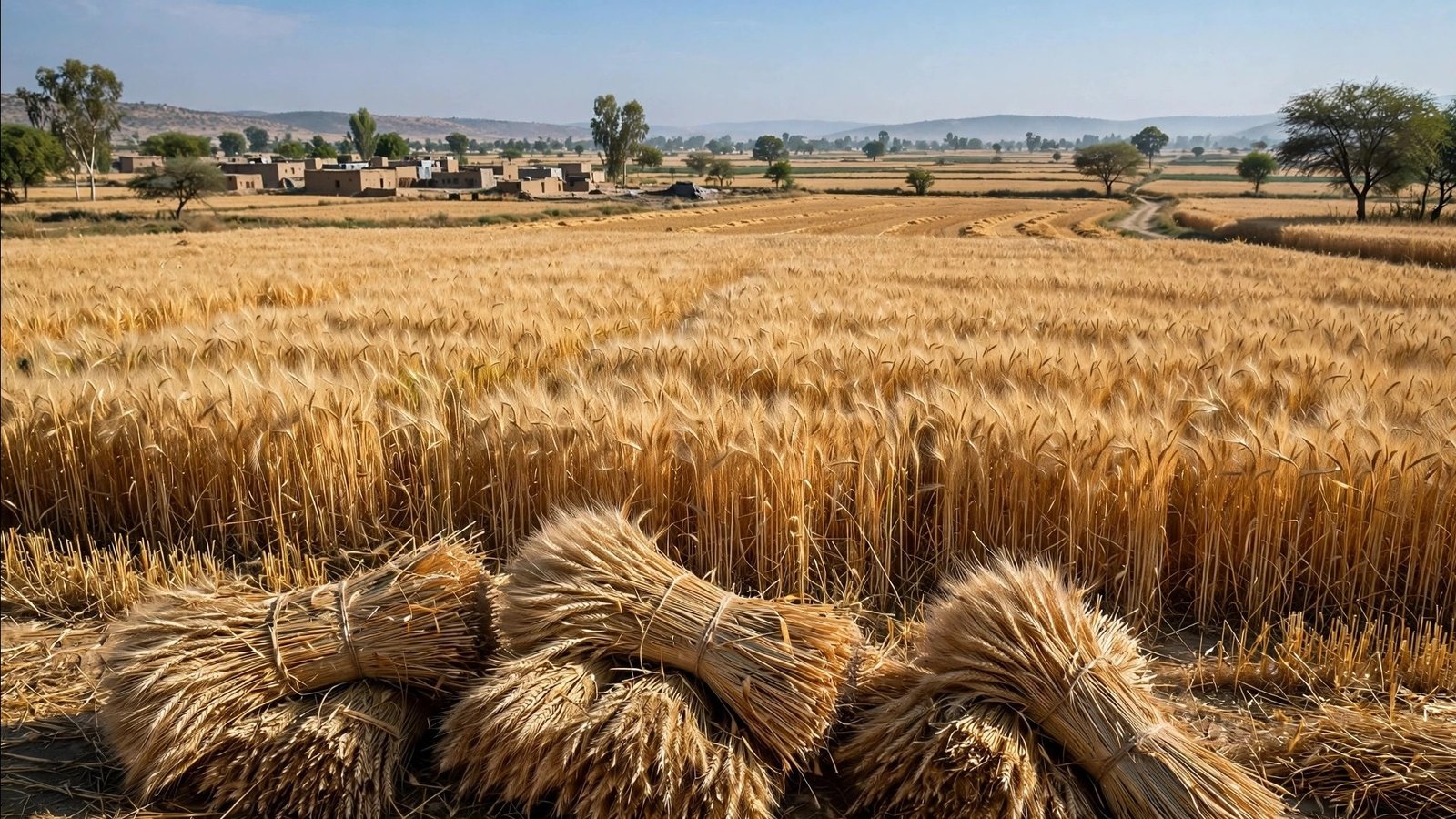
The wheat price Pakistan open markets are showing on 15 October 2026 runs roughly Rs. 4,000 to Rs. 5,120 per maund (40 kg), with a national average near Rs. 4,560, according to grain-exchange trackers. Wheat sits at the centre of Pakistan’s food economy — the gap between the open-market rate and the government’s subsidised mill quota is currently the story driving flour prices across the country.
Wheat Price Pakistan: Mandi Rates at a Glance
Indicative rates reported for mid-October 2026:
| Market | Rate per 40 kg (Maund) |
|---|---|
| Open market (Ghalla Mandi) | Rs. 4,000 – 5,120 |
| National average (PBS, week to 8 Oct) | Rs. 5,437 |
| Government mill quota (subsidised) | Rs. 3,800 |
| Official support price (2026 crop) | Rs. 3,500 |
| 100 kg wholesale bag | Rs. 10,000 – 12,800 |
| Retail chakki atta (per kg) | Rs. 108 – 138 |
The price Punjab’s farmers received under the 2026 policy was fixed at Rs. 3,500 per maund — well below the open market, which is why the province approved a Rs. 10 billion flour subsidy on 10 October to hold retail flour down. In Lahore, wheat was reported at Rs. 5,450 per maund this week, while a 15 kg flour bag costs Rs. 2,350.
Why Wheat Is Rising: The Subsidy Gap
The Pakistan Bureau of Statistics recorded a 5.69 per cent weekly jump in flour prices, and Punjab’s open-market wheat has climbed about Rs. 400 in four days to roughly Rs. 5,200 per maund in some reports. Mills buying private wheat at over Rs. 5,400 a maund cannot sell flour at the controlled rate, so the official Rs. 1,100 per 10 kg bag only holds where mills receive enough subsidised government wheat. Karachi, Islamabad and Peshawar flour prices are running near Rs. 3,400 for a 20 kg bag, well above Lahore’s controlled level.
The 2026-27 Crop: Sowing Starts 1 November
Wheat sowing in Punjab opens on 1 November, but as of late September the government had not yet announced a support price for the 2026-27 crop. Farmer bodies are asking for Rs. 5,000 per 40 kg, pointing to rising input costs. The price households pay for flour will depend heavily on how much subsidised wheat reaches mills this winter. Compare with our wheat price Pakistan 2026 guide and the petrol price Pakistan 2026 update, since fuel costs feed into transport and milling.
What Households Can Do
Buy the official 10 kg bag by name and check the printed price — in Punjab, shops charging more can be reported to the toll-free number 0800-02345 or through the Qeemat Punjab app. Keep receipts and photos of any overcharging. For daily mandi data see CheckPrice.pk’s wheat page, and for the flour-market fallout read Daily Magazine’s report on climbing flour prices.
How the Government Tries to Control Flour Prices
Pakistan manages wheat through a dual system: a subsidised official channel and a free open market. The province releases government wheat to flour mills at Rs. 3,800 per maund — roughly Rs. 1,600 below the open market — on the condition that mills sell flour at controlled prices. When releases are delayed, as millers complained this October after waits of more than two weeks, the subsidised flour disappears from shops and the market price takes over. The Rs. 10 billion subsidy approved on 10 October 2026 aims to widen the quota and close that gap. Price magistrates can fine shops selling above notified rates, and Punjab’s Qeemat app lets citizens report overcharging with photos. The system works best in Lahore and Faisalabad, where 20 kg bags held near Rs. 2,200–2,300, and worst in Rawalpindi and Sialkot, where the same bag crossed Rs. 3,100 this month.
FAQs
What is the wheat price in Pakistan today per maund?
The wheat price Pakistan open market shows Rs. 4,000–5,120 per maund (40 kg) on 15 October 2026, averaging near Rs. 4,560.
What is the government wheat support price?
Punjab’s 2026 policy fixed the procurement price at Rs. 3,500 per maund, while mills get subsidised quota wheat at Rs. 3,800.
Why is flour getting expensive?
Open-market wheat near Rs. 5,400 a maund is far above the subsidised rate, so mills pass the cost into flour wherever the subsidy does not reach.
What is the price of a 10 kg flour bag?
The official Punjab price is Rs. 1,100, but market prices run higher in many cities.
When does wheat sowing start?
Sowing in Punjab opens on 1 November, with the 2026-27 support price still unannounced.
Rates change daily — treat these as a snapshot for 15 October 2026 and confirm mandi rates locally before trading.
In-Depth Guide: Wheat Price Pakistan: Per Maund Rate Update
Household budgets feel every fluctuation, which is why families track wheat price pakistan daily. The wheat price pakistan today rate tells you what to expect at the shop, the wheat price pakistan price trend 2026 explains where things are heading, and understanding why wheat price pakistan increasing helps you plan smarter. This guide breaks it all down.
Wheat Price Pakistan Today Rate
The wheat price pakistan today rate varies between cities and even between markets in the same city. Official price lists are issued by district administrations, but actual shop rates can differ based on supply, transport costs and the seller’s margin. Checking the rate before shopping — especially for weekly groceries — helps you spot overcharging immediately.
Wheat Price Pakistan Price Trend 2026
The wheat price pakistan price trend 2026 is shaped by season, input costs, fuel prices and government policy. Farm produce follows harvest cycles, rising before new supply arrives and falling when markets are full. Imported items move with the dollar rate and international commodity markets. Watching these patterns over a few months teaches you when to buy and when to wait.
Wheat Price Pakistan Wholesale Rate Lahore
The wheat price pakistan wholesale rate lahore is usually lower than retail because middlemen margins are removed. Bulk buyers, shopkeepers and large families can save meaningfully by purchasing from wholesale markets — just factor in transport cost and storage, since perishables need proper handling.
Why Wheat Price Pakistan Increasing
To understand why prices keep changing, look at the full chain: production costs, weather, fuel for transport, taxes and market speculation all play a role. Short-term spikes after a supply disruption usually settle, but sustained rises signal deeper cost pressures. Smart households buy staples in reasonable bulk when rates dip and avoid panic buying during spikes.
Related Posts
 BusinessPSX Suspends LSE SPAC-I Trading as Ningbo Green Light Energy Merger Clears Way for October 26 Listing
 BusinessPakistan Freelancers Earn Record $197 Million in September 2026
 BusinessPakistan Introduces Electronic Power Monitoring System to Crack Down on Power Theft
 BusinessTech Stocks Trillion Loss: $1 Trillion Wiped Out as Oil Hits $110
 BusinessLululemon Chief Product Officer: Maggie Gauger Joins as President & CPO in Leadership Overhaul
Most Popular
 How-ToPTA Tax Calculator 2026: Check Mobile Tax on Any Phone144 views
 Canada JobsTech Jobs in Canada: Roles, Salaries, and Skills Needed117 views
 TechnologyRedmi K100 Launching on 28 October: 10,000mAh Battery, 185Hz Display and Full Specs112 views
 TechnologyTecno Mobile Prices in Pakistan 2026: Spark, Camon and Pova Series Compared110 views
 ShowbizWomen’s Fashion in Pakistan 2026: Trends, Brands and Style Guide98 views
 BISPPunjab Driving License Scam Alert: Fake Websites & “Without Test” Fraud | UrduPro94 views