IMF Urges Fairer Pakistan Tax System as Salaried Class Pays Rs629 Billion
The International Monetary Fund has told Pakistan that its tax system is becoming less fair even as the economy stabilises, urging the government to build a broader, more neutral system that spreads the burden beyond salaried workers. Jihad Azour, the IMF’s Director for the Middle East and Central Asia, made the case in a televised address at a two-day IMF Pakistan tax reform workshop in Islamabad on 20-21 October, as new Federal Board of Revenue data showed the salaried class now contributes Rs629 billion in income tax.
The workshop, titled “Reforms for a Modern and Growth-Friendly Tax System in Pakistan” and organised by the Ministry of Finance and Revenue with the IMF, is examining how to turn Pakistan’s stabilisation gains into durable growth. Azour’s message was direct: fairness in the IMF Pakistan tax reform agenda is not a side issue — it is the condition for growth itself.
What the IMF Asked Pakistan to Do
Azour argued that Pakistan must translate its stabilisation gains “into stronger and more durable growth,” which requires a tax system that is simpler, more neutral and more predictable. In the IMF Pakistan tax reform push, he named the mechanics: broadening the tax base, strengthening revenue administration, cutting tax expenditures and concessions, and protecting priority public spending.
He warned that fiscal policy cannot stop at meeting primary-balance targets and must make room for public investment and social spending, describing a medium-term tax strategy as the vehicle for that shift. “A fairer tax system can encourage compliance, better services can strengthen trust, and a more neutral tax structure can allow productive firms to expand rather than remain small or informal,” Azour said in his opening speech.
The workshop’s agenda, published by the Finance Ministry, sets out six sessions, including one on a unified sales tax regime across the federation and the provinces, one on a simpler and more neutral income tax system, and one on fiscal federalism and provincial tax revenues. It is scheduled to conclude with a high-level panel consolidating recommendations.
Salaried Workers Now Pay Rs629 Billion
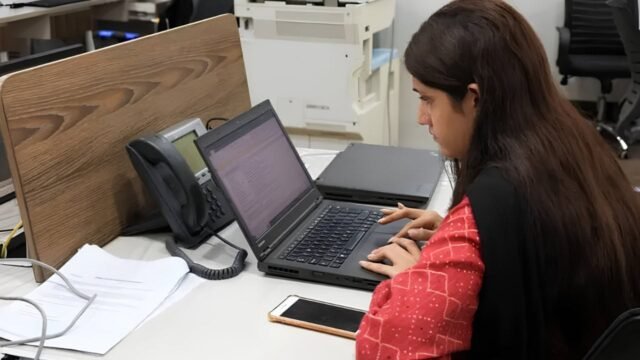
The gap between Azour’s prescription and current collection patterns is visible in FBR figures reported by The Express Tribune. Salaried workers’ income tax contribution rose from Rs391 billion before the IMF programme began to Rs629 billion as of June 2026 — presented as evidence that the burden has concentrated on the salaried class.
Over the same period, other sectors contributed comparatively little. Punjab and Sindh together collected Rs5.1 billion in agriculture income tax as of June under the new regime, against a combined last-year target of Rs12.5 billion — Sindh collected Rs1.1 billion against a Rs2 billion target, and Punjab Rs4 billion against Rs10.5 billion. This is the uneven landscape the IMF Pakistan tax reform effort is meant to fix.
Real Estate Collections Fall 38% After Tax Cut
Real estate moved the other way entirely. Income tax collection from the sector fell 38% to Rs35.2 billion in the first three months of the current fiscal year — Rs22 billion below the comparable period — after the government cut realty income tax by 50%. The sector had paid Rs200 billion in FY2024 and Rs236 billion the following year, and could now fall below Rs150 billion.
Separately, the FBR’s fixed-tax scheme for retailers had enrolled only 137 new retailers as of 15 October against an annual target of one million. The Express Tribune noted an apparent contradiction: the IMF management agreed in June to lower realty withholding rates and endorsed a fixed-tax trader scheme that allows cash dealing — measures that reduce tax collected from sectors its own director is now urging to be brought into the net. The IMF Pakistan tax reform debate will have to confront this contradiction head-on.
Aurangzeb and Zardari Respond
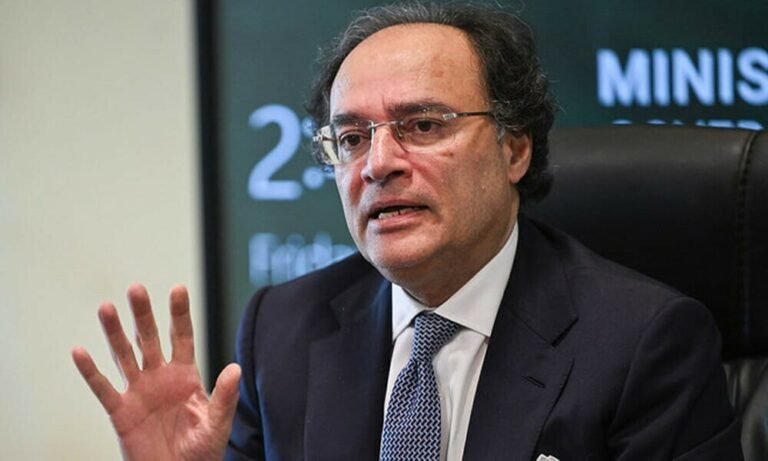
Finance Minister Muhammad Aurangzeb, speaking at the same workshop, said businesses could no longer be surprised by tax changes in successive budgets. He cited the macro picture the government has been emphasising: a fiscal deficit at a 22-year low, three consecutive primary surpluses, and a tax-to-GDP ratio that has risen from 8.8% to 10.3%. His remarks framed the IMF Pakistan tax reform workshop as part of a broader stabilisation story.
President Asif Ali Zardari also met Azour and assured him of the government’s commitment to reforms, according to the President’s Secretariat. The official readout put the economy’s size at $452.1 billion, with 3.7% growth and a 2.6% fiscal deficit, while a $1.21 billion IMF disbursement remains pending.
What Comes Next for the IMF Pakistan Tax Reform Push
The workshop’s output remains the open question. As of 21 October, the closing panel had not reported, and no medium-term tax strategy has been published — so there is no settled federal-provincial agreement on a unified sales tax or on provincial revenue shares. Whether the government converts the workshop into binding changes in the next budget is unknown, as is whether provincial governments accept the federal-provincial coordination Azour called for.
Azour also warned that Pakistan remains exposed to higher energy and food prices, disrupted trade and supply chains, weaker external demand and an abrupt tightening in global financing, linked to the Iran conflict and energy-price volatility. For a country that imports most of its fuel, he argued, a tax system that leans on salaried pay is harder to defend when import costs rise. The real test of the IMF Pakistan tax reform push will be whether the next budget turns the workshop’s recommendations into binding law.
Sources: Khabarwire; The Express Tribune (via Europe Says)
Related on UrduPro: Pakistan Budget 2026-27: Key Highlights and Analysis; Pakistan Economy 2026: GDP Growth, Inflation and IMF Update
Related Posts
 BusinessPSX Suspends LSE SPAC-I Trading as Ningbo Green Light Energy Merger Clears Way for October 26 Listing
 BusinessPakistan Freelancers Earn Record $197 Million in September 2026
 BusinessPakistan Introduces Electronic Power Monitoring System to Crack Down on Power Theft
 BusinessTech Stocks Trillion Loss: $1 Trillion Wiped Out as Oil Hits $110
 BusinessLululemon Chief Product Officer: Maggie Gauger Joins as President & CPO in Leadership Overhaul
Most Popular
 How-ToPTA Tax Calculator 2026: Check Mobile Tax on Any Phone142 views
 Canada JobsTech Jobs in Canada: Roles, Salaries, and Skills Needed117 views
 TechnologyTecno Mobile Prices in Pakistan 2026: Spark, Camon and Pova Series Compared109 views
 TechnologyRedmi K100 Launching on 28 October: 10,000mAh Battery, 185Hz Display and Full Specs109 views
 ShowbizWomen’s Fashion in Pakistan 2026: Trends, Brands and Style Guide97 views
 BISPPunjab Driving License Scam Alert: Fake Websites & “Without Test” Fraud | UrduPro94 views