Pakistan Economy 2026: GDP Growth, Inflation and IMF Update
The Pakistan economy is moving through a demanding stretch in 2026, caught between modest recovery and rising price pressures. The International Monetary Fund’s October 2026 World Economic Outlook, released on 13 October 2026, kept Pakistan’s growth forecast at 3.5% for fiscal year 2026-27 but lifted its inflation projection sharply to 9.9%, a combination that defines the economic debate in Islamabad as of mid-October 2026.
For households, businesses and investors, the Pakistan economy outlook for the rest of the fiscal year comes down to three questions: how fast can the country grow, how quickly prices are rising, and whether the external position stays stable enough to avoid another round of emergency measures.
Pakistan Economy Growth Forecast: 3.5% vs Government Target of 4%
The IMF’s latest Pakistan economy projections tell a story of cautious optimism tempered by hard constraints:
- GDP growth: 3.5% for FY2026-27, unchanged from the Fund’s earlier estimate, below the government’s 4% target and slightly under the 3.6% recorded last fiscal year.
- Inflation (CPI): 9.9%, up from 8.4% in the April estimate and well above the government’s 8.2% target; last year it was 7.1%.
- Current account: a deficit of 1% of GDP (about $4.4 billion), reversing last year’s 0.5% surplus.
- Unemployment: 6.5%, down slightly from 6.9% last year.
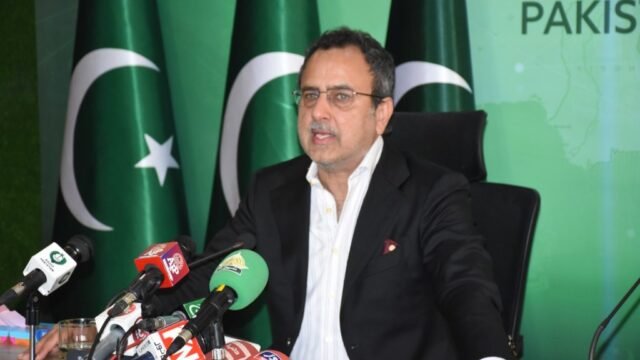
Finance Minister Muhammad Aurangzeb has expressed confidence that growth will come in “north of 4 percent”, telling Reuters that Pakistan’s economy should beat the IMF’s more conservative view. The gap between the Fund’s 3.5% and the government’s 4% will matter when the next programme review is discussed, because it shapes expectations on revenue, spending and the Pakistan stock market 2026 performance.
Inflation Back Up: What 9.9% Means for Households
For ordinary Pakistanis, the Pakistan economy headline that bites hardest is inflation. At a projected 9.9%, wage gains are likely to lag living costs again after the brief improvement to 7.1% last year. The IMF cited the ongoing Middle East conflict, which has pushed oil prices above $100 a barrel and disrupted energy supply, as a reason for lifting regional inflation forecasts.
The government is fully passing on higher fuel costs to consumers while charging substantial taxes, and the IMF has objected to a monthly compensation scheme of Rs 2,000 for motorcyclists and Rs 3,000 for small vehicle owners, describing it as broad-based and expensive. A higher inflation forecast also strengthens the case for keeping monetary policy tight — the State Bank kept its policy rate at 11.5% on 14 September 2026 — rather than cutting interest rates to support growth.
External Sector: Reserves, Remittances and the Current Account
The Pakistan economy’s external position has improved but remains fragile. Foreign exchange reserves held by the State Bank reached $21.4 billion as of mid-September 2026, and workers’ remittances have been a major support — Pakistan received $3.6 billion in September 2026 alone, up 12.7% year on year (more in our Pakistan remittances 2026 update). The SBP expects remittances to rise to $44 billion in FY27.
Still, the IMF expects the current account to swing back to a deficit of 1% of GDP this year, implying greater demand for imported goods and more sensitivity to oil and food shocks. The lender will publish its staff-level report only after its executive board approves the next loan tranches, tentatively scheduled for late November 2026.
Outlook: Risks and Opportunities for the Pakistan Economy
The Pakistan economy’s near-term trajectory depends on a handful of variables. On the positive side, the budget for FY27 brought tax relief for the salaried class and eliminated the high-income earner surcharge (see our Pakistan Budget 2026-27 highlights), which should support consumption. The stock market’s record run earlier in 2026 also signalled investor confidence.
On the risk side, Middle East tensions keeping oil prices elevated, the IMF’s inflation warning, and heavy external debt repayments all constrain policy space. The global backdrop adds to the strain: the IMF put 2026 world growth at 3.1% and 2027 at 3.4%, with risks tilted to the downside. For Pakistan, the realistic Pakistan economy path for 2026-27 is slow-and-steady growth around 3.5%, with inflation as the key variable to watch in the remaining months of 2026.
Further reading: Bloom Pakistan: IMF keeps growth at 3.5% while inflation forecast rises to 9.9% and TechJuice: IMF warns of inflation pressures as Pakistan growth stays at 3.5%.
Frequently Asked Questions
Q1: What is the IMF’s GDP growth forecast for Pakistan in 2026-27?
The IMF projects Pakistan economy growth at 3.5% for FY2026-27, below the government’s 4% target and slightly under the 3.6% recorded in FY2025-26.
Q2: What is the inflation forecast for Pakistan in 2026-27?
The IMF raised its inflation forecast to 9.9% for FY2026-27, up from its earlier 8.4% estimate and above the government’s 8.2% target.
Q3: What is Pakistan’s current account forecast for 2026-27?
The IMF expects a current account deficit of 1% of GDP (about $4.4 billion), reversing the 0.5% surplus recorded last fiscal year.
Q4: What did Finance Minister Aurangzeb say about Pakistan’s growth?
Muhammad Aurangzeb told Reuters he is “quite clear” that growth will come in north of 4% in FY2026-27, above the IMF’s 3.5% projection.
Q5: When will the IMF’s next review of Pakistan’s programme happen?
The IMF’s staff-level report will be published after its executive board approves the next loan tranches, tentatively scheduled for late November 2026.
Understanding Pakistan’s Economy in 2026
The Pakistan economy in 2026 is best read through a few key indicators: GDP growth, inflation, the rupee’s stability, foreign reserves and the IMF programme’s status. Pakistan economy latest news on the Pakistan inflation rate 2026 directly affects household budgets, while IMF Pakistan programme 2026 reviews determine policy direction on taxes, energy prices and subsidies. For ordinary readers, the practical lens is simple: stable reserves and falling inflation mean breathing room; the reverse means tougher months ahead.
Growth, Jobs and the Road Ahead
The Pakistan gdp growth 2026 figure captures the economy’s overall momentum, but the composition matters: agriculture’s performance, industrial revival and the IT sector’s export growth each tell different stories about where jobs are being created. For citizens, growth only matters when it translates into employment and rising real incomes — indicators worth watching alongside the headline rate.
Related Posts
 BusinessPakistan Introduces Electronic Power Monitoring System to Crack Down on Power Theft
 BusinessTech Stocks Trillion Loss: $1 Trillion Wiped Out as Oil Hits $110
 BusinessLululemon Chief Product Officer: Maggie Gauger Joins as President & CPO in Leadership Overhaul
 BusinessKOSPI Index Crash: South Korea’s KOSPI Suffers 7.57% Drop, Triggering Circuit-Breakers
 BusinessBlinkit Reliance Food Probe: Indian Regulators Name Executives in Expired Food Case
 BusinessHDFC Bank Profit Miss: Q2 Net Profit Rises 4.7% but Treasury Slump Disappoints
Most Popular
 How-ToPTA Tax Calculator 2026: Check Mobile Tax on Any Phone86 views
 BISPPunjab Driving License Scam Alert: Fake Websites & “Without Test” Fraud | UrduPro79 views
 Canada JobsTech Jobs in Canada: Roles, Salaries, and Skills Needed76 viewsBusinessTech Stocks Trillion Loss: $1 Trillion Wiped Out as Oil Hits $11066 views
 TechnologyTecno Mobile Prices in Pakistan 2026: Spark, Camon and Pova Series Compared60 views
 ShowbizWomen’s Fashion in Pakistan 2026: Trends, Brands and Style Guide58 views



One comment