182 couples, one ceremony: what happened in Khanewal
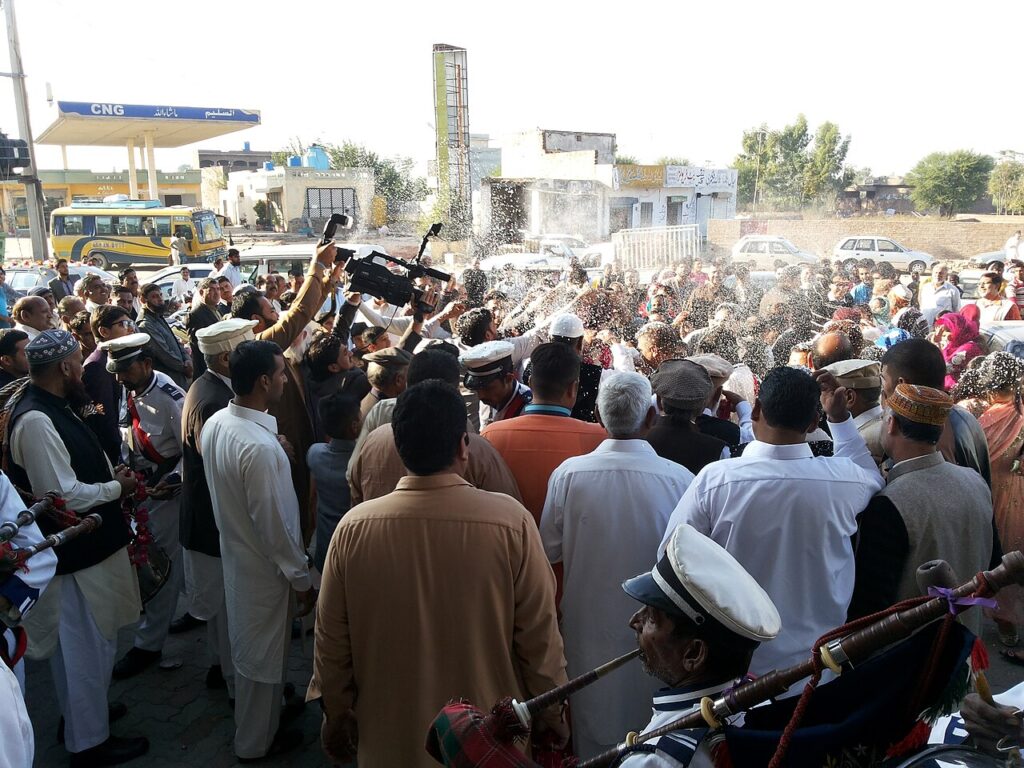
One hundred and eighty-two couples married on the same day in Khanewal this week, in the latest mass wedding held under the Punjab government‘s Dhee Rani Programme. The ceremony, organised by the Social Welfare Department, brought together families from across the district for a single collective wedding — and every newly married couple left with an ATM card carrying Rs200,000 as a wedding gift from the chief minister.
The Khanewal ceremony is the biggest single event of the programme’s new phase so far. A provincial minister told the gathering that 5,000 daughters across Punjab would be married with honour and respect under the Dhee Rani Programme this year, as the government pushes ahead with a scheme designed to take the cost of weddings off the shoulders of low-income families.
For the families involved, the day matters for a simple reason: a wedding in Pakistan can cost more than a household earns in a year, and many parents delay their daughters’ marriages for years because they cannot afford the ceremony. The Dhee Rani Programme answers that problem directly — the government pays for the wedding itself, and adds a cash gift on top.
Rs200,000 salami and a free ceremony for every bride
Every bride married under the programme receives Rs200,000 as salami — the traditional wedding gift — paid through a Bank of Punjab ATM card. The government also bears all the expenses of the collective wedding ceremony, so the family pays nothing for the event itself.
The distinction matters, and the Social Welfare Department has been clear about it: the Rs200,000 is part of the collective marriage scheme. It is not a general cash grant for families arranging private weddings on their own. The money goes to brides selected for the government-arranged ceremonies, and it arrives on an ATM card rather than in cash.
That detail is deliberate. Paying through a bank card puts the money directly in the bride’s hands, and it leaves a record of exactly who received what — a safeguard that matters in a welfare programme handling thousands of payments.
Phase 3 so far: five ceremonies, 5,000 weddings planned

The current phase of the programme began on 12 November 2026, when mass weddings resumed across Punjab. Five ceremonies had been held within the first week, and the numbers have climbed steadily from city to city.
The phase opened in Lahore on 12 November, where 150 couples married, including 21 couples from minority communities. Provincial Information Minister Azma Bukhari attended that ceremony and described the programme as a model welfare initiative. Two days later, Gujranwala hosted 110 couples — 93 Muslim couples and 17 Christian couples — at a ceremony in Rahwali. Okara followed on 16 November with 131 couples. Khanewal’s 182 couples is the largest gathering yet.
The government’s target for the financial year 2026-27 is 5,000 more weddings. That would build on the roughly 8,000 deserving daughters married under the programme during 2024-25 and 2025-26, taking the scheme’s total well past 13,000 weddings since it began.
Who can apply — and how
The programme is for brides from deserving, underprivileged and low-income families in Punjab. It covers orphans, women with disabilities, daughters of persons with disabilities, and women from minority communities. The bride must be between 18 and 40 years old and hold a valid Punjab domicile.
Families can apply through the official Dhee Rani Programme portal, or through the Maryam Ko Batain app, where applications are received and verified before eligible families are included in a ceremony. The Social Welfare Department’s helpline is 1312 for questions about registration and eligibility. Where applications outnumber the places available, the department may hold an electronic ballot to select eligible candidates.
The message from the Khanewal ceremony was simple enough: for families who qualify, the wedding itself need no longer be the obstacle. The government arranges the ceremony, pays for it, and hands the bride Rs200,000 to start her married life — and with 5,000 weddings planned this year, Khanewal will not be the last district to host one.
Sources: INP — Punjab launches third phase of Dhee Rani Programme; Nazrana Times — 182 couples marry under Dhi Rani Program in Khanewal.
Related Posts
 Pakistan NewsLahore Tops World’s Most Polluted Cities Again as AQI Hits 538 — Eight Punjab Cities in Pakistan’s Worst Ten
 Pakistan NewsDiabetes Now Affects One in Three Adults in Pakistan — 34.5 Million People, and Millions Don’t Know They Have It
 Pakistan NewsThree Bodies Found at Sardar Khetran’s Barkhan Home: Four Guards Held as Murder Case Names MPA and His Two Sons
 Pakistan NewsOne in Four Healthy Pakistanis Already Has Heart Disease Signs, Landmark PAK-SEHAT Study Finds
 Pakistan NewsPMD Issues Drought Watch for Sindh, Balochistan and South Punjab as Rainfall Falls Up to 100% Below Normal
 Pakistan NewsZardari Promulgates Five Ordinances for Khyber Pakhtunkhwa: 21 of 40 Privilege Sections Removed
Most Popular
 How-ToPTA Tax Calculator 2026: Check Mobile Tax on Any Phone421 views
 Pakistan NewsPIA Boeing 787 Lease Deal: What It Means for the Airline396 views
 Canada JobsTech Jobs in Canada: Roles, Salaries, and Skills Needed393 views
 SportsUEFA Champions League 2026-27: Format, Teams and Schedule390 views
 TechnologyPM Shehbaz Sets November Deadline for Alibaba AI and Digitalisation Projects in Pakistan370 views
 ShowbizWomen’s Fashion in Pakistan 2026: Trends, Brands and Style Guide366 views