PMS Exam 2027: Guide, Syllabus and Preparation
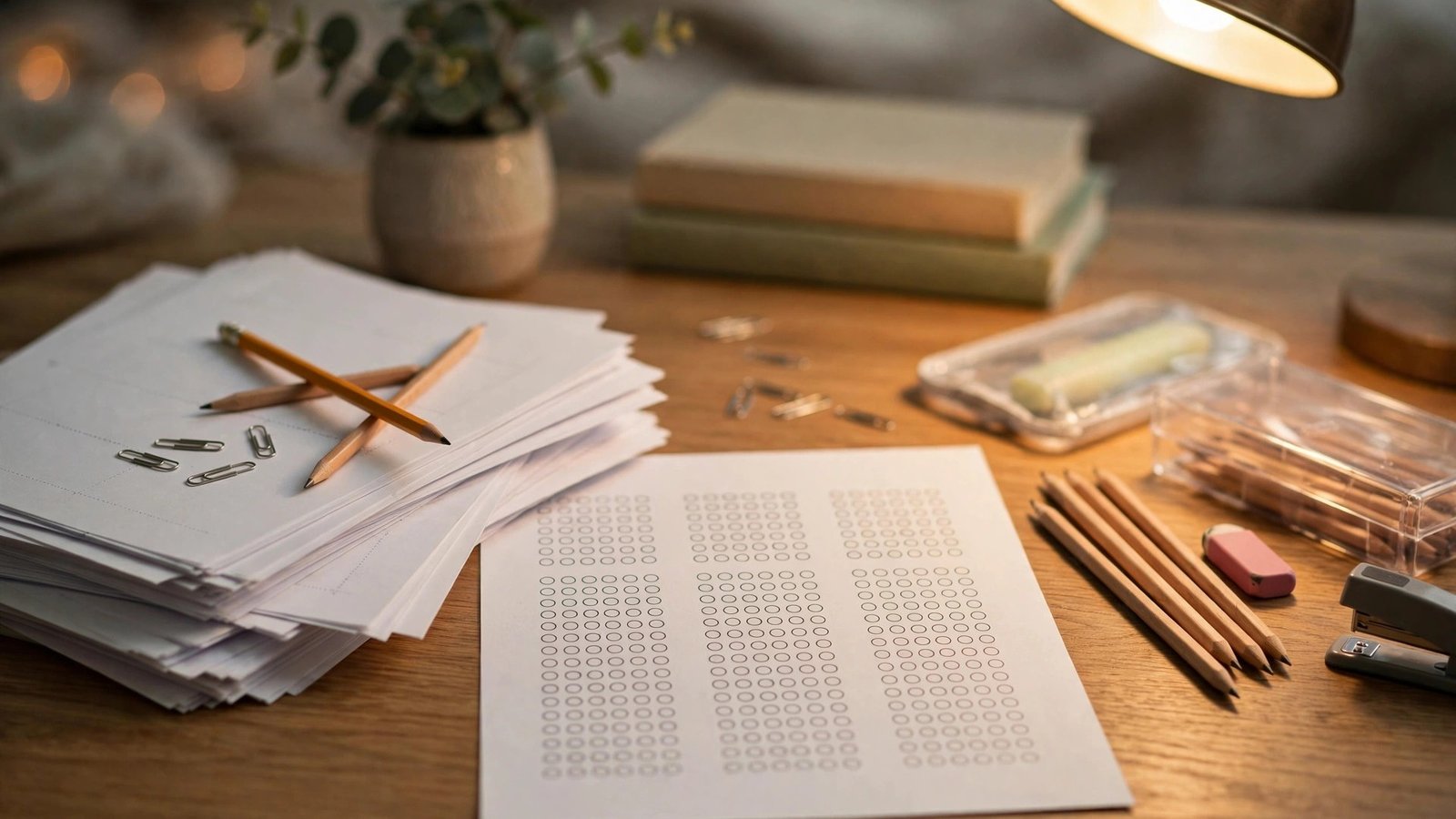
The PMS exam 2027 will open doors to the Provincial Management Service for thousands of aspirants, and this cycle brings the most significant syllabus overhaul in years. In October 2026, the Punjab Public Service Commission (PPSC) announced a revised syllabus for the Combined Competitive Examination expected in 2027, restructuring the written examination into eleven papers worth 1,100 marks with an interview adding 300 marks, for a grand total of 1,400 marks. Anyone targeting the PMS exam 2027 needs to study the new paper structure closely, because preparing to the old pattern would waste precious months.
PMS Exam 2027: Revised Paper Pattern
Under the revised scheme, Papers I and II cover General Knowledge followed by the Mental Ability and Reasoning Test. Papers III to V are English Essay, English and Urdu, all subjective. Papers VI to X each carry 25 marks of MCQs and 75 marks of subjective questions, covering Islamic Studies (or Ethics for non-Muslims), Pakistan Studies I (history before and after independence), Pakistan Studies II (geography, society, culture and institutions), International Affairs, and Economy and Development. Paper XI is a single optional subject, subjective, worth 100 marks. Two details matter most: the Mental Ability and Reasoning Test carries a 33 per cent qualifying mark with negative marking, and the full subject-wise syllabi were not yet released when PPSC issued its press release on 8 October 2026 — aspirants should download the detailed outlines from ppsc.gop.pk once published.
The PMS is the provincial counterpart of the CSS, recruiting officers to the Provincial Management Service (PMS) in BS-17, alongside related posts in the Excise, Taxation and other provincial services. While CSS officers can be posted anywhere in Pakistan, PMS officers serve within their province, which makes it the natural target for candidates with a Punjab domicile who want administrative careers close to home. Other provinces run their own variants — KPPSC conducts a Provincial Management Service Competitive Examination, and Balochistan and Sindh have their own combined competitive exams with provincial syllabi.
Eligibility Criteria and How to Apply
Eligibility for the Punjab PMS requires a bachelor’s degree with at least second division and a Punjab domicile, with the age limit generally set between 21 and 30 years (exact figures confirmed in the official advertisement). Applications are submitted online through ppsc.gop.pk, and the application fee is paid only through authorised channels such as 1Link member banks, ATMs, mobile banking, JazzCash, Easypaisa or U Paisa. The commission’s schedule of written tests is published only on the official PPSC website. In-service candidates need departmental permission, and only practical experience gained after the prescribed qualification counts toward experience requirements.
A crucial preparation point: negative marking applies to MCQ papers, so blind guessing is penalised — unlike the CSS MPT, where there is no negative marking. Focus your practice on Mental Ability and Reasoning MCQs, which now function as a gatekeeper paper, and on the 25-mark MCQ sections within Papers VI to X, since these objective components reward consistent drilling.
Preparation Strategy for the New Pattern
Start with the four new or reshaped subjects that the revised syllabus emphasises: Mental Ability and Reasoning, Pakistan Studies I and II, International Affairs, and Economy and Development. For the subjective papers, build essay-writing stamina in English and Urdu with weekly timed practice, and anchor your Pakistan Studies answers in concrete facts, constitutional provisions and economic data rather than generalisations. For International Affairs and Economy and Development, follow daily international news and the State Bank’s publications, because this pattern rewards contemporary awareness over memorised summaries.
Choose your single optional subject from your academic strength — with only one optional paper worth 100 marks, a subject you already know well is far safer than a scoring subject you would have to learn from scratch. Solve at least five years of past papers for every subject, and practise the MCQ portions under exam timing. Remember that the PMS and CSS written stages both demand structured, analytical answers, so cross-preparation between the two is efficient if you are attempting both.
For related coverage, see our CSS 2027 exam guide and preparation strategy and our overview of PPSC jobs and advertisements for the latest provincial openings.
Frequently Asked Questions
How many papers are in the PMS exam 2027? Eleven papers under the revised PPSC pattern: five in the first group and five mixed MCQ-subjective papers, plus one optional subject.
What are the total marks? 1,100 for the written examination plus 300 for the interview and viva voce, totalling 1,400 marks.
Is there negative marking? Yes, in the MCQ papers — including the Mental Ability and Reasoning Test, which also has a 33 per cent qualifying threshold.
Who conducts the PMS exam? The Punjab Public Service Commission conducts the Combined Competitive Examination for Punjab; KPPSC, SPSC and BPSC run their own provincial variants.
What qualification is required? A bachelor’s degree with at least second division and the relevant provincial domicile.
External references: PPSC CCE 2027 revised syllabus: 11 papers, 1,400 marks and PMS compulsory subjects syllabus outline.
In-Depth Guide to the PMS Examination
The PMS exam 2027 conducted by the Punjab Public Service Commission is the provincial counterpart of the CSS, leading to the Provincial Management Service and other coveted provincial posts. Because the syllabus overlaps heavily with CSS, many aspirants prepare for both examinations together, and PMS often serves as excellent practice — or a parallel opportunity — for CSS candidates. The competition is intense, with thousands competing for a limited number of seats each cycle.
PMS exam syllabus 2027 and eligibility
The PMS exam syllabus 2027 comprises compulsory papers in English, Urdu, Pakistan Studies, Islamiat and General Knowledge, plus optional subjects chosen from the PPSC’s approved list. Under the PMS eligibility criteria Punjab, candidates need a bachelor’s degree and must meet the age limits notified in the advertisement, with relaxations for specified categories. Always verify the latest advertisement, because rules on age, domicile and the number of attempts are updated from time to time.
Difference between CSS and PMS, and preparation books
A common question is the difference between CSS and PMS: CSS is a federal examination conducted by the FPSC leading to all-Pakistan services, while PMS is conducted by the provincial commissions (Punjab, Sindh, KP, Balochistan) for provincial services. The paper pattern and syllabus are similar but not identical, and the age limits and attempt rules differ. For PMS exam preparation books, use the same standard texts recommended for CSS — quality political science, history and general knowledge books — supplemented with past PMS papers, which reveal the PPSC’s distinct questioning style.
Related Posts
 EducationUHS Private MBBS Admissions 2026: Last Day Today, 6 November — Apply Before 5 PM
 EducationSindh Schools to Close on 9 November for Iqbal Day — Three-Day Weekend for Students
 EducationPakistan Secures 11 China Education Agreements — Most of Any Country at CACIE 2026
 EducationChevening Teams Up With Allied Bank: Fully Funded UK Master’s Scholarships for Pakistanis
 EducationMaryam Nawaz Sets 1 Million Youth Skills Training Target for Punjab Over Three Years
 EducationUniversity of Karachi Self-Finance Admission 2027: Last Date Today, 30 October — How to Apply
Most Popular
 How-ToPTA Tax Calculator 2026: Check Mobile Tax on Any Phone417 views
 Pakistan NewsPIA Boeing 787 Lease Deal: What It Means for the Airline389 views
 Canada JobsTech Jobs in Canada: Roles, Salaries, and Skills Needed387 views
 SportsUEFA Champions League 2026-27: Format, Teams and Schedule384 views
 TechnologyPM Shehbaz Sets November Deadline for Alibaba AI and Digitalisation Projects in Pakistan364 views
 ShowbizWomen’s Fashion in Pakistan 2026: Trends, Brands and Style Guide360 views