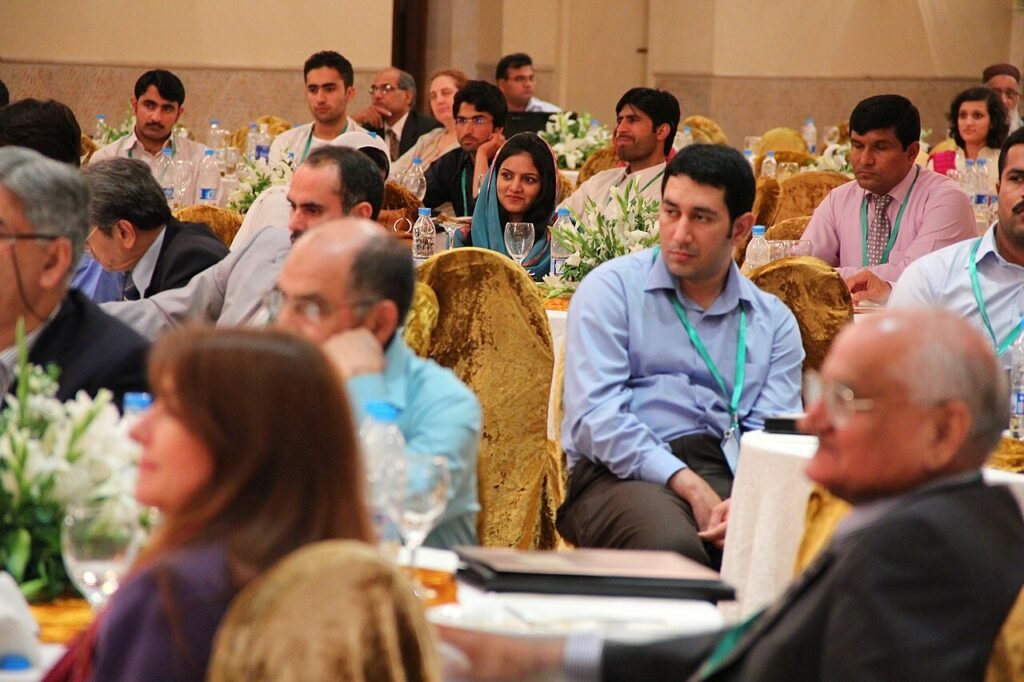
Pakistan and Russia have opened a new chapter in their relationship, and this time it is written in code rather than communiques. The two countries brought their technology industries face to face in Islamabad on Wednesday, 5 November 2026, for a working session aimed at turning years of diplomatic goodwill into signed contracts between companies.
The Pakistan–Russia IT Collaboration Webinar was the third meeting in a webinar series run by the Pakistan Software Export Board (PSEB), which works under the Ministry of IT and Telecommunication, together with the University of World Civilizations Moscow. The session was held at the Ministry of Planning, Development and Special Initiatives in Islamabad, with Russian speakers joining from Moscow. Its theme was “Building Technology Partnerships, Market Access and Joint Solutions”, and instead of a large conference, the organisers gathered a focused group of leading companies and industry associations from both countries, each asked to bring specific capabilities and specific business needs to the table.
Federal Minister for Planning, Development and Special Initiatives Ahsan Iqbal attended as chief guest. He told the session that technology had become a key driver of Pakistan’s economic transformation and that it opened real room to deepen cooperation with Russia. Under URAAN Pakistan, the government’s national economic transformation plan, digital development — known as E-Pakistan — is one of five strategic pillars, with the ambition of building a one-trillion-dollar economy by 2035.
Six areas where the two sides will work together
The discussions centred on six areas where the two industries complement each other. The first is artificial intelligence and cloud computing, where Pakistan’s software houses have built delivery experience and Russia brings deep research strength. The second is cybersecurity and the protection of critical infrastructure, an area both sides treat as a national priority. The third is digital governance and digital public infrastructure, including the systems governments use to deliver services online.
The remaining three areas are trade in IT and IT-enabled services, with investment and business-to-business cooperation attached; the exchange of digital skills and workers; and quantum computing, the frontier technology that both countries are now investing in. The breadth of the list shows that the two sides are not looking at a single deal, but at a working relationship across the full technology stack.
The numbers behind Pakistan’s pitch
Pakistan came to the table with figures that explain why it believes it has something to sell. The country produces more than 75,000 IT graduates every year, and the government has set a target of developing one million AI professionals by 2030. Seven new AI centres are being set up to strengthen research, innovation and links between universities and industry.
The pitch also rested on systems Pakistan has already built. NADRA’s digital identity system is internationally recognised, and Raast, the country’s instant payment system, processed 646 million transactions in a single quarter. IT exports reached a record $4.6 billion in FY2025-26, growth of around 20 percent over the previous year, and the sector is now looking for new markets, new partners and higher-value work. The government has also announced one app for all government services and digital IDs, a further sign of how central digital delivery has become to its plans.
Iqbal argued that Russia’s strong scientific and engineering foundations, combined with Pakistan’s skilled human resources and international IT delivery experience, could create opportunities that benefit both sides in artificial intelligence, cloud computing, cybersecurity, digital governance and emerging technologies. He urged companies from both countries to move beyond conventional cooperation towards technology-driven partnerships, joint ventures and globally competitive products and digital platforms.
Who said what in Islamabad and Moscow
The Russian side was represented at senior level. Bella Cherkesova, Deputy Minister of Digital Development, Communications and Mass Media of the Russian Federation, delivered the keynote address from the Russian side on the digital partnership, covering policy, investment and emerging technologies.
Ambassador Faisal Niaz Tirmizi, Pakistan’s Ambassador to the Russian Federation, said relations between the two countries had entered a more mature and multidimensional phase, and that technology and digital trade could become a new pillar of their economic partnership. He added that Pakistan’s mission in Moscow would work closely with PSEB to open doors for Pakistani companies in the Russian market.
Faisal Jeddy, the chief executive of PSEB, presented Pakistan’s IT capabilities and a framework for turning first contact into a first contract: define the opportunity, match the right companies, agree a pilot project, and assign named focal persons on both sides. “Partnerships rarely fail for lack of intent; they fail for lack of follow-up,” he said, adding that every company that took part would leave with a defined opportunity, a named counterpart and a clear next step, and that PSEB would stay with them until those conversations became contracts.
From talk to contracts
The industry sessions that followed turned that framework into specific proposals. In a session moderated by Dr Roxolana Zigon of the University of World Civilizations Moscow, RUSSOFT President Valentin Makarov and P@SHA Chairman Dr Shoab Ahmed Khan discussed connecting the two software industries through structured partnerships and joint delivery, while Dr Irina Serenko examined the digital economy as a promising sector for collaboration.
A second session, moderated by Shahbaz Hameed of PSEB, brought together Ahrar Naqvi, chief executive of Ebryx; Yegor Rykov, regional chief executive of Positive Technologies; Abdul Haseeb, group chief executive and managing director of TMC; and Dr Alexey Akimov, director of the Russian Quantum Center. They explored joint development in cybersecurity, enterprise software and financial technology, as well as artificial intelligence, cloud and emerging technologies, with joint delivery in Pakistan, Russia and third-country markets.
In his closing remarks, Zarrar Hasham Khan, Secretary of the Ministry of IT and Telecommunication, said the session had produced something more valuable than goodwill: a shortlist of concrete opportunities in cybersecurity, enterprise software, artificial intelligence and cloud, with companies on both sides ready to pursue them. He said the ministry’s role now was to remove friction, from market intelligence and regulatory facilitation to visibility for companies in each other’s markets, so that the first pilot projects could begin without delay — and that progress would be reviewed regularly with PSEB and its partners, because momentum, once lost, is hard to regain.
Why Russia, and why now
The webinar did not come out of nowhere. The two countries concluded the tenth session of their intergovernmental commission on trade, economic, scientific and technical cooperation in Islamabad in November 2025, signing three memoranda of understanding, and they have agreed to hold the eleventh session in Russia during 2026. The technology webinar series is the practical follow-up to that government-level work — an attempt to give companies, not just ministries, a reason to engage.
For Pakistan, the logic is straightforward. Traditional export markets are crowded, and the IT sector needs new buyers for higher-value work if the record export figures are to keep growing. For Russia, Pakistan offers a large pool of English-speaking engineers and a track record of delivering software for clients in the Gulf, Europe and North America. Both sides were careful to stress that no contracts were signed on Wednesday. The test, as Iqbal put it, will be measured through increased trade, investment, innovation and employment opportunities — and the first pilot projects will show whether the shortlist drawn up in Islamabad turns into real business.
TechJuice reported the details of the webinar, and CW Pakistan reported on an earlier edition of the series.
Related Posts
 TechnologyPTA TikTok Ban Clarification: Viral Notice Is Fake, No Ban Ordered
 TechnologyPTA Chairman Inspects Mobile Networks in Islamabad and Rawalpindi After 31 October Deadline
 TechnologyThe Elder Scrolls VI Is Officially Called Sentinel — Bethesda Reveals Hammerfell Setting After Eight Years
 TechnologyChatGPT Can Now Make GIFs: OpenAI Launches Images 2.6 With 50% Faster Image Generation
 TechnologyXbox Series X-BITE: A Working Console Inside a Five-Foot Alligator — and Only One Exists
 TechnologyUber AI Agents Booked Just 4 Rides in Its Busiest Week — the Agentic Hype Meets Reality
Most Popular
 How-ToPTA Tax Calculator 2026: Check Mobile Tax on Any Phone416 views
 Pakistan NewsPIA Boeing 787 Lease Deal: What It Means for the Airline388 views
 SportsUEFA Champions League 2026-27: Format, Teams and Schedule383 views
 Canada JobsTech Jobs in Canada: Roles, Salaries, and Skills Needed379 views
 TechnologyPM Shehbaz Sets November Deadline for Alibaba AI and Digitalisation Projects in Pakistan361 views
 ShowbizWomen’s Fashion in Pakistan 2026: Trends, Brands and Style Guide356 views