
Pakistan mango exports fall sharply this season — by 36 per cent, according to the country’s fruit exporters — as the conflict between the United States and Iran, a closed border with Afghanistan and freight costs up fivefold squeeze the trade in the king of fruits.
The All Pakistan Fruit and Vegetable Exporters Association says the season that has just closed was one of the toughest in recent memory. Traders had already warned during the season that export sales would fall by at least 30 per cent; the association’s latest figure puts the final damage higher, at 36 per cent.
For an industry that normally earns Pakistan around $110 million a year and ranks the country among the world’s four largest mango exporters, it is a heavy blow — and one that lands hardest on the growers and small exporters who depend on the three-month season.
What the exporters say happened
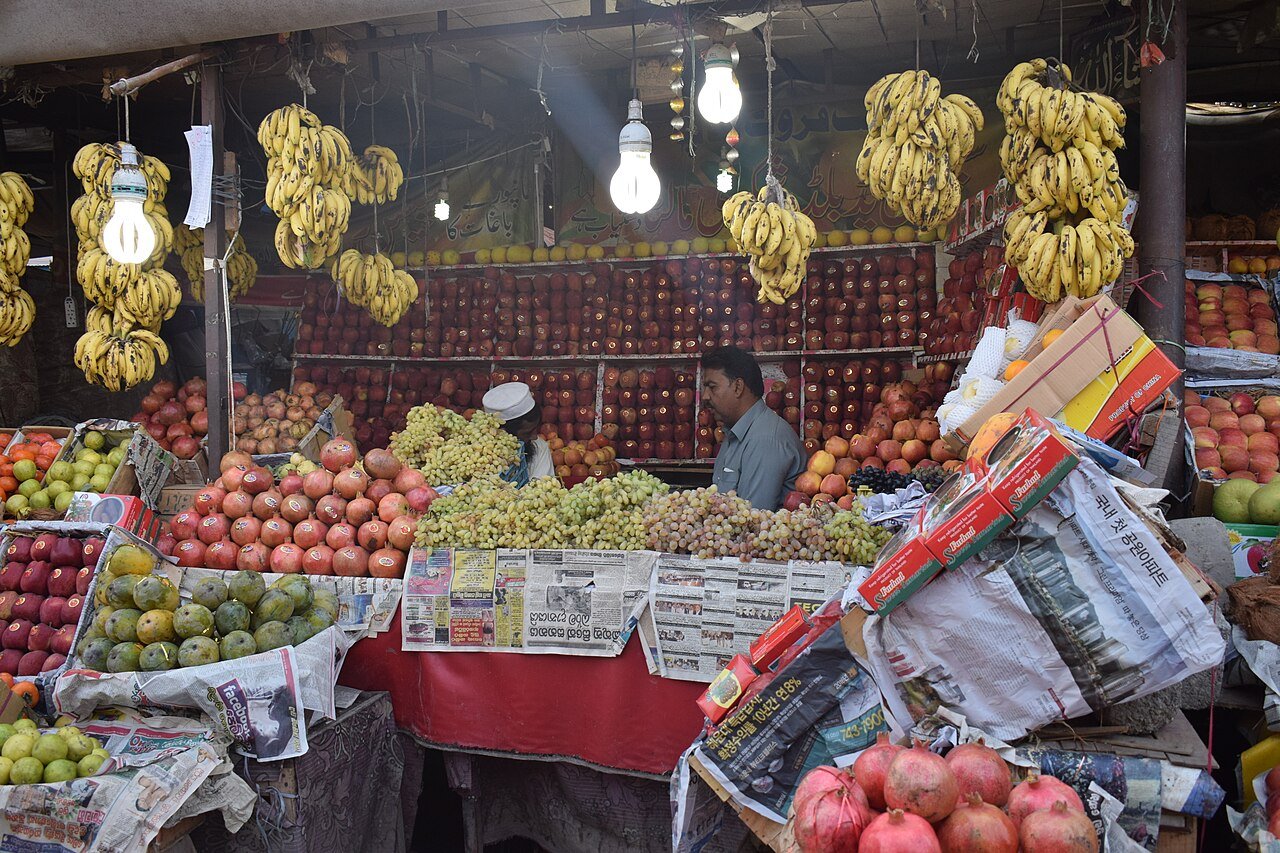
The association’s chief patron, Waheed Ahmed, told the AFP news agency that total mango exports were expected to shrink by around 30,000 tonnes from last season, to about 80,000 tonnes. The problem, he said, was not one market but the whole map: “Almost 80 per cent of mango export is to the Gulf region, Iran and Afghanistan.”
Every one of those routes was hit at once. “The border to Afghanistan is closed, there is war in Iran… there is war in the entire Middle East,” Ahmed said. Afghanistan, which bought 23,403 tonnes of Pakistani mangoes in 2025, recorded no official imports at all in 2026, according to Department of Plant Protection data.
The exporters welcomed the preliminary ceasefire agreement between the United States and Iran, but Ahmed was blunt that it had come too late for this season: the outlook remains uncertain, he said, and it “won’t change the losses incurred this season.”
Freight costs rose fivefold

Even where buyers were still willing, getting the fruit to them became far more expensive. Shipping a 25-tonne container of mangoes cost around $1,400 last year, Ahmed said. This year the same freight cost $6,000 to $7,000 — roughly five times as much.
The jump reflects longer, rerouted journeys as the Afghanistan corridor closed and shipping through the Gulf became more expensive and less predictable. With margins already thin on a perishable fruit, many exporters simply could not make the numbers work, and shipments that would normally have gone out stayed home.
The domestic market could not take up the slack. Pakistan’s inflation rate leapt to 10 per cent in the three months after the conflict began, up from 5.5 per cent in the July-to-February period, according to a government survey — leaving households with less to spend on fruit that is, for many families, a seasonal luxury rather than a staple.
A smaller crop to begin with
The trade shock landed on a crop that was already smaller than usual. Unusually hot weather in February, followed by cold and rainy conditions through March and April, damaged flowering across the orchards. Industry estimates put national production about 20 per cent below normal — around 1.5 million tonnes against close to 1.8 million tonnes in a normal year.
The federal Commerce Ministry responded by pushing the start of the export season back to 1 June, citing fruit-maturity and quality concerns. The exporters’ association had begun the season aiming high: a target of 125,000 tonnes of exports and earnings of $100 million, with about 70 per cent of shipments headed for Middle Eastern markets.
Neither target survived contact with the season. By August, Department of Plant Protection figures showed recorded shipments of just 44,882 tonnes for 2026 — against 132,587 tonnes in 2024 and 116,011 tonnes in 2025 — and the number of destination countries had shrunk from 77 to 34. Iran remained the largest single buyer, taking about 20,336 tonnes, followed by the United Arab Emirates with 10,068 tonnes and Oman with 6,359 tonnes.
What the industry wants now
Exporters say the season’s losses point to problems that go beyond one bad year. Industry sources cited in the trade press blame gaps in cold-chain facilities, the cost and difficulty of certification, weak market development and thin trade diplomacy — the unglamorous infrastructure that decides whether a perishable fruit can reach a distant buyer in saleable condition.
Their asks are practical: government support for air freight, better compliance with international sanitary and phytosanitary standards, upgraded cold-chain infrastructure, and diplomatic work to restore access to lost markets. The association also wants new buyers beyond the narrow Gulf–Iran–Afghanistan corridor that currently absorbs four-fifths of shipments, so that a crisis in one region cannot again wipe out a third of the trade.
For now, the orchards are quiet. The 2026 harvest closed in September, and the next crop in Multan opens in mid-June 2027. Growers and exporters have seven months to fix what this season exposed — and a 36 per cent fall to make up for when the fruit returns.
Related Posts
 BusinessThar Coal Mining Shifts from Diesel to National Grid by April 2028
 BusinessPM Shehbaz Announces Rs400 Billion Tax Relief and Major EV Push
 BusinessRoshan Digital Accounts Near One Million as Overseas Pakistanis Send $274 Million in October
 BusinessPakistan Targets Rs2 Trillion in SME Financing by June 2028 as Export Finance Scheme Rises to Rs1.5 Trillion
 BusinessPakistan Finalises Plan for 16 LNG Cargoes to Keep Gas Flowing Through Winter
Most Popular
 How-ToPTA Tax Calculator 2026: Check Mobile Tax on Any Phone420 views
 Pakistan NewsPIA Boeing 787 Lease Deal: What It Means for the Airline396 views
 Canada JobsTech Jobs in Canada: Roles, Salaries, and Skills Needed392 views
 SportsUEFA Champions League 2026-27: Format, Teams and Schedule389 views
 TechnologyPM Shehbaz Sets November Deadline for Alibaba AI and Digitalisation Projects in Pakistan369 views
 ShowbizWomen’s Fashion in Pakistan 2026: Trends, Brands and Style Guide366 views