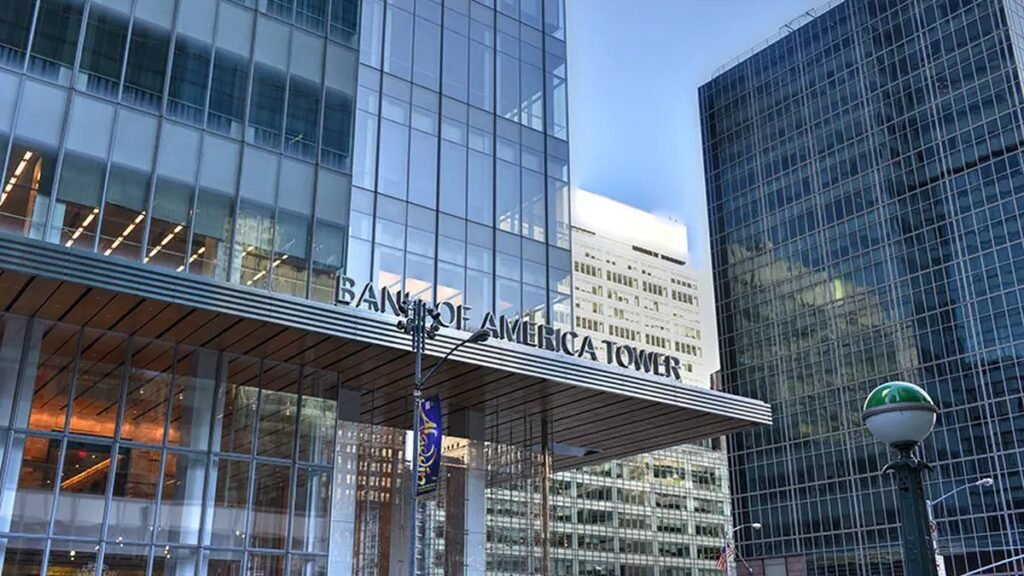
Bank of America Anthropic Flaws: Bank Hires 1,000 Contractors to Fix AI System
Bank of America has hired 1,000 contractors to fix flaws in an Anthropic-built AI system known internally as “Mythos,” according to reports this week — an extraordinary human intervention that underscores how seriously the financial industry takes AI reliability. The Bank of America Anthropic flaws episode is one of the largest known remediation efforts for a deployed AI system in banking, and it lands at a moment when lenders are racing to put artificial intelligence at the centre of their operations.
The contractors have reportedly been tasked with reviewing and correcting the AI system’s outputs — a labour-intensive quality-control operation that suggests the flaws were significant enough that automated fixes alone could not be trusted. Neither Bank of America nor Anthropic has publicly detailed the nature of the problems.
What Is Anthropic’s “Mythos” System?
While full details remain undisclosed, “Mythos” is understood to be an AI system built on Anthropic’s Claude models and deployed inside Bank of America’s operations. Large banks are currently embedding AI assistants across customer service, document processing, fraud detection, compliance review and internal knowledge search. The Bank of America Anthropic flaws came to light as the system was being scaled — the point at which edge cases and errors that are invisible in pilots become impossible to ignore.
Anthropic, the AI lab behind the Claude family of models, has positioned itself as the safety-conscious alternative in the AI race, and counts major enterprises and governments among its customers. A high-profile remediation effort at one of America’s biggest banks is therefore uncomfortable — though analysts note it also demonstrates a mature approach to AI deployment: find the problems, then fix them thoroughly.
Why Banks Cannot Tolerate AI Errors
The Bank of America Anthropic flaws matter because banking has almost no tolerance for the failure modes that AI systems are famous for. A chatbot that “hallucinates” — confidently inventing facts — is an amusing curiosity in a consumer app; in a bank, it can mean wrong balances, mis-stated disclosures, flawed compliance filings or misdirected customer funds. Regulators treat such errors as operational risk, and the penalties can be severe.
This is why banks are among the most demanding enterprise AI customers. They require audit trails, human-in-the-loop controls for consequential decisions, extensive red-teaming, and continuous monitoring. The decision to bring in 1,000 contractors suggests Bank of America discovered a class of errors systematic enough to need human review at scale — the AI equivalent of a product recall.
The Bigger Picture: AI Reliability in 2026
The Bank of America Anthropic flaws story arrives in a year full of AI growing pains. CoreWeave’s bond distress has investors questioning AI infrastructure economics; eight US states are suing OpenAI over safety and copyright; Meta has admitted its smart glasses recorded conversations without a wake word. The pattern is consistent: AI capabilities are advancing faster than the operational discipline around them.
For Pakistan’s banking sector — where institutions from large commercial banks to fintech startups are piloting AI for customer service and credit assessment — the lesson is direct. AI deployment in finance is not a matter of switching a model on; it requires the same governance, testing and human oversight as any other critical system. The banks that invest in that discipline early will have the advantage.
What Happens Next
Analysts expect Bank of America to complete the remediation over the coming months, with the contractor workforce likely scaling down as fixes are validated. The longer-term question is whether the industry develops better tooling for catching AI errors before deployment — automated evaluation, formal verification of critical outputs, and stronger guardrails — so that thousand-person cleanup crews become unnecessary.
Anthropic, for its part, continues to grow at a remarkable pace, with reported quarterly revenue reaching $16.8 billion ahead of a potential IPO. Enterprise trust is the foundation of that growth, which makes resolving the Bank of America Anthropic flaws quickly and transparently a commercial imperative as well as a technical one.
Frequently Asked Questions
What are the Bank of America Anthropic flaws?
Reported flaws in “Mythos,” an Anthropic-powered AI system deployed at Bank of America, serious enough that the bank hired 1,000 contractors to review and correct the system’s outputs. The exact nature of the flaws has not been publicly disclosed.
Why hire 1,000 contractors instead of fixing the AI?
Some classes of AI errors need human judgement to identify and correct reliably. A large contractor workforce allows systematic human review of outputs at a scale that automated methods could not yet guarantee — essentially a quality-control operation for AI.
Does this mean AI is unsafe for banking?
Not necessarily — it means AI in banking needs rigorous governance. Banks already apply heavy controls to all critical systems; the incident shows those controls working as intended, catching problems before they caused customer harm.
What is Anthropic’s “Mythos”?
An internal AI system at Bank of America built on Anthropic’s Claude models, reportedly used in banking operations. Public details are limited.
Related Posts
 TechnologyEasypaisa Reportedly Fires Around 30 Employees Over Aggregator Account Irregularities
 TechnologyPakistan Mobile Phone Production Falls 20% in September Despite Strong Monthly Recovery, PTA Data Shows
 TechnologyLUMS Is Building an Industrial AI Lab to Train Engineers for the Factories of the Future
 TechnologyPTCL Appoints Amad Khan as Chief Marketing Officer — Who He Is and What He Will Lead
 TechnologyHackers Turn Supermarket Freezers Into 50°C Ovens Across Europe in Second Cyberattack Wave
 TechnologyVivo V80 Coming to Pakistan This Month: IP69 Rating, 144Hz AMOLED, 7200mAh Battery
Most Popular
 How-ToPTA Tax Calculator 2026: Check Mobile Tax on Any Phone394 views
 Pakistan NewsPIA Boeing 787 Lease Deal: What It Means for the Airline379 views
 SportsUEFA Champions League 2026-27: Format, Teams and Schedule372 views
 Canada JobsTech Jobs in Canada: Roles, Salaries, and Skills Needed353 views
 SportsBallon d’Or 2026: London Ceremony, Nominees and All-Time Records Ahead of 70th Anniversary334 views
 ShowbizWomen’s Fashion in Pakistan 2026: Trends, Brands and Style Guide331 views


One comment