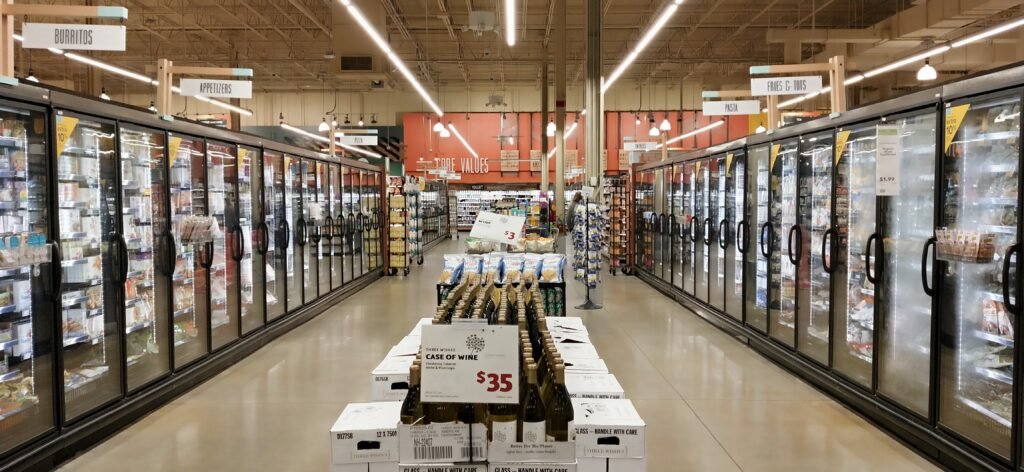
Hackers have done it again — and this time they turned supermarket freezers into ovens. In the early hours of Monday, 2 November, cyberattackers seized control of refrigeration systems at supermarkets across at least seven European countries, remotely forcing temperatures inside fridges and freezers up to a scorching 50°C (122°F). Mountains of fresh and frozen food had to be thrown away, and investigators say this is the second coordinated wave of its kind in three weeks — with no group yet claiming responsibility.
The attack struck stores in Belgium, Sweden, the Netherlands, Luxembourg, Estonia, Denmark and Finland, with retailers in Ireland also reporting compromised units, according to TechJuice’s report on the incidents. Affected chains include Ahold Delhaize — which confirmed an IT incident at dozens of its Delhaize stores in Belgium and Luxembourg — plus Carrefour, Spar, Colruyt, Sweden’s ICA and Coop, and Ireland’s SuperValu, where 13 of the chain’s 223 stores had a specific refrigeration model compromised.
One ICA branch in Sjöbo, southern Sweden, posted a notice for shoppers stating plainly that its freezers had been hacked and dialled up to 50°C. The store’s manager, Rickard Nilsson, told Swedish newspaper Aftonbladet that the team could not regulate the temperature at all: hot air was getting into the freezers and everything was ruined.
At a Delhaize store in Hoeilaart, Belgium, management told Het Laatste Nieuws it had to bin €100,000 worth of food — losses that are being repeated, on smaller and larger scales, at hundreds of stores.
How the Hack Worked: Freezers Forced Into Defrost Mode

The attack did not involve breaking glass or cutting power. It was carried out remotely, through the very internet connections supermarkets use to monitor their refrigeration. Modern commercial fridges and freezers are connected to the internet so that contractors and technicians can check temperatures, tune setpoints and log compliance records without visiting the store.
According to Digital Trends, citing the BBC and Reuters, the attackers exploited refrigeration controllers made by Danish firm Danfoss — widely used across Europe — and forced the units’ evaporators into continuous defrost mode. Defrost mode is normally a short, controlled warming cycle that melts ice build-up; held open indefinitely and driven remotely, it turned the cabinets into ovens.
In the Netherlands, a Danfoss spokesperson said the refrigeration systems of at least 17 companies were tampered with during the night’s attack and their temperature settings changed. Belgian refrigeration company Sabcobel, which works with Delhaize systems, confirmed the method directly: its CEO said hackers switched evaporators to defrost mode, and technicians began mobilising at 1 a.m. to disconnect affected units.
Critically, the attackers did not need sophisticated malware — Danfoss said the Dutch units that were hit were not on a protected network and were still using their factory default passwords. The hackers reportedly issued normal administrative defrost commands through supervisory web interfaces that were left exposed to the internet.
The October Attack on France: 700 Stores, Then Fires

What makes the 2 November wave so alarming is that it followed an almost identical blueprint used three weeks earlier. On the night of 11–12 October, hackers seized control of cooling units at hundreds of supermarkets across France, pushing some as high as 50°C. Major retailers were hit, including Intermarché, Coopérative U and E.Leclerc.
The Paris prosecutor’s office called it a “large-scale” attack, received around 10 complaints, and estimated the number of victims at about 700.
The October attack was destructive in ways that went beyond spoiled food: staff at some Paris supermarkets threw boxes of perished meat into giant containers, and some stores reported fires triggered by overheating equipment as compressors ran away thermally. The CEO of Coopérative U called the incident “extremely serious and unprecedented,” and French prosecutors opened a cybercrime case.
Computer emergency response teams issued warnings — France’s CERT-FR on 12 October and Belgium’s Centre for Cybersecurity on 13 October — urging retailers to disconnect vulnerable equipment from the internet. Clearly, not everyone did.
Millions in Losses and a Warning From Brussels

The financial damage is mounting. The October wave alone is estimated to have cost tens of millions of euros in direct stock and business losses, and the second wave — hitting at least seven countries at once — will add substantially to that bill.
European Commissioner for Agriculture Christophe Hansen publicly condemned the attack, calling it an attack on food products directly; as one expert put it via El País, “the weaponisation of food has become a reality.”
National investigators are scrambling. John Billow, head of Sweden’s national cybersecurity centre, told Reuters that investigators were working to address the incidents nationwide. And the problem may not be confined to Europe: Digital Trends reports that the Pentagon is taking a second look at refrigerators that failed at several US military bases this summer, with suspicion that hackers may have been involved there too.
A Security Failure Nobody Should Be Surprised By

Security experts say the attacks expose a fundamental vulnerability in how industrial equipment is connected. Internet-exposed control systems, default passwords that were never changed, and older units that vendors can no longer patch — the same combination showed up in both waves. The warnings were issued publicly three weeks ago, yet the second wave used the same Danfoss technology against stores that had still not secured it.
For shoppers, the good news is that the spoiled food is being binned, not sold — it should not reach anyone’s cart. But the incident is a demonstration of how digital threats increasingly reach into everyday life, as the European Commission put it.
A freezer, it turns out, is a computer with a cooling system — and if it is connected to the internet with a default password, someone on the other side of the world can turn it into a 50-degree oven. The question investigators cannot yet answer: who is behind it. As TechJuice’s report notes, no group has claimed responsibility for either attack — and that silence is, for security services across Europe, the most unsettling part of all.
Related Posts
 TechnologyPTA to Inspect Telecom Networks on Thursday as Operators Reportedly Boost Signals Ahead of Visit
 TechnologyGoogle Tells Schools: Opt Out of AI and Lose Search Too
 TechnologyAirlink AirV Electric Bikes Launched in Lahore: 11 Models, Six Series, Up to 200 km Range
 TechnologyBitMart Hack: Crypto Exchange Confirms $391,000 Breach 53 Minutes Before $49M Mercado Bitcoin Heist
 TechnologySBP Starts Mojaloop Training for Pakistani Payment Developers — 16-Week Open-Source Course Opens
 TechnologyPakistan Calls Out Tech Giants’ “Algorithmic Power” at the UN, Demands Accountability
Most Popular
 How-ToPTA Tax Calculator 2026: Check Mobile Tax on Any Phone407 views
 Pakistan NewsPIA Boeing 787 Lease Deal: What It Means for the Airline384 views
 SportsUEFA Champions League 2026-27: Format, Teams and Schedule377 views
 Canada JobsTech Jobs in Canada: Roles, Salaries, and Skills Needed365 views
 SportsBallon d’Or 2026: London Ceremony, Nominees and All-Time Records Ahead of 70th Anniversary339 views
 ShowbizWomen’s Fashion in Pakistan 2026: Trends, Brands and Style Guide339 views