
AI Pakistan 2026: Policy, Startups and Jobs — Complete Guide
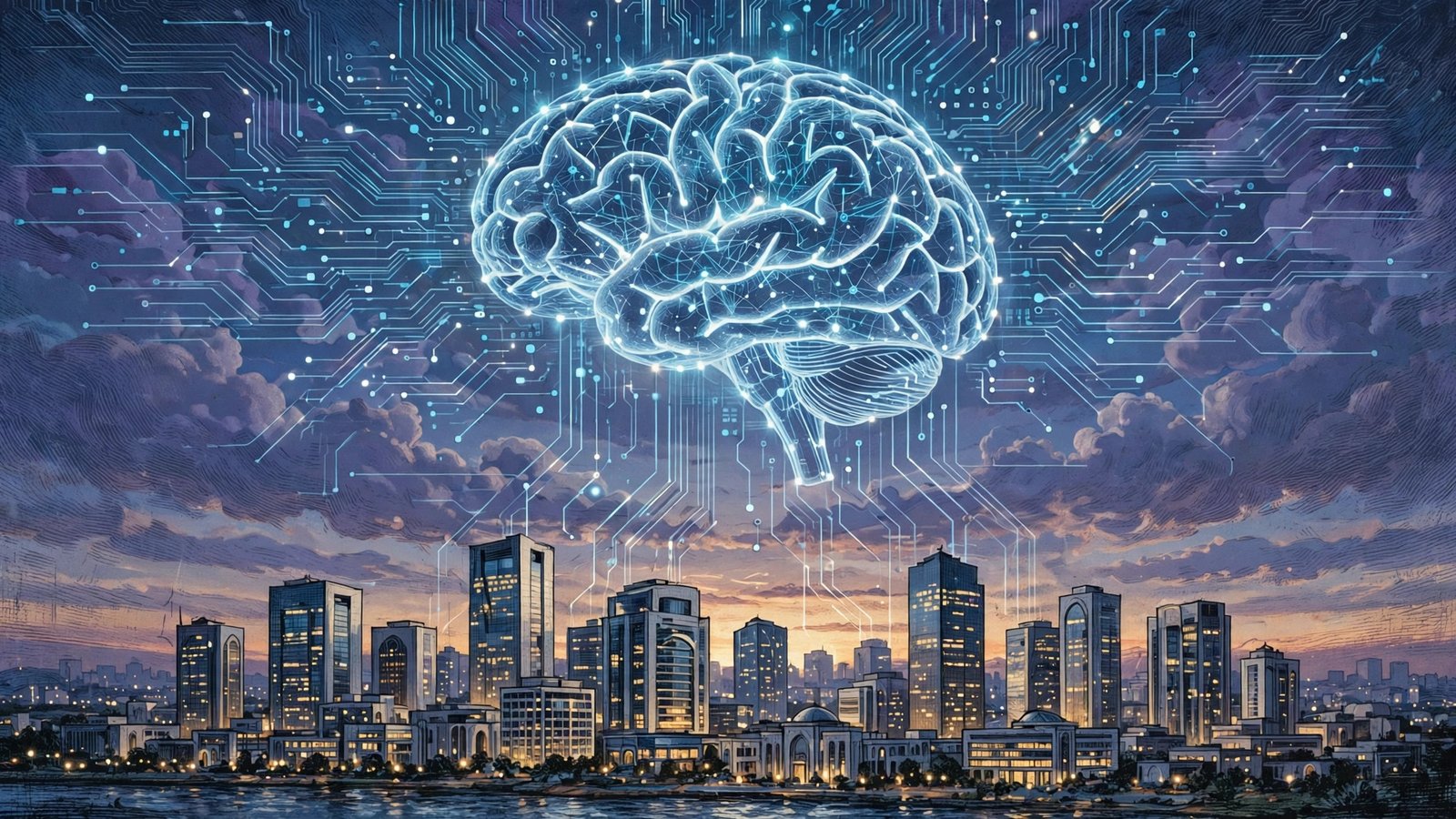
Artificial intelligence is quickly becoming one of the biggest technology stories in the country, and the picture of AI Pakistan 2026 looks very different from anything we have seen before. In July 2026, the Ministry of Information Technology and Telecommunication launched the National AI Advancement Initiative (NAAI), a nationwide programme to incubate hundreds of AI startups. On top of that, a Rs. 283 billion AI ecosystem plan running from 2026 to 2031 was announced, aiming to bring AI into healthcare, agriculture, education and public services. If you are a student, a founder, or simply curious about where technology jobs are heading, this guide explains what is actually live and what it means for you.
AI Pakistan 2026: The National AI Advancement Initiative and Seven Hubs
The centrepiece of AI Pakistan 2026 policy activity is NAAI, the implementation arm of the National AI Policy. Its headline feature is a network of seven AI hubs located in Islamabad, Lahore, Karachi, Peshawar, Quetta, Muzaffarabad and Gilgit — a deliberate attempt to spread opportunity beyond a single city. Each hub is planned to provide modern office space, high-speed internet, collaboration areas, mentorship and dedicated workspaces for startup teams.
The numbers behind NAAI are ambitious: 560 AI startups are to be incubated over two years, with each hub inducting around 20 startups per cohort and running two cohorts a year. In parallel, the initiative promises non-dilutive seed grants for 150 founders — money that does not cost the recipient any equity, which is a materially better deal than standard accelerator terms. According to reports, the ministry has issued a request for proposals for a single operator or consortium to design, build, operate and sustain all seven centres under a performance-based two-year contract.
Startups in these hubs are meant to concentrate on practical, sector-specific AI applications rather than generic research. The stated priority areas are healthcare, agriculture, education, fintech, public-sector governance and smart cities. For founders, AI Pakistan 2026 therefore offers a much more concrete support structure than anything that existed in earlier years. To understand the basics behind the technology driving all of this, see our beginner’s guide on what artificial intelligence is.
The Rs283 Billion AI Ecosystem Programme
Beyond NAAI sits an even larger proposal: a National AI Ecosystem Development Programme with a projected outlay of Rs. 283 billion through 2031, of which an initial Rs. 185 million was earmarked for FY2026-27. The stated objectives include economic transformation through AI adoption across sectors, support for AI startups and innovation, sector-specific modernisation of public services and industry, and the development of AI governance and ethical frameworks.
A strategic funding window is proposed under the programme to respond quickly to emerging opportunities and challenges. Observers note that while the programme signals serious intent, the key test will be execution — translating allocations into working infrastructure, working data, and working products. For more on the programme’s details, read this report on the Rs283bn AI ecosystem plan.
AI Startups in Pakistan: What Is Changing
For founders, AI Pakistan 2026 brings a clearer runway than before. The NAAI model explicitly targets commercialisation: the hub operator is expected to run AI boot camps, accelerator programmes, thematic hackathons and mentoring networks, and to connect founders with venture capital firms, incubators and technology companies. There is also an explicit mandate to include women and founders from rural communities, addressing two groups that have historically been under-represented in the tech ecosystem.
The legal environment is still evolving. As of 2026 there is no single dedicated AI statute; the relevant framework combines the national AI policy work led by MoITT, PECA provisions on electronic offences and data handling, PTA regulation of communications services, SECP company-law requirements and SBP guidance for financial-services applications. Investors are being advised to confirm data-protection obligations against official portals, since dedicated legislation has been under development.
AI Jobs in Pakistan and Capacity Building
The government has also committed to large-scale capacity building as part of AI Pakistan 2026 planning. Commitments announced around the Indus AI Week 2026 included 1,000 PhD scholarships in AI and training for one million non-IT professionals to raise national productivity. A partnership with the DFINITY Foundation added 1,500 licences for the Caffeine AI platform, aimed at letting government officials, academia and startups build production-ready applications using natural-language prompts.
For students and professionals wondering about careers, building hands-on familiarity helps — see our roundup of AI tools for work and study. The direction of travel is clear: roles combining domain knowledge (healthcare, agriculture, finance) with AI literacy are likely to grow fastest. Keep an eye on hub cohort announcements and the seed-grant application windows, since fast-moving government initiatives can change details between announcement and rollout. See TechJuice’s coverage of the NAAI seven-hub launch for the latest status updates.
What This Means for Ordinary Pakistanis
Even if you never found a startup, the AI wave will touch daily life through AI-assisted healthcare diagnostics, smarter agricultural advisory services, AI tutors in classrooms and more efficient government services. The promise of AI Pakistan 2026 is that these benefits arrive through locally built products rather than only imported ones. The risks — data privacy, misinformation, job displacement in routine roles — will need the governance frameworks the government has promised to develop. The next two years of hub operations will show whether the ambition matches the delivery.
FAQs
Q: What is the National AI Advancement Initiative (NAAI)?
A: It is MoITT’s implementation programme under the National AI Policy, launched in July 2026, establishing seven AI hubs across Pakistan to incubate 560 startups over two years and disburse non-dilutive seed grants to 150 founders.
Q: Where are the seven AI hubs located?
A: The hubs are planned for Islamabad, Lahore, Karachi, Peshawar, Quetta, Muzaffarabad and Gilgit.
Q: What is the Rs283 billion AI programme?
A: It is the proposed National AI Ecosystem Development Programme running 2026 to 2031, intended to fund AI adoption across sectors, startup support, governance frameworks and a strategic funding window.
Q: Are there AI jobs available in Pakistan in 2026?
A: The government has committed to 1,000 AI PhD scholarships and training for one million non-IT professionals, alongside hub incubation programmes that are expected to generate startup and AI-sector jobs.
Q: Is there a dedicated AI law in Pakistan?
A: As of 2026, no single dedicated AI statute is in force; the framework combines the national AI policy, PECA, PTA regulation, SECP requirements and SBP guidance, with dedicated data-protection legislation under development.
Related Posts
 TechnologyRedmi K100 Launched in China: 10,000mAh Battery, Snapdragon 8 Elite and Prices From CNY 3,499
 TechnologyPM Youth Chromebook Scheme 2026: 500,000 Chromebooks Launched — Who Can Apply and How to Apply Online
 TechnologySUPARCO Opens UN Space Conference in Islamabad: Early Warning, Climate Action and Disaster Risk Assessment
 TechnologyApple’s New M6 MacBook Pro and iMac Are Here: Specs, Prices and 6 November Release Date
 TechnologyChrome’s emSign Root Removal Lands Today: What Pakistani Websites and Users Must Do
 TechnologyApple’s New OLED iPad Mini Is Here: A20 Pro Power, 8.5-Inch Display and a $699 Price Tag
Most Popular
 SportsBallon d’Or 2026: London Ceremony, Nominees and All-Time Records Ahead of 70th Anniversary290 views
 How-ToPTA Tax Calculator 2026: Check Mobile Tax on Any Phone289 views
 TechnologyRedmi K100 Launching on 28 October: 10,000mAh Battery, 185Hz Display and Full Specs267 views
 SportsUEFA Champions League 2026-27: Format, Teams and Schedule267 views
 TechnologyAround 20 Pakistani Tech Companies Showcase Innovation at TechCrunch Disrupt 2026 in San Francisco262 views
 Canada JobsTech Jobs in Canada: Roles, Salaries, and Skills Needed257 views


One comment