Solar Panels Pakistan 2026: Prices and Net Metering Guide
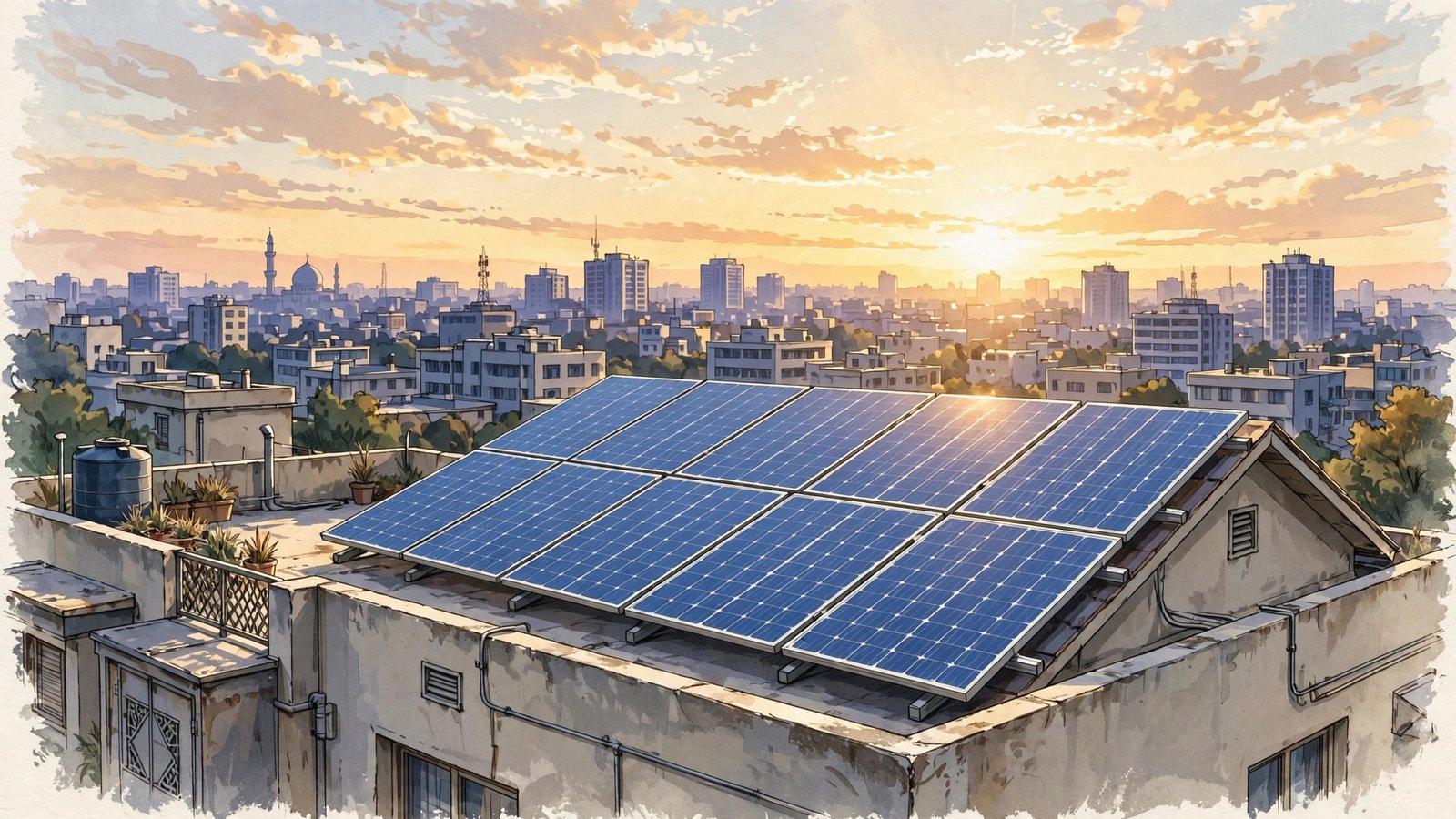
Rooftop solar has become one of the fastest-growing consumer energy choices in the country, and the market for solar panels Pakistan 2026 combines record-low hardware prices with a major policy change. In 2026, NEPRA’s prosumer regulations ended one-for-one net metering for new connections, replacing it with net billing — exported units are now bought at the national average purchase price instead of the old Rs. 27 per unit windfall. This guide covers current per-watt prices, system costs, brand choices and how the new rules change the maths. For rate tables, also see our solar panel prices 2026 guide.
Solar Panels Pakistan 2026: Per-Watt Prices and System Costs
Tier-1 N-type TOPCon panels now trade around Rs. 38–43 per watt (A-grade), with some trackers showing Rs. 37–46 per watt across brands like Jinko, Longi, JA Solar, Risen, Trina and Astronergy. Mono PERC sits around Rs. 33 per watt, and old 540–555W stock is being cleared at Rs. 28–38 per watt. Panels carry 10% sales tax on imports (the proposed rise to 18% did not happen) and no customs duty, while inverters carry 18%.
Complete on-grid system costs in solar panels Pakistan 2026 run roughly: 5 kW at Rs. 550,000–890,000 depending on equipment and source; 7 kW around Rs. 625,000; 10 kW around Rs. 850,000–1,500,000; 12 kW around Rs. 978,000; and 15 kW around Rs. 1,150,000. Hybrid systems with lithium battery storage add Rs. 150,000–400,000 depending on capacity — worth considering where load-shedding persists. A 585W Tier-1 plate currently costs about Rs. 22,500–25,500. See CheckPrice’s October 2026 solar price tracker for live rates.
The New Net Metering Rules
The headline change for solar panels Pakistan 2026 buyers is net billing. Under the old scheme, exported units were bought at around Rs. 26–27 per unit — a one-for-one windfall. Under the 2026 prosumer regulations, exported units are bought at the national average purchase price (around Rs. 10–13 per unit in practice), agreement durations are shorter, and NEPRA generation licences are now required for all systems. The old green meter cost around Rs. 35,000; new standard bi-directional meters cost around Rs. 46,000 and AMI smart meters around Rs. 70,000.
What changes practically? The payback period on oversized systems stretches — from 3–4 years to around 5–7 years in some analyses — which shifts demand to systems sized to match daytime use plus batteries. Existing net-metering consumers are protected: their current contracts are honoured and unaffected by the revised rates. Off-grid systems with batteries for homes, businesses and tube wells are completely unaffected. Read Oraan’s analysis of panel prices and the policy shift for deeper context.
Buying Tips for 2026
Choose A-grade documented panels with 25-year performance warranties — the Rs. 2–3 per watt saved on B-grade factory seconds is not worth the higher degradation over a 15–25 year life. Go Tier-1 N-type from established brands; confirm the net-metering application and AEDB approval are included in the installer package; get at least three quotations from registered installers, since quotes can differ by Rs. 60,000–80,000 on a 10 kW system; watch solar panel price trends before locking a quote, since solar panels Pakistan 2026 rates move with the dollar and stock cycles; and size the system to your daytime consumption rather than maximum roof space.
FAQs
Q: What is the solar panel price in Pakistan in 2026?
A: Tier-1 N-type panels cost around Rs. 37–46 per watt; a 585W plate runs about Rs. 22,500–25,500, and a complete 5 kW on-grid system costs roughly Rs. 550,000–890,000.
Q: What changed in the 2026 net metering policy?
A: New connections moved from one-for-one net metering to net billing — exported units are bought at the national average purchase price (around Rs. 10–13) instead of Rs. 26–27.
Q: Are existing solar users affected?
A: No — existing net-metering contracts are honoured and unaffected by the revised rates.
Q: What is the payback period now?
A: Roughly 3–5 years depending on your DISCO, consumption pattern and system size; oversized systems now take longer under net billing.
Q: Which brands are recommended?
A: Tier-1 N-type panels from Jinko, Longi, JA Solar, Risen, Trina and Astronergy, paired with hybrid inverters from Growatt, Deye, Solis or Huawei for battery readiness.
Complete Guide: Solar and Net Metering in 2026
Solar panels Pakistan 2026 remain one of the smartest household investments amid high electricity tariffs. Panel prices have fallen dramatically over recent years, shortening payback periods — but net metering policy changes mean you should verify current rules before investing.
Solar panel price in Pakistan 2026 and best panels
Solar panel price in Pakistan 2026 per watt is at historic lows, though tier-1 brands command a premium worth paying for warranty honour. The best solar panels Pakistan choices are tier-1 manufacturers with local warranty support — efficiency ratings matter less than the installer’s honesty about realistic generation. Get quotes from at least three installers and check their previous installations.
Net metering Pakistan procedure and 5kW system cost
The net metering Pakistan procedure involves applying through your DISCO (LESCO, IESCO, etc.), inspection, and installation of a bidirectional meter — the process takes weeks to months, so start early. Solar system cost 5kW Pakistan is the most common residential size, typically covering a medium household’s daytime needs. Size the system to your actual consumption from past bills, not the installer’s upsell.
Net Metering vs Gross Metering: What Changed
The solar panels Pakistan 2026 investment case depends heavily on net metering rules, which have evolved. Under classic net metering, exported units offset imported units generously; proposed shifts toward gross metering would change the economics. Before investing, confirm the current policy with your DISCO and read the latest NEPRA determinations — the payback calculation differs materially between regimes.
Choosing an installer
For solar panels Pakistan 2026, installer quality matters as much as equipment: proper mounting structure engineering (critical in high-wind areas), correct inverter sizing, neat DC wiring with protections, and honest generation estimates. Verify the installer’s previous work, insist on tier-1 panels with verifiable serial numbers, and get the net metering application handled professionally — paperwork errors cause the longest delays.
Related Posts
 TechnologyPakistan and China Launch Information Corridor (CPIC) in Islamabad: Four Pillars, Fact-Checking and What It Means
 TechnologyRedmi K100 Launched in China: 10,000mAh Battery, Snapdragon 8 Elite and Prices From CNY 3,499
 TechnologyPM Youth Chromebook Scheme 2026: 500,000 Chromebooks Launched — Who Can Apply and How to Apply Online
 TechnologySUPARCO Opens UN Space Conference in Islamabad: Early Warning, Climate Action and Disaster Risk Assessment
 TechnologyApple’s New M6 MacBook Pro and iMac Are Here: Specs, Prices and 6 November Release Date
 TechnologyChrome’s emSign Root Removal Lands Today: What Pakistani Websites and Users Must Do
Most Popular
 SportsBallon d’Or 2026: London Ceremony, Nominees and All-Time Records Ahead of 70th Anniversary290 views
 How-ToPTA Tax Calculator 2026: Check Mobile Tax on Any Phone290 views
 SportsUEFA Champions League 2026-27: Format, Teams and Schedule268 views
 TechnologyRedmi K100 Launching on 28 October: 10,000mAh Battery, 185Hz Display and Full Specs267 views
 TechnologyAround 20 Pakistani Tech Companies Showcase Innovation at TechCrunch Disrupt 2026 in San Francisco262 views
 Canada JobsTech Jobs in Canada: Roles, Salaries, and Skills Needed258 views