NCCIA Cyber Patrolling: 351 Held for Online Harassment of Women as 17 Monitoring Units Go Live
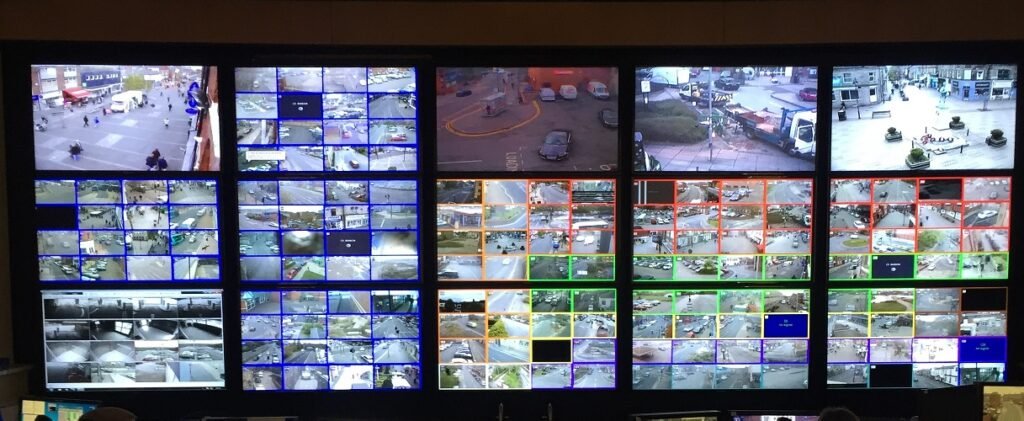
Pakistan’s NCCIA cyber patrolling operation has hit its stride: the National Cyber Crime Investigation Agency says it has arrested 351 suspects for allegedly harassing women on social media, as 17 dedicated cyber patrolling units now monitor online activity across the country. The figures, announced by Director General Syed Ali Nasir Rizvi on Thursday, mark the sharpest public escalation yet in the agency’s fight against online harassment, fake news and anti-state propaganda.
The announcement came with a striking demonstration of speed — and of how far the NCCIA cyber patrolling model has come. During a live E-Kachehri session, a school principal reported that one of her students was being blackmailed online — and the alleged harasser was arrested within 15 minutes, according to the agency’s statement carried by APP.
The 15-minute arrest: how the case unfolded

According to an NCCIA official quoted by APP on 29 October, the school principal told DG Rizvi during the E-Kachehri that a student was being blackmailed by a young man who had allegedly obtained her personal photographs. The agency moved immediately, and the suspect was in custody within 15 minutes of the complaint.
The episode was presented as proof that the NCCIA cyber patrolling system now responds in near real time. Rizvi said the agency had rebuilt its complaint pipeline so that citizens’ reports reach the concerned complaint cells without the delays that used to bury them — and that the turnaround is now being measured in minutes, not weeks.
17 cyber patrolling units, 147 cases, 351 arrests
The headline numbers behind this cyber patrolling units Pakistan push are the agency’s strongest to date. Rizvi confirmed that the 17 units, established to monitor social media activity and take action against online criminal offences, have so far registered 147 cases. In a separate count, 351 suspects allegedly involved in harassing women through social media have been arrested.
The units have been scaling up since early October, when the NCCIA first announced that cyber-patrolling teams were fully operational in all regions. By 25 October the agency said the teams were actively identifying illegal content, tracing IP addresses behind suspicious accounts, and blocking links and accounts involved in unlawful activity. Thursday’s figures show that machinery now producing results at volume.
What the units are watching — and how AI helps

Rizvi spelled out the monitoring brief: the NCCIA cyber patrolling units are watching for online harassment, fake news, anti-state propaganda, the circulation of obscene material and other cyber-related offences. Earlier briefings added that IP addresses of suspicious accounts are being traced to identify the people behind them, and that several accounts and links have already been blocked.
Technology is doing much of the heavy lifting. The agency says modern digital tools, including artificial intelligence, are being used to strengthen action against child sexual abuse material and other serious online offences, giving the NCCIA cyber patrolling operation a technical edge that manual monitoring could never match. It is the same AI-first posture the agency has shown elsewhere this month, as it expanded a cyber crime Pakistan social media awareness campaign to nine cities for students, journalists and the general public on 29 October.
20,000 complaint verifications in 42 days

Behind the arrests sits a complaint machine that has been running at full tilt. Rizvi said more than 20,000 complaint verifications had been carried out over the past 42 days, each followed by necessary action. The agency credits a restored end-to-end system for making sure reports actually reach investigators — a long-standing complaint from victims who said their cases vanished into bureaucratic silence.
For citizens, the front door remains the NCCIA helpline 1799, which the agency says is now fully operational across Pakistan. The helpline, alongside the NCCIA cyber patrolling units and the E-Kachehri complaint sessions, forms the three-layer intake the agency is counting on to keep cases moving.
What this means for social media users in Pakistan

The message to the public is unambiguous. Earlier this month the NCCIA warned users against posting anti-state content, sending threatening messages, harassing individuals online and publishing defamatory material — with an official’s pointed reminder that “you are not clicking alone.” The agency says anti-state posts, harassment and defamation can all trigger legal action under the law.
The crackdown lands alongside a broader tightening of the online space: the Islamabad High Court has separately ordered regulators including the NCCIA to report on online harassment enforcement, as covered in our report on the IHC’s orders to PTA, Pemra and NCCIA, while Pakistan moves toward activating a dedicated social media regulator, as reported here. The NCCIA online harassment arrests are the enforcement arm of that shift — and at 351 and counting, the numbers suggest the NCCIA cyber patrolling machine intends to keep scaling. For context on the earlier activation of the units, Tez Khabar’s report and TechJuice carried the initial announcements.
Related Posts
 TechnologyAlphabet Stock Crash: Google Parent Loses $500 Billion in Worst Single-Day Plunge in History
 TechnologySamsung Galaxy A08 Launched in India — Pakistan Price & Launch Expected
 TechnologyPolymarket Hack: $2.7 Million Drained in One Hour as Compromised DebugBear Script Halts Trading
 TechnologyPTA Announces 120-Day Tax-Free Mobile Registration for Overseas Pakistanis
 TechnologyBinance Hacked: Over $6 Billion Stolen in Biggest Crypto Theft in History
 TechnologyECP Proposes AI Labels, Deepfake Ban for Election Campaigns
Most Popular
 How-ToPTA Tax Calculator 2026: Check Mobile Tax on Any Phone324 views
 SportsUEFA Champions League 2026-27: Format, Teams and Schedule313 views
 SportsBallon d’Or 2026: London Ceremony, Nominees and All-Time Records Ahead of 70th Anniversary308 views
 Canada JobsTech Jobs in Canada: Roles, Salaries, and Skills Needed293 views
 Pakistan NewsPIA Boeing 787 Lease Deal: What It Means for the Airline292 views
 TechnologyRedmi K100 Launching on 28 October: 10,000mAh Battery, 185Hz Display and Full Specs286 views