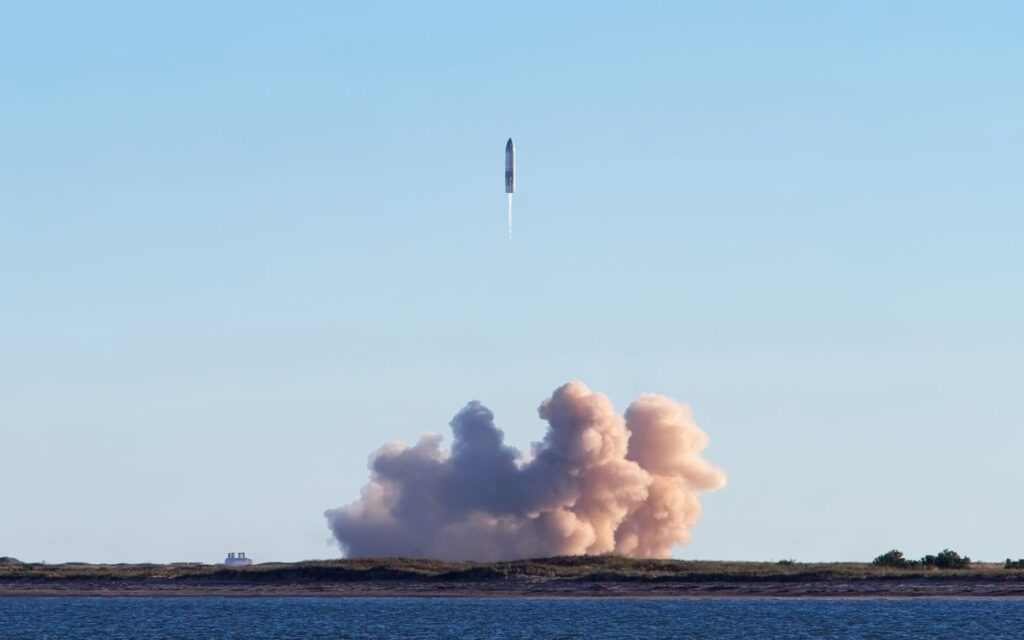
Pakistan’s first astronaut finally has a name. China’s space agency has confirmed that Wing Commander Muhammad Zeeshan Ali will fly aboard the Shenzhou-24 mission, which lifts off from the Jiuquan Satellite Launch Center in northwestern China at 5:18 AM Pakistan time on Wednesday, 25 November. The Zeeshan Ali Shenzhou-24 launch will make him the first Pakistani ever to travel to space — and the first foreign astronaut to board China’s Tiangong space station.
The China Manned Space Agency (CMSA) announced the three-person crew on Tuesday, ending months of speculation over which of Pakistan’s two trained pilots would get the seat. Commander Tang Hongbo will lead the mission, flight engineer Wu Yi will fly alongside him, and Zeeshan Ali will travel as a payload specialist, responsible for scientific experiments rather than flying the spacecraft. The agency said the crew is in good condition and launch preparations are complete.
The flight is the centrepiece of a space partnership between Pakistan and China that began with a training agreement in February 2025. Zeeshan Ali, a decorated pilot from the Pakistan Air Force, and Khurram Daud, a pilot from the Pakistan Navy, began astronaut training in Beijing in April at the China Astronaut Research and Training Center, where China’s own taikonauts prepare for orbital missions. One flies; the other serves as backup.
A week aboard Tiangong
The Shenzhou-24 spacecraft will ride a Long March-2F rocket into orbit and dock with the Tianhe core module of the Tiangong station, which has been permanently crewed since 2022. Zeeshan Ali is scheduled to spend about a week aboard the station, carrying out space science experiments alongside the station’s planned research programme, before returning to Earth aboard the Shenzhou-23 spacecraft, which is already docked at Tiangong.
The return arrangement is unusual, and it is what makes the short visit possible. One member of the outgoing Shenzhou-23 crew, Zhu Yangzhu, will remain aboard Tiangong for a further six months, completing China’s first year-long stay in orbit — which frees a seat on the returning spacecraft for the Pakistani visitor. During the handover, six people will be aboard Tiangong at once, the station’s design maximum.
Shenzhou-24 is the 41st flight mission of China’s crewed space programme and its 18th crewed flight. Pakistan’s national flower, the jasmine, features in the mission’s logo — a small, deliberate touch on a flight that both countries are presenting as a milestone in their cooperation under the Belt and Road Initiative.

From agreement to launch pad
The road to the launch pad has been short by space-programme standards, but every step was public. China and Pakistan signed the astronaut training and selection agreement in February 2025. The selection proceeded in three stages — preliminary screenings, secondary evaluations and a final round that concluded in April 2026 — and the CMSA formally announced the Pakistani payload specialist selection on 7 November.
The Shenzhou-24 crew completed a full launch rehearsal at Jiuquan on Sunday, with all three members finishing the required pre-flight procedures. The spacecraft and its Long March-2F rocket were moved to the launch area on 17 November. Planning Minister Ahsan Iqbal arrived in China on Monday to attend the departure ceremony, meeting the two Pakistani candidates at the launch centre before the announcement was made.
For Pakistan’s space agency, SUPARCO, the flight is the most visible moment in its history. The agency has run satellites and sounding rockets for decades, but it has never put a person in orbit — and until this week, it was not certain which of its two candidates would be the one to go.

What the flight means for Pakistan
The flight matters for reasons that go beyond a single week in orbit. Pakistan will become the first country in South Asia to send a citizen to a space station, and it will do so ahead of its regional rival: India’s first crewed mission under the Gaganyaan programme is not expected to launch before the second quarter of 2027. For a country whose space programme has long lived in the shadow of its neighbours, that timing is part of the story.
There is also a practical side. A payload specialist’s job is science, and the experiments Zeeshan Ali carries out aboard Tiangong will be chosen with Pakistani research institutions in mind — the kind of work that is impossible to do in a laboratory on Earth. The flight is short, but the data and the experience come home with him.
For now, though, the moment belongs to the countdown. At 5:18 AM tomorrow, a Long March rocket will carry three people toward Tiangong — and for the first time, one of them will be a Pakistani. Millions of people in Pakistan will be watching a launch that, until a few years ago, would have seemed out of reach.
Related Posts
 TechnologyIShowSpeed Beats GTA 6 in 52 Hours Without Sleep — Then Deletes His Own Save File
 TechnologyPTA Orders Mobile Operators to Fix Network Problems in Shorkot, Jhang, Shahpur and SahiwalTechnologyDucky Bhai Completes GTA 6 After 84-Hour Live Marathon on Ducky Reloaded
 TechnologyNCCIA Launches Cyber Safety Guide for Senior Citizens to Fight Online Scams
 TechnologyPakistan $2.5 Billion Tech Exports Target — New Mobile Manufacturing Policy Takes Shape
 TechnologySCICON 7.0: Sindh Urges 350+ Karachi Students to Prepare for an AI-Driven Future
Most Popular
 How-ToPTA Tax Calculator 2026: Check Mobile Tax on Any Phone421 views
 Pakistan NewsPIA Boeing 787 Lease Deal: What It Means for the Airline396 views
 Canada JobsTech Jobs in Canada: Roles, Salaries, and Skills Needed394 views
 SportsUEFA Champions League 2026-27: Format, Teams and Schedule390 views
 TechnologyPM Shehbaz Sets November Deadline for Alibaba AI and Digitalisation Projects in Pakistan370 views
 ShowbizWomen’s Fashion in Pakistan 2026: Trends, Brands and Style Guide366 views