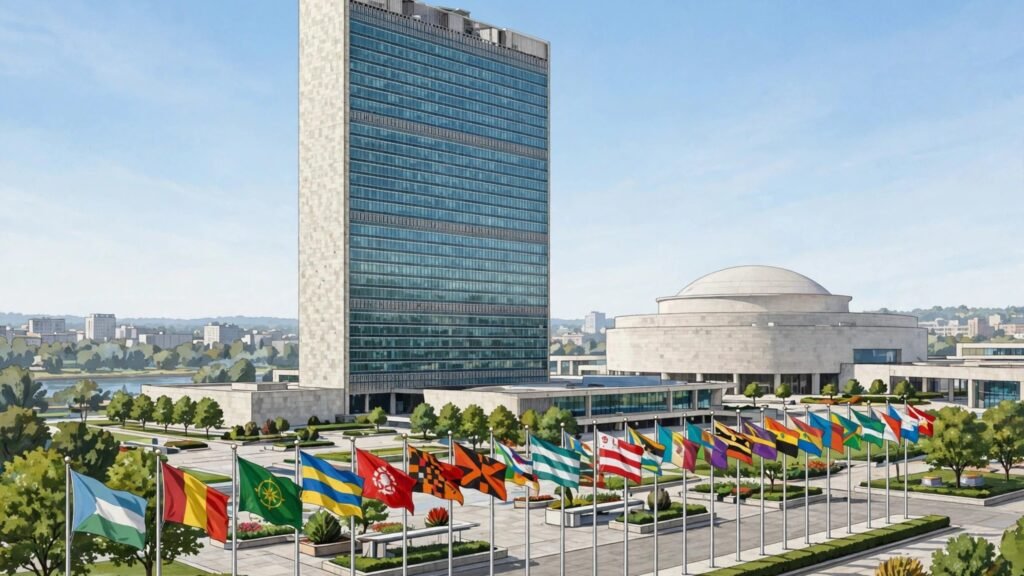
United Nations 2026: Key Resolutions and Pakistan’s Role
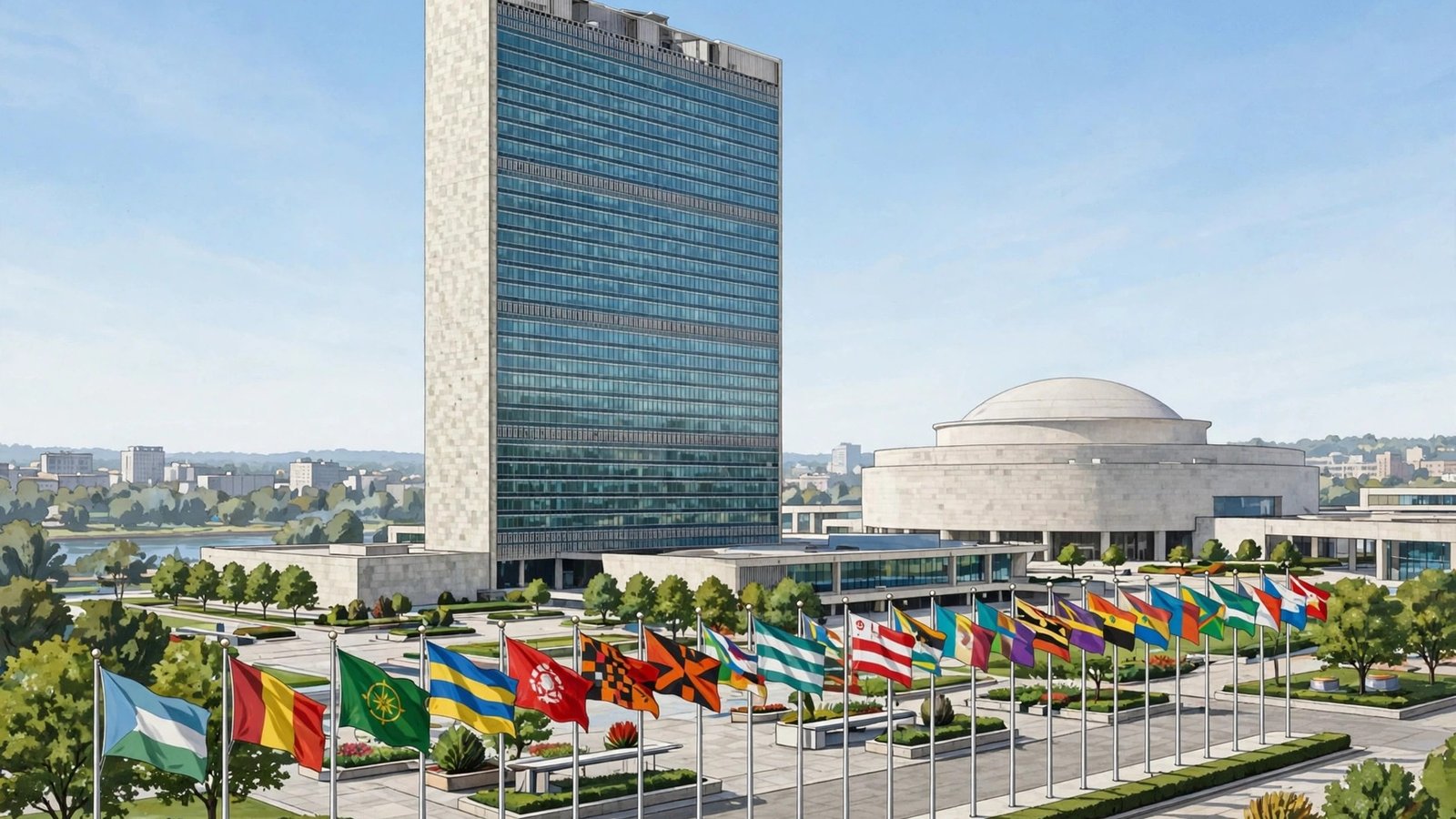
The United Nations in 2026 is under severe strain — wars grinding on across regions, the Security Council repeatedly deadlocked by the veto, and General Assembly resolutions struggling to turn words into action. Into this moment, Pakistan has pushed an unusually active diplomatic agenda at the UN in October 2026: a landmark water resolution, a reform campaign for a stronger General Assembly, and vocal positions on Syria, Gaza and the Congo. This guide explains the key UN 2026 developments and Pakistan’s role.
UN 2026 Water Resolution: Pakistan’s Diplomatic Win
On 7 October 2026, the UN Human Rights Council in Geneva adopted by consensus a resolution on the human right to safe drinking water and sanitation, introduced by Germany and Spain. All 47 members approved it. Pakistan played a decisive role in shaping the final text: Pakistani diplomats pushed for a clear reference to cooperation over shared, cross-border water resources — and kept it there despite reported Indian efforts to have the provision removed.
Pakistan’s First Secretary Adeel Khokhar told the council that countries sharing water resources share responsibilities, describing cooperation over shared waters as a responsibility rather than a favour between neighbouring states. For Pakistan, the language matters: the country has maintained that the Indus Waters Treaty remains a binding international agreement and has rejected attempts to place its obligations in abeyance, a position Deputy Prime Minister Ishaq Dar also pressed when he met UN Secretary-General António Guterres in Islamabad on 6 October.
Reform Push: A Stronger General Assembly
The UN 2026 reform debate arrives at a moment of acute institutional strain. Pakistan’s broader UN 2026 campaign is about institutional reform. During a General Assembly debate on revitalising the Assembly’s work in early October, Pakistan’s delegate — with the statement posted by the Permanent Mission on 8 October — argued that a revitalised General Assembly is essential to a revitalised United Nations, and that no organ should act beyond the limits of the Charter.
Islamabad’s concrete demands: a stronger Assembly role in peace and security when the Security Council is paralysed by the veto, a dedicated mechanism to monitor whether resolutions are actually implemented, and regular, detailed reporting from the UN Secretariat and the Security Council back to the Assembly. The push was reported by Dawn on 10 October 2026 and framed as the latest instalment of a campaign Pakistan has waged for decades — pressed with unusual intensity this year as wars grind on and the Council deadlocks.
Dar-Guterres Talks and Key Conflicts
On 6 October 2026, Deputy Prime Minister and Foreign Minister Ishaq Dar held wide-ranging talks with Secretary-General Guterres in Islamabad, covering Palestine, Jammu and Kashmir, Afghanistan, counterterrorism and the Indus Waters Treaty. Dar reiterated that the Kashmir dispute should be resolved in accordance with relevant UN Security Council resolutions. On 8 October, Guterres spoke at the Foreign Service Academy on “Strengthening Multilateralism in a Changing World,” praising Pakistan’s generosity, resilience and solidarity while warning of interlinked challenges — conflict, inequality, climate change and AI — and calling for a more representative, reformed UN.
The UN 2026 calendar has given Pakistan unusual visibility in New York and Geneva. Pakistan’s voice has been prominent in the Security Council as well. On 13 October, Permanent Representative Ambassador Usman Jadoon condemned Israeli military operations in Syria as violations of international law, demanded withdrawal from occupied territories including the Golan Heights, and cited Resolutions 338 and 497. On 14 October, Jadoon urged unified diplomatic action on the conflict in eastern Democratic Republic of the Congo, warning that fighting by the M23 and other armed groups, displacement, food insecurity and an Ebola outbreak demanded that diplomacy move from declarations to verifiable progress on the ground.
What Comes Next
For Pakistan, the UN 2026 wins — the water clause and the reform campaign — need follow-through into implementation. For Pakistanis following diplomacy, see World News 2026 and World News Today. The reform debate connects to the great-power standoffs covered in Trump 2026: Key US Policies and Global Impact and Xi Jinping 2026: China’s Key Policies and Global Role.
As AsiaOne News reported on 7 October 2026, Pakistan’s diplomacy kept the cross-border water cooperation clause in the adopted resolution — while WE News English carried Pakistan’s 8 October statement demanding a stronger Assembly role when the veto stalls the Security Council and a mechanism to track resolution implementation.
Frequently Asked Questions
What was Pakistan’s UN water resolution win?
The UN 2026 water resolution, adopted by consensus on 7 October, kept Pakistan’s clause on cross-border water cooperation in the final text, against Indian opposition.
What is Pakistan’s UN reform proposal?
A stronger General Assembly role in peace and security when the Security Council is veto-paralysed, plus a dedicated mechanism to monitor resolution implementation with regular Secretariat reporting.
What did Dar and Guterres discuss in October 2026?
Palestine, Kashmir, Afghanistan, counterterrorism and the Indus Waters Treaty, in Islamabad on 6 October 2026.
What did Pakistan say on Syria and the DRC?
On 13 October it condemned Israeli operations in Syria and demanded withdrawal from occupied territories; on 14 October it urged unified action on the eastern DRC conflict amid fighting and an Ebola outbreak.
Why does the UN 2026 reform debate matter?
With the Security Council deadlocked by vetoes on multiple conflicts, Pakistan argues the 193-member General Assembly must gain real muscle to act — or UN resolutions remain unenforced words.
Key Details: The UN and Pakistan in 2026
The UN 2026 agenda intersects Pakistan’s interests on Kashmir, climate finance, peacekeeping and development goals. This section covers United Nations Pakistan 2026 priorities, the UN General Assembly 2026 session, the Pakistan UN ambassador role, and key UN resolutions Pakistan follows.
United Nations Pakistan 2026 Priorities
United Nations Pakistan 2026 engagement centres on longstanding positions: the Kashmir dispute and relevant UN resolutions Pakistan cites, climate vulnerability and loss-and-damage finance, and Pakistan’s major troop contributions to UN peacekeeping. These themes recur in every Pakistani address at the UN General Assembly 2026 and shape the country’s multilateral diplomacy.
Pakistan UN Ambassador and Mission
The Pakistan UN ambassador in New York leads daily diplomacy — Security Council engagements, General Assembly negotiations and coalition-building with developing nations. Effective multilateral diplomacy is quiet work: resolutions negotiated, statements coordinated, votes secured. Pakistani readers following UN 2026 developments should watch the mission’s official briefings for substance beyond the annual General Assembly speech headlines.
Related Posts
 World NewsSaudi Arabia Executes Two Bangladeshi Nationals in Mecca; Bangladesh Says It Was Not Informed
 World NewsSaudi Defense Minister Meets UAE President in Abu Dhabi Amid Regional Tensions
 World NewsKatie Zacharia Fired After Five Days as White House Press Secretary
 World NewsStrait of Hormuz Closed: IRGC Declares Waterway Shut After Tanker Attacks
 World NewsEurope News 2026: Latest Headlines and Updates
 World NewsChina News 2026: Latest Headlines and Updates
Most Popular
 How-ToPTA Tax Calculator 2026: Check Mobile Tax on Any Phone138 views
 Canada JobsTech Jobs in Canada: Roles, Salaries, and Skills Needed115 views
 TechnologyTecno Mobile Prices in Pakistan 2026: Spark, Camon and Pova Series Compared108 views
 TechnologyRedmi K100 Launching on 28 October: 10,000mAh Battery, 185Hz Display and Full Specs104 views
 ShowbizWomen’s Fashion in Pakistan 2026: Trends, Brands and Style Guide97 views
 BISPPunjab Driving License Scam Alert: Fake Websites & “Without Test” Fraud | UrduPro93 views

One comment