Strait of Hormuz Closed: IRGC Declares Waterway Shut After Tanker Attacks
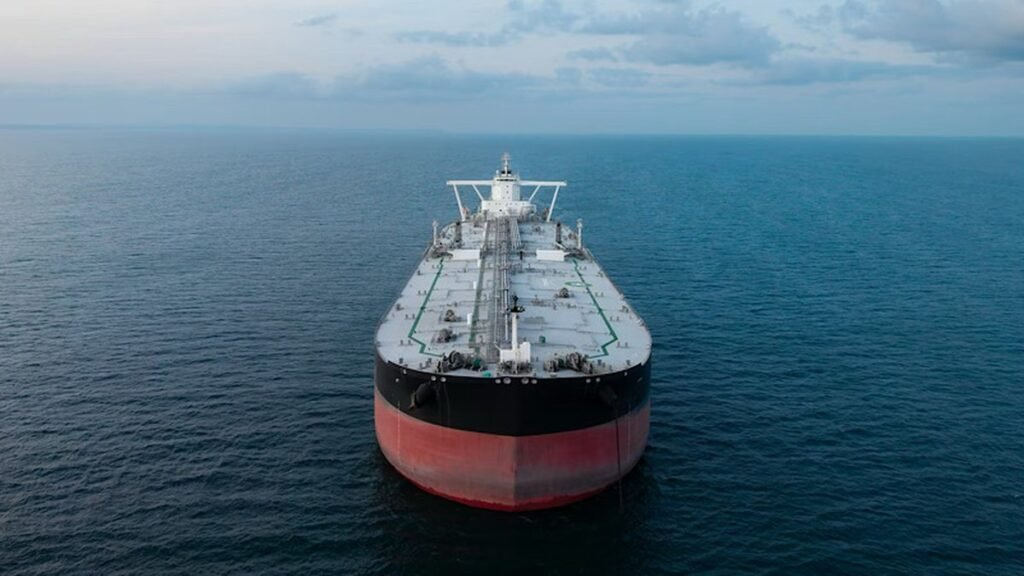
Iran’s Islamic Revolutionary Guard Corps Navy has declared that the Strait of Hormuz closed to unauthorised shipping, warning vessels against defying Iranian maritime regulations after a series of mine strikes on tankers in the strategic waterway. The announcement follows an attack on a supertanker carrying more than two million barrels of crude oil, which caught fire after striking a sea mine.
The declaration that the Strait of Hormuz closed marks a sharp escalation in the confrontation over one of the world’s most important energy chokepoints. The strait normally carries around a fifth to a quarter of the world’s seaborne oil trade, and its effective closure has already pushed Brent crude above $110 a barrel and sent shipping insurance costs soaring.
Strait of Hormuz Closed: What the IRGC Announced
In a statement carried by Iranian state media, the IRGC Navy said a supertanker attempting to transit through an unauthorised route struck a mine, triggering what it called a massive explosion and fierce fire. The IRGC claimed the vessel had deliberately switched off its positioning and radar systems to deceive Iranian maritime authorities and was travelling with the support of the US military.
“The Strait of Hormuz is closed, and the consequence of defying Iranian regulations in the Strait of Hormuz is burning in the fire of trust in the terrorist US army,” the IRGC Navy stated. The warning was directed at vessels attempting to rely on US military protection rather than coordinating with Iranian authorities. Iran has required permits and fees for passage through its Strait Authority since late February, when the waterway was effectively closed to normal commercial traffic.
Iran’s Fars news agency posted video appearing to show the vessel ablaze. The IRGC said the tanker was carrying more than two million barrels of crude oil. Independent verification of the vessel’s identity, flag and cargo was not immediately available.
Three Tankers Hit in Escalating Pattern of Attacks
The supertanker fire is the latest in a spate of mine strikes. According to maritime reports, at least two other tankers were reported hit off Saudi Arabia’s coast in the same period, according to the United Kingdom Maritime Trade Operations office. Earlier in the month, the Marshall Islands-flagged Suezmax tanker MT Valthera was struck in the strait, with all 11 Indian crew members reported safe, and the VLCC Angola Prosperity, owned by South Korea’s Sinokor, was also hit.
The International Maritime Organization recorded nine tanker attacks in the strait in the week of 28 September to 5 October, the highest weekly total since the confrontation began. A chemical tanker was separately struck by projectiles off Qatar, and the IRGC said it struck the LPG tanker NV Sunshine on 9 October for taking an unauthorised route, a claim that could not be independently verified.
A UAE-owned cargo ship caught fire and sank earlier in the week after being struck by a mine, while the Singapore-flagged container ship GFS Pride sank after being hit by a projectile, with its 21 crew members safely evacuated. The pattern of attacks has made commercial insurers treat the strait as effectively closed regardless of official declarations.
US Rejects Iran’s Claim as Oil Prices Surge
The US military has repeatedly pushed back on claims that the IRGC controls the strait, even as the Strait of Hormuz closed warning keeps commercial vessels and insurers on edge. Admiral Brad Cooper, commander of US Central Command, said US forces were working with regional allies and shipping industry partners to protect vessels, declaring: “The Strait of Hormuz is controlled by the United States and our regional partners, not Iran. It remains open for business.”
Despite the competing claims, the commercial reality is stark. With the Strait of Hormuz closed to normal commercial traffic, Kpler ship-tracking data put Hormuz crude exports at about 8.5 million barrels per day in the week to 7 October, roughly 40 percent below pre-crisis levels. VLCC freight rates on the Gulf-to-Asia route hit a record near $1.4 million per day as a ship-to-ship transfer system bypassing the strait strains vessel supply. Saudi Aramco is in talks to formalise long-term shuttle contracts built on that bypass system.
The Strait of Hormuz closed warning has fed directly into energy markets. Brent crude surpassed $110 a barrel, its highest level in five months, while US crude crossed $100 for the first time since September. The continued upward trend increases the likelihood of further interest rate rises by the Federal Reserve, with diesel futures also jumping sharply.
What the Standoff Means for Global Energy Security
The strait has been at the heart of tensions since late February, when US and Israeli strikes on Iranian sites prompted Tehran to close the waterway and lay mines. A US blockade of Iranian ports has been in force since July. President Trump said on 8 October that the US would not attack Iran before November’s midterm elections, that the blockade remains in force, and that oil is flowing through the strait — while rejecting Iran’s latest proposal to end the confrontation.
After declaring the Strait of Hormuz closed, Reuters reported, citing officials close to Tehran, that Iran plans to widen threats against ships using routes it has not authorised, including Omani-side channels and Gulf of Oman transfer points — a plan that could not be independently verified. The UN and maritime agencies have urged restraint, warning that a full closure would devastate the global economy.
For Pakistan and other energy-importing nations in South Asia, the disruption carries direct costs: higher crude prices feed into petrol, diesel and electricity tariffs, while shipping delays complicate trade. With the Strait of Hormuz closed and winter approaching in the northern hemisphere, demand for heating fuel adds further upward pressure on prices.
Frequently Asked Questions
Is the Strait of Hormuz closed?
Iran’s IRGC Navy has declared the strait closed to unauthorised vessels and requires permits and fees for passage. The US military disputes Iran’s control and says the waterway remains open, but commercial traffic is severely disrupted and insurers treat it as effectively closed.
How much oil passes through the Strait of Hormuz?
Before the crisis, about 20 to 25 percent of the world’s seaborne oil trade transited the strait. Ship-tracking data suggests flows are now roughly 40 percent below pre-crisis levels.
What caused the latest tanker fire?
According to the IRGC Navy, a supertanker carrying over two million barrels of crude struck a sea mine while attempting an unauthorised route with its tracking systems switched off. The claim could not be independently verified.
How does the Hormuz crisis affect oil prices?
The disruption has pushed Brent crude above $110 a barrel, its highest in five months. Higher crude prices raise petrol, diesel and shipping costs worldwide and increase pressure on central banks to keep interest rates elevated.