
Supreme Court of Pakistan 2026: Latest Judgments

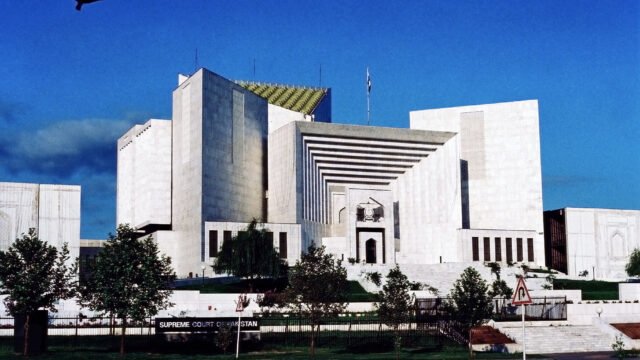
The Supreme Court Pakistan has delivered a series of significant judgments in October 2026, touching on blasphemy law, family law, criminal procedure and the investigative process in cases of violence against women. As of 15 October 2026, the apex court under Chief Justice Yahya Afridi continues to shape Pakistan’s legal landscape through rulings that balance statutory rigour with evolving judicial doctrine.
Supreme Court Pakistan: Blasphemy Case Verdict of October 2026
On 7 October 2026, a three-member Supreme Court Pakistan bench headed by Chief Justice Yahya Afridi and comprising Justices Shakeel Ahmad and Ishtiaq Ibrahim delivered its verdict in a long-running blasphemy case. The court dismissed the appeal of Qaiser Ayub, upholding his death sentence under Section 295-C of the Pakistan Penal Code, while acquitting his brother Amoon Ayub and ordering his immediate release.
The bench held that the prosecution had failed to establish Amoon Ayub’s personal involvement in the alleged offence, while proof of guilt was maintained against Qaiser Ayub. The judgment, authored by Justice Ishtiaq Ibrahim, noted that a 10-month delay in lodging the FIR — caused by jurisdictional confusion between the police and the FIA — did not adversely affect the prosecution’s case, since the complainant had submitted a written application immediately after the incident.
The court also reviewed the legal application of Section 295-C, describing the law as extremely comprehensive, so that any act of blasphemy committed through words, writing, pictures, gestures or insinuations could not escape punishment once the criminal act and sacrilegious intent were proven.
The Shiqaq Ruling: Strengthening Family Law
In a landmark family-law decision, a five-member appellate bench of the apex court headed by Justice Shahid Waheed held that a marriage can be dissolved on grounds of shiqaq — serious and continuing marital discord — even when legal cruelty is not proven. The ruling rests on the residuary provision of the Dissolution of Muslim Marriages Act, 1939.
The court held that family courts cannot automatically convert a wife’s suit for dissolution based on cruelty into a khula decree without her clear and voluntary consent, since such a conversion would require her to give up her dower — a result the court found unfair when she had not agreed to it. By recognising shiqaq under Section 2(ix) of the 1939 Act, the court allows a broken marriage to end without penalising the wife, reflecting Pakistan’s growing emphasis on fairness and lawful safeguards for women within the justice system.
The bench clarified that shiqaq is not established by everyday quarrels, short separations or general incompatibility: it requires a genuine, deep-seated and continuing breakdown where reasonable reconciliation efforts have failed.
Gender-Sensitive Investigations in Violence Against Women
In another October ruling, the Supreme Court Pakistan underscored that changing societal attitudes is insufficient to protect women from violence — investigations themselves must be conducted with a gender-sensitive approach. Justice Mohammad Hashim Khan Kakar, writing for a two-member bench, stated that police officers should receive training to recognise and overcome gender and patriarchal biases when investigating cases of violence against women.
The ruling emerged from a murder case but has broader implications. The court noted that bias in investigations can affect the search for truth even before evidence reaches judges, and stressed the need to avoid gender stereotypes during investigations into crimes against women. Domestic violence presents unique challenges, the court observed, since such crimes often occur behind closed doors, independent eyewitnesses are rare, and family members may be reluctant to testify.
Procedural Rulings: Merits Over Hyper-Technicality
The apex court has also reinforced a liberal approach to procedure this month. In a civil ruling delivered on 12 October 2026, a bench set aside lower court orders and allowed the amendment of a plaint at an advanced stage, holding that courts should avoid a hyper-technical approach when the amendment is necessary for a complete and effective adjudication of the controversy.
In a criminal ruling of 7 October 2026, the court restored a charge under Section 307 of the Pakistan Penal Code, holding that a charge cannot be quashed merely because injuries were sustained on non-vital parts of the body. The court observed that when victims raise their arms to defend their heads from lethal blows, resulting limb injuries do not negate the attacker’s original intent to kill — the act, coupled with the requisite intent or knowledge, fully justified the charge.
Authority of Apex Court Orders
In a judgment concerning the Illegal Dispossession Act, 2005, a two-member bench of Justices Jamal Khan Mandokhail and Malik Shahzad Ahmad Khan held that under Article 187 of the Constitution, the Supreme Court possesses authority to issue directions necessary for doing complete justice — an authority that obligates all executive and judicial authorities, including high courts throughout Pakistan, to comply with its directions.
What the Latest Supreme Court Pakistan Judgments Mean
Taken together, the October 2026 Supreme Court Pakistan rulings show an apex court active across the legal spectrum: upholding statutory severity in blasphemy cases, expanding protections for women in marriage and criminal investigations, and insisting that procedure serve justice rather than obstruct it.
For more context, read our coverage of Chief Justice of Pakistan Yahya Afridi and the Election Commission of Pakistan.
Frequently Asked Questions
What was the Supreme Court’s October 2026 blasphemy verdict?
A three-member bench led by CJP Yahya Afridi upheld Qaiser Ayub’s death sentence under Section 295-C but acquitted his brother Amoon Ayub for lack of proven personal involvement.
What is the shiqaq ruling?
The court held that a marriage can be dissolved for serious, continuing marital discord (shiqaq) under the 1939 Act even when cruelty is not proven, without forcing the wife to give up her dower.
What did the court say about investigations of violence against women?
Justice Kakar’s bench ruled that investigations must be gender-sensitive and that police should be trained to recognise and overcome gender and patriarchal biases.
Can plaints be amended at an advanced stage?
Yes — the court’s 12 October 2026 ruling allowed an amendment where it was necessary for effective adjudication, preferring merits over hyper-technicality.
Are all authorities bound by Supreme Court orders?
Yes. The court held under Article 187 that all executive and judicial authorities, including high courts, are bound to act upon apex court directions.
Supreme Court upholds death sentence in blasphemy case, acquits co-accused
Supreme Court shiqaq ruling on marriage dissolution
Related Posts
 Pakistan NewsKP Unveils Rs70 Billion Police Plan: 17,000 Vacant Posts to Be Filled, Faceless Anti-Terrorism Courts Planned
 Pakistan NewsPolio Drive Vaccinates 23.4 Million Children in Five Days as Campaign Enters Final Day
 Pakistan NewsPeshawar Lahore Direct Flights Resume on 9 November
 Pakistan NewsImaan Mazari, Hadi Ali Chattha Challenge 10-Year Sentences in Islamabad High Court
 Pakistan NewsRaiwind Ijtema 2026: First Phase Ends Today with Closing Dua as Lahore Roads Stay ClosedPakistan NewsBushra Bibi’s Eye Condition “Extremely Critical”, Lawyer Tells Islamabad High Court in £190 Million Case
Most Popular
 How-ToPTA Tax Calculator 2026: Check Mobile Tax on Any Phone419 views
 Pakistan NewsPIA Boeing 787 Lease Deal: What It Means for the Airline392 views
 Canada JobsTech Jobs in Canada: Roles, Salaries, and Skills Needed389 views
 SportsUEFA Champions League 2026-27: Format, Teams and Schedule386 views
 TechnologyPM Shehbaz Sets November Deadline for Alibaba AI and Digitalisation Projects in Pakistan367 views
 ShowbizWomen’s Fashion in Pakistan 2026: Trends, Brands and Style Guide361 views



One comment