The most famous unsolved problem in mathematics produced two rival answers in a single day — one written with the help of artificial intelligence, and one written entirely by a human. Then, within hours, the human proof ran into trouble.
On Friday, 20 November, Levent Alpöge, a mathematician at Anthropic, announced that he believed he had, working with the company’s AI model Claude, discovered a proof of the Riemann Hypothesis. The claim went further than the original 1859 problem: Alpöge said the same method also settled the Generalised Riemann Hypothesis, a broader statement covering a whole family of related equations.
Hours later, Stanford University answered with a proof of its own. Ravi Vakil, a Stanford professor and the current president of the American Mathematical Society, posted what he called a “hurried announcement” on his blog, sharing a draft proof of the Generalised Riemann Hypothesis written by Alessandro Masullo, a mathematician at Stanford. “It is all human, with no AI,” Vakil wrote.
A proof twelve years in the making
Masullo’s draft was not written in a rush. He describes it as the product of twelve years of work, and it carries the title “The Music of the Primes”. Masullo received his doctorate from Stanford in 2020 under the supervision of Brian Conrad, one of the most respected — and most sceptical — number theorists in the field.
Conrad had been reading the argument closely for months, sending detailed feedback that Masullo had been incorporating. Vakil said the proof had held up so far under that scrutiny, and he asked the mathematical community to check it quickly, fill any small gaps and formalise it.
The draft was never meant to appear like this. The plan had been to bring Masullo to Stanford for a year, polish the writing, circulate it quietly among enough experts, and only then announce it. Alpöge’s announcement made that plan impossible, so Vakil released the current draft as it stood.
The AI proof it was answering
Alpöge’s claim was backed by a very different kind of evidence. He released the proof only in Lean, a programming language built so that software can check a mathematical argument line by line, split into 14 data packages. He says that printed out, the argument would run to more than 250,000 pages, because the AI spells out even basic steps.
All 175,187 files compile without errors, and two independent checkers have accepted the formalisation. Alpöge says the five main theorems rely only on Lean’s three standard axioms. Leading number theorists have said the claim looks very probably right — but no human has yet read and understood the proof, and the Clay Mathematics Institute still lists the problem as unsolved.
Problems found within hours
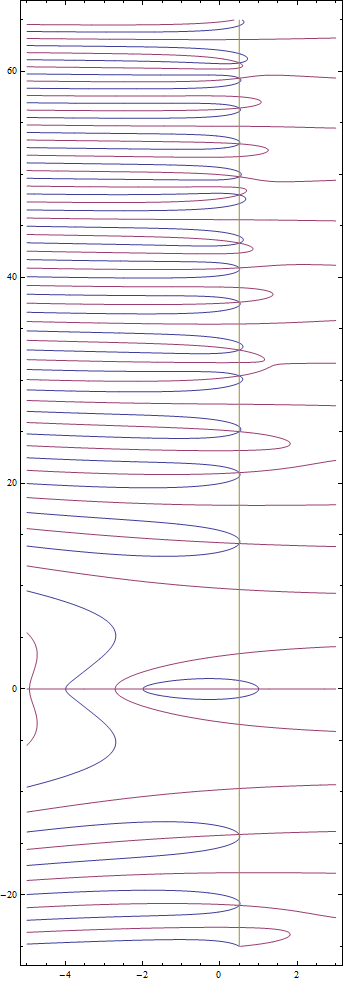
The Stanford draft did not survive its first day unscathed. About eight hours after his first post, Vakil updated it to say that several people had contacted him to report problems in the proposed proof, identified with the assistance of different AI models.
“As is usual, all issues need to be resolved to the satisfaction of the community before this proof would be accepted as true,” Vakil wrote. “I make no claim as to the correctness of the proof strategy.”
Conrad confirmed to Scientific American that Vakil’s account of events was accurate, but added that the paper was still going through major revision. “To judge the success of the method requires the paper to reach a stage of more final revision,” he said. He described the decision to publish now as a choice between “two unpalatable options”: announce the draft immediately, or stay silent and post it later.
Why this problem matters
The Riemann Hypothesis, posed by the German mathematician Bernhard Riemann in 1859, concerns the distribution of prime numbers — the numbers divisible only by one and themselves. It is one of the seven Millennium Prize Problems chosen by the Clay Mathematics Institute, each carrying a one-million-dollar prize.
Riemann was born 200 years ago this September, which makes the timing of the twin claims a striking coincidence. The confirmation of either proof would be one of the biggest moments in the history of mathematics. For now, neither claim has been verified, and both face the same test: the slow, sceptical checking of the mathematical community.
Related: Pakistan’s AI satellite imagery service Novascope turns 10-metre views into 1-metre views.
Sources: The Decoder, Nature.
Related Posts
 TechnologyPakistan’s First AI Satellite Imagery Service Launches: Novascope Turns 10-Metre Views into 1-Metre Detail
 TechnologyNCCIA Raids Lahore Call Centre Targeting UK Customers — Eight Arrested in Fake Phone Scam
 TechnologyPTA Inspects 226 Mobile Sites Across Pakistan, Finds Faulty Batteries and Failing Generators
 TechnologyNCCIA Launches Cyber Info App: Report Online Scams, Fraud and Hacking From Your Phone
 TechnologyUfone vs Jazz October 2026: Pakistan’s Mobile Users Cross 212.5 Million as Jazz Holds the Lead
 TechnologyPakistan Loses $400 Million a Year Because Local Card Payments Travel Abroad, Senate Panel Reveals
Most Popular
 How-ToPTA Tax Calculator 2026: Check Mobile Tax on Any Phone421 views
 Pakistan NewsPIA Boeing 787 Lease Deal: What It Means for the Airline396 views
 Canada JobsTech Jobs in Canada: Roles, Salaries, and Skills Needed392 views
 SportsUEFA Champions League 2026-27: Format, Teams and Schedule390 views
 TechnologyPM Shehbaz Sets November Deadline for Alibaba AI and Digitalisation Projects in Pakistan370 views
 ShowbizWomen’s Fashion in Pakistan 2026: Trends, Brands and Style Guide366 views