The Pakistan Turkey drone deal will bring more than 100,000 Turkish unmanned systems to Pakistan over the next three years, under an agreement signed with Turkish technology firm Pasifik Teknoloji. The contract was executed through Pakistan’s National Radio and Telecommunication Corporation (NRTC) on Friday 18 September 2026, and was disclosed through Türkiye’s Public Disclosure Platform before being reported on Sunday 15 November. It covers the supply, distribution and local assembly of drones, unmanned helicopters and ground support stations, with deliveries and technology transfer scheduled to run until September 2029.
What the Pakistan Turkey Drone Deal Includes
The order is built around one system above all others: the Merküt first-person-view (FPV) drone. In total, the package comprises 100,000 Merküt FPV kamikaze drones, 500 DELİ tactical loitering munitions, 10 ALPİN unmanned helicopters, 25 DUMRUL miniature unmanned helicopters and 250 KORGAN autonomous land support stations. The agreement follows an earlier framework arrangement announced in May 2026, which was initially described as being for an unnamed allied nation. Since then, Pakistani forces have carried out field evaluations, combat simulations and pilot training with the equipment, and the framework has now become a concrete supply, distribution and manufacturing pact.
The Merküt FPV Drone

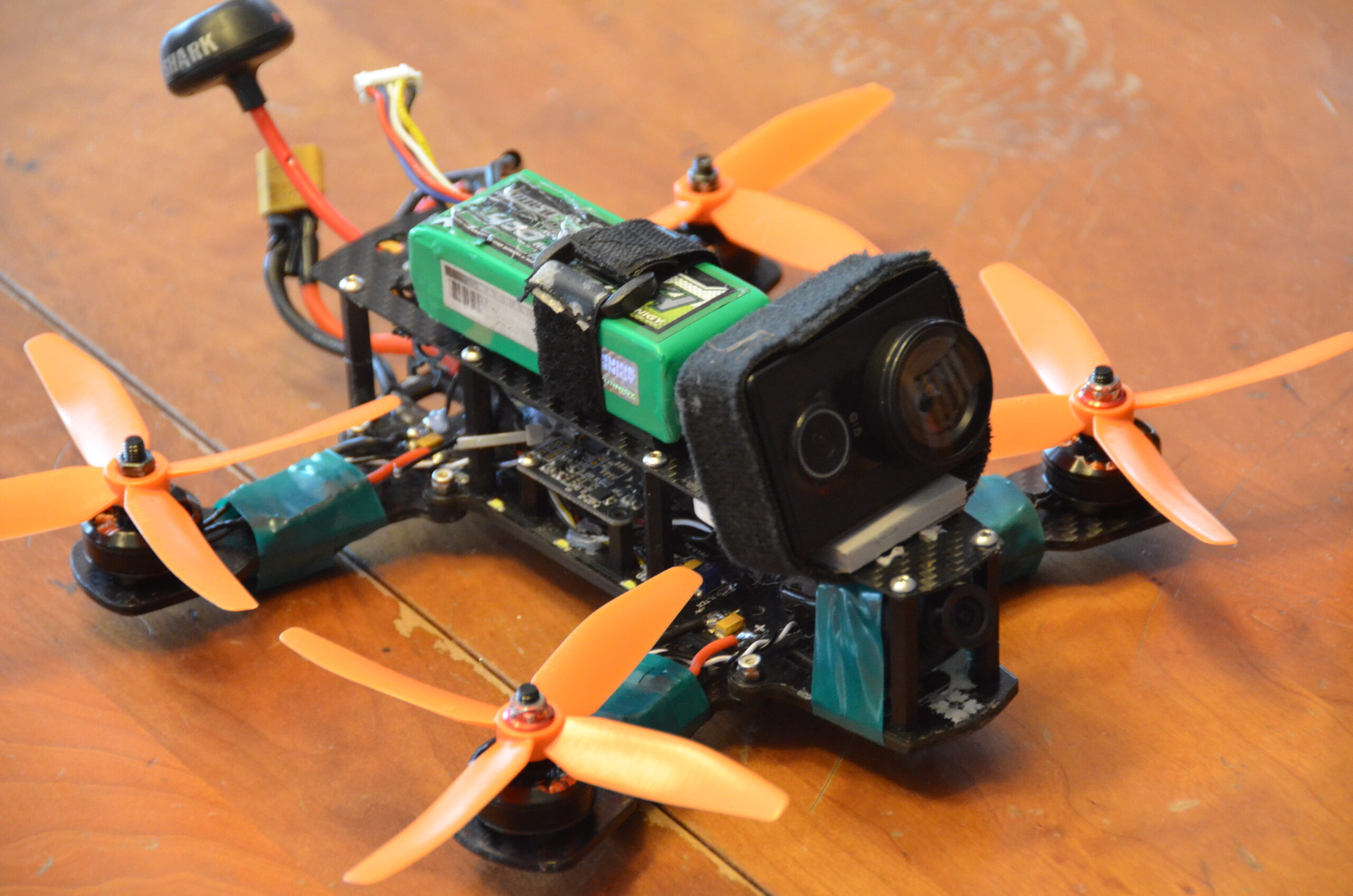
The Merküt is the centrepiece of the deal: a small, low-cost first-person-view drone designed to be used once, as a precision strike weapon. Open-source reported specifications put its top speed at around 200 kilometres per hour, with an operating range of up to 8 kilometres and a flight time of 20 to 30 minutes. Its warhead is fitted with roughly 1,000 steel balls, each 3 millimetres in diameter, producing a reported blast radius of up to 20 metres. The drone also carries thermal imaging, is built to resist electronic warfare, and has a dual-safety arming system that allows it to be recovered if a mission is aborted. The scale of the order — one hundred thousand units — points to a deliberate shift towards affordable, disposable strike assets that can be fielded in large numbers, rather than a small fleet of expensive platforms.
ALPİN, DUMRUL and KORGAN: Helicopters and Ground Stations
Alongside the FPV drones, Pakistan is acquiring two types of unmanned helicopter. The ALPİN is a fully autonomous rotorcraft built for heavy lifting and sustained surveillance. It can carry up to 200 kilograms of payload, including fuel, fly pre-programmed missions on its own, and operate around the clock using night-vision and thermal optics. The DUMRUL is a smaller, electric-powered mini-helicopter with a low acoustic signature, designed for covert, short-range reconnaissance and strike work. It can stay airborne for up to 120 minutes. The third element of the package is the KORGAN: 250 autonomous land support stations that work as automated “drone-in-a-box” ground bases, handling the launch, landing and battery swapping of drone fleets on their own, and keeping persistent surveillance and perimeter defence networks running without constant human handling.
Local Manufacturing in Pakistan
A central part of the agreement is that the systems will not simply be imported. The contract provides for the sale and distribution of the equipment in Pakistan and for the establishment of local assembly and manufacturing facilities, so that at least part of the fleet is built in the country. Defence analysts say the domestic production element should strengthen Pakistan’s industrial defence base and give it the logistics and hardware infrastructure to sustain uncrewed operations in demanding environments, including high-altitude areas along the western frontier and border regions. The deal is also reported to be Pasifik Teknoloji’s first major defence export, and analysts have preliminarily estimated its value at around $100 million — an estimate, not an officially confirmed figure.
Why the Deal Matters
The purchase reflects the lessons of modern, high-intensity warfare, where cheap, expendable drones have proved decisive and where large numbers matter as much as individual capability. For Pakistan, the package adds an organic, immediate precision-strike capability at unit level: small drones that front-line forces can launch themselves, rather than waiting on larger aircraft. It is the latest step in a deepening military partnership between Ankara and Islamabad. In 2025, the two countries also announced plans for a joint aircraft manufacturing facility to produce Türkiye’s fifth-generation KAAN fighter jet. The drone deal follows the Pakistan Air Force’s own recent unveiling of new smart munitions, including the Arrow-1, which entered production at NASTP this month.
Related: PAF Arrow-1 Smart Munition Enters Production at NASTP, New Footage Shows
Sources
Defence.in — Pakistan Inks Deal with Turkey’s Pasifik Teknoloji for 100,000 Merküt Kamikaze Drones, Unmanned Helicopters, and Land Systems (15 November 2026); News18 — One Lakh FPV Drones, 500 Loitering Munitions: What Pakistan Is Buying From Turkey Under Defence Deal (15 November 2026).
Related Posts
 TechnologyRedmi 17 5G Pre-Booking Opens in Pakistan at Rs 72,999 with Free Speaker and Zong Bundle
 TechnologyPAF Arrow-1 Smart Munition Enters Production at NASTP, New Footage Shows
 TechnologyNCCIA Call Centre Raids: 154 Arrested as Illegal Loan-App Blackmail Rings Busted in Islamabad and Rawalpindi
 TechnologyTranssion Pakistan: Tecno and Infinix Maker Eyes Local Phone Parts Manufacturing
 TechnologyPUBG Mobile Flash Launches Worldwide: Full Game in Under 1GB for Budget Phones
 TechnologyPTA May Cut Voice SIM Limit to Three per CNIC — What It Means for Mobile Users
Most Popular
 How-ToPTA Tax Calculator 2026: Check Mobile Tax on Any Phone420 views
 Pakistan NewsPIA Boeing 787 Lease Deal: What It Means for the Airline395 views
 Canada JobsTech Jobs in Canada: Roles, Salaries, and Skills Needed391 views
 SportsUEFA Champions League 2026-27: Format, Teams and Schedule388 views
 TechnologyPM Shehbaz Sets November Deadline for Alibaba AI and Digitalisation Projects in Pakistan368 views
 ShowbizWomen’s Fashion in Pakistan 2026: Trends, Brands and Style Guide365 views