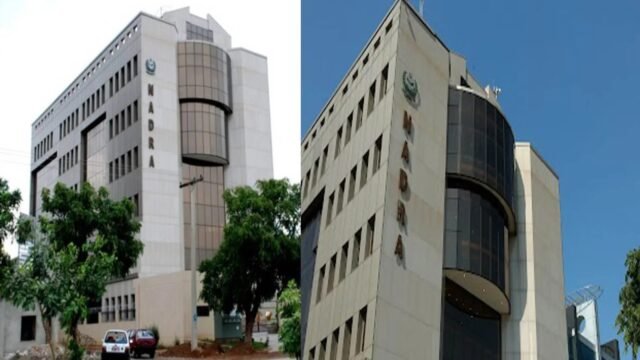
Lahore’s smog may soon be watched by artificial intelligence. Punjab Chief Minister Maryam Nawaz has shared a first look at the Punjab AI Climate Observatory under construction in Lahore, describing it as Pakistan’s first facility of its kind and a landmark step towards a climate-resilient Punjab.
In a post on X on Sunday, 15 November, the chief minister said the Punjab AI Climate Observatory would track air quality, water, soil and weather in real time, using an AI-powered system to analyse climate data as it arrives. The centre is also meant to strengthen weather forecasting, early warnings and flood prediction across the province.

What the Punjab AI Climate Observatory will monitor
The observatory’s core job is measurement. Its AI system will collect and analyse environmental data around the clock, giving officials a continuous picture of the air people breathe, the water in rivers and aquifers, the condition of farmland soil and the weather moving across the province.
That live picture from the Punjab AI Climate Observatory is meant to feed directly into decisions. Better forecasting and earlier warnings would give departments more time to prepare for floods and extreme weather, while the data would support water conservation, climate-resilient farming, forest protection and evidence-based policymaking — the goals the chief minister listed in her post.
The facility will also hold environmental data resources and research laboratories for young scientists, and bring international research partnerships under one roof. The stated ambition is to make Punjab a regional leader in climate innovation, training a new generation of climate scientists at home rather than relying only on outside expertise.
A project eighteen months in the making
The idea is not new. The observatory was approved on 19 May 2025, at a meeting chaired by Senior Minister Marriyum Aurangzeb, where the University of Engineering and Technology (UET) Lahore presented a technical report. It was billed then as the largest facility of its kind in the region.
The feasibility work covered the budget, the equipment to be bought and the land needed, and the chief minister later ordered the work to be speeded up. Sunday’s post described the project as under construction — but it gave no completion date, no cost and no exact site, the three details Lahore’s residents most want to know.
That gap matters for the Punjab AI Climate Observatory. The problems the observatory is meant to track have not waited: large parts of Punjab were inundated in the 2025 monsoon floods, and Lahore has spent much of this month at or near the top of global pollution rankings, with the city’s air quality index easing from a peak of 647 only last week.

Why the data matters more than the building
A working Punjab AI Climate Observatory could change how Punjab argues about its smog. At present, officials blame a share of winter pollution on smoke crossing from India, while critics point to traffic, kilns and industry at home — and neither side has a public, continuous, source-level record to settle the question.
The project also sits inside a wider legislative push: Punjab is drafting a climate law with support from the United Nations Development Programme, modelled on British and Swiss legislation. Binding targets of that kind are only as good as the measurements behind them.
Two questions will decide whether the observatory earns its billing as a milestone. The first is whether its data will be published openly and in real time, so universities, farmers and residents can use it, or kept inside government. The second is who will run it — an AI system trained on patchy sensors will produce confident forecasts of limited use.
What happens next
For now, the public record is a construction update and a promise. The chief minister has framed the Punjab AI Climate Observatory as a landmark for a climate-resilient Punjab and Pakistan; the test will be a published timeline, an opening date and open data.
Until then, Lahore’s smog season continues — and the city will keep watching its own skies the old-fashioned way: by breathing them.
Related
- Punjab’s Water Demand Already Exceeds Supply, FAO Warns
- Google’s Digital Sahafat Trains 4,000 Pakistani Journalists in AI Tools
Sources
- Punjab’s AI Climate Observatory still has no opening date — LHR Times
- Punjab AI Climate Observatory — 247News
Related Posts
 TechnologyKP Police Crack Down on TikTokers Over Obscene Live Content: Arrests in Peshawar, Mardan, Swabi and Mansehra
 TechnologyFIA Rs120 Billion Gambling Probe: Three More Arrested in Sahiwal as JazzCash and Easypaisa Case Widens
 TechnologyAI Training Khyber Pakhtunkhwa — 800,000 Youth Trained as Government Plans IT Parks and Startup Support
 Technology20 Startups Win Davos Startup Challenge 2027, Head to Pakistan Pavilion
 TechnologyMicrosoft Reveals Why Outlook and Teams Crashed Worldwide — A Bug Hiding Since July
 TechnologyPakistan Internet Speed Up 60% in Two and a Half Years, Says IT Minister Shaza Fatima
Most Popular
 How-ToPTA Tax Calculator 2026: Check Mobile Tax on Any Phone420 views
 Pakistan NewsPIA Boeing 787 Lease Deal: What It Means for the Airline395 views
 Canada JobsTech Jobs in Canada: Roles, Salaries, and Skills Needed391 views
 SportsUEFA Champions League 2026-27: Format, Teams and Schedule388 views
 TechnologyPM Shehbaz Sets November Deadline for Alibaba AI and Digitalisation Projects in Pakistan368 views
 ShowbizWomen’s Fashion in Pakistan 2026: Trends, Brands and Style Guide365 views