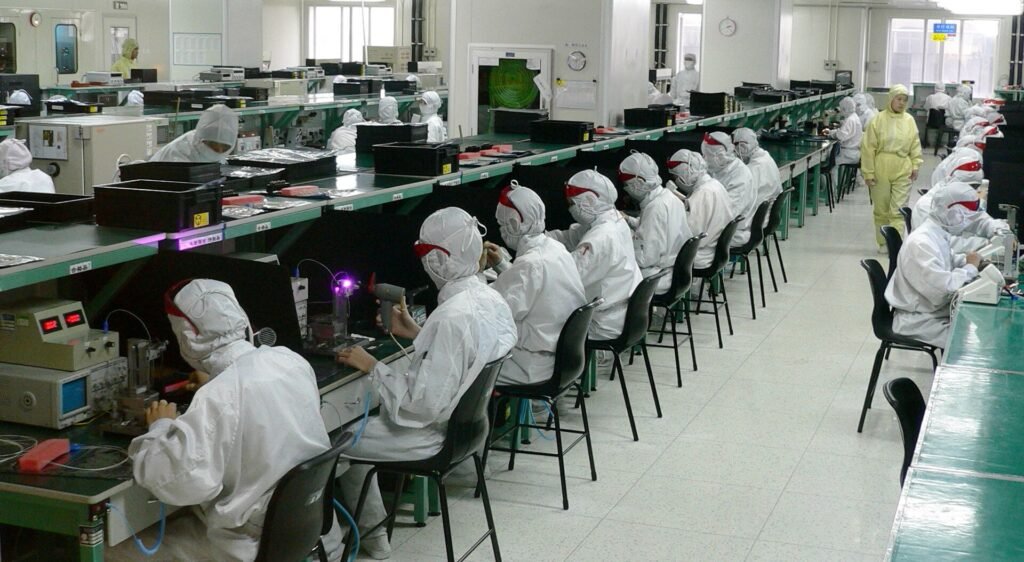
Pakistan has crossed a manufacturing milestone that would have seemed far-fetched just a few years ago: 961,326 5G smartphones were assembled inside the country between January 2025 and May 2026. The figure comes from an official document of the Pakistan Telecommunication Authority, details of which were reported by INP-WealthPk on 31 October 2026, and it lands at a telling moment — just as the country gears up for wider 5G deployment.
What makes the number matter is not just its size but what it says about the direction of travel. Pakistan’s mobile-device manufacturing policy was designed to turn the country from a pure importer of handsets into an assembly hub, and nearly a million 5G units in seventeen months suggests that bet is starting to pay off. This is what the story of Pakistan locally manufactured 5G smartphones looks like in hard numbers: almost one million devices, built in local plants, in a little over a year.
Almost a million 5G phones made in Pakistan
The per-brand breakdown shows Samsung leading the local-assembly pack with 396,268 units manufactured through Lucky Motor Corporation, followed by Vivo with 248,508 units through Coastal Jade Technology (Pvt.) Ltd, and Infinix/Tecno with 216,560 units through Inovi Telecom (Pvt.) Ltd. Oppo accounted for 96,900 locally manufactured units, while Nubia (ZTE) produced 3,090 — bringing the combined total to 961,326.
The spread across brands is significant. Rather than depending on a single company, local 5G assembly now spans Korean and Chinese manufacturers working through Pakistani partners. It also shows that local manufacturing is no longer confined to basic 2G and 4G feature phones; fifth-generation devices, with their more demanding hardware, are rolling off the same lines.
15.56 million 5G-ready devices already on the networks
Manufacturing is only half the picture. The same PTA document puts the number of 5G-capable IMEIs detected on Pakistani mobile networks since 2019 at more than 15.56 million — meaning millions of handsets already in people’s pockets can connect to 5G the moment the service switches on. Of those, around 3.81 million are registered in the DIRBS, the Device Identification, Registration and Blocking System that the regulator uses to verify and whitelist legitimate handsets.
The gap between those two figures is worth noting. A 5G-ready device that is not properly registered in DIRBS sits in a grey zone — it works on the network but contributes nothing to the documented, tax-paying device base, and it may be vulnerable to blocking. For the PTA, closing that gap is part of the same project as boosting local manufacturing: a documented, locally assembled device base is easier to regulate, easier to tax fairly, and harder for illegal importers and IMEI tampering rackets to exploit.
The price gap — and PTA’s tax appeal
For ordinary buyers, the question is simpler: what does a 5G phone actually cost? According to the PTA’s price points, the cheapest imported 5G handset on the market is the ZTE Nubia Focus 5G at around Rs45,000, while the cheapest locally manufactured 5G option — the Tecno Camon 30 — sits at roughly Rs50,000. One standout is Nubia’s locally assembled 5G device at about Rs36,000, which the PTA describes as one of the lowest-priced locally assembled 5G handsets available.
That last detail is the crux of the regulator’s argument to the government. The PTA has urged the authorities to rationalize taxes and duties on mobile handsets, warning that heavy taxation keeps prices high and slows broadband — and by extension 5G — adoption. Cheaper, fairly taxed handsets, the regulator argues, would put 5G within reach of low- and middle-income households, students and first-time users, while squeezing out illegal imports and IMEI tampering.
The claimed benefits run wider than cheaper phones. According to the PTA, lower duties would support digital inclusion, online education, telemedicine, digital banking and e-commerce; speed up 5G adoption once networks light up; create manufacturing jobs as local assembly expands; and — the pitch aimed squarely at the finance ministry — raise long-term government revenues through a broader tax base rather than punishing rates on a narrow one.

The factories are producing, the handsets are already in people’s pockets, and the networks are being readied — but the leap from nearly a million locally made 5G devices to mass adoption depends on affordability. If duties fall, the one-million milestone may look like the starting line; if they do not, it may stand as a record for some time.
Sources: INP-WealthPk (Ijaz Kakakhel, 31 Oct 2026); Pakistan Telecommunication Authority. All figures in this article are from the PTA document as reported by INP-WealthPk.
Related Posts
 TechnologyPTA Sets 2,000 5G Sites Per Operator Target by 2028 — Plus 5x Faster 4G
 Technology‘SMS of Death’: A Single Text Message Can Crash Your Android Phone — No Click Needed
 Technology326 Cyber Threats Hit Pakistan in a Year, PTA’s Dark Web Report Reveals
 TechnologyOppo Reno17 Series Confirmed for November 2026 Launch in China
 TechnologyPVARA Under AML Law: Pakistan’s Crypto Regulator Gets Bank-Level Powers
 TechnologySBP Releases Draft Open Banking Regulations for Public Consultation
Most Popular
 How-ToPTA Tax Calculator 2026: Check Mobile Tax on Any Phone347 views
 SportsUEFA Champions League 2026-27: Format, Teams and Schedule328 views
 SportsBallon d’Or 2026: London Ceremony, Nominees and All-Time Records Ahead of 70th Anniversary325 views
 Canada JobsTech Jobs in Canada: Roles, Salaries, and Skills Needed317 views
 Pakistan NewsPIA Boeing 787 Lease Deal: What It Means for the Airline306 views
 ShowbizWomen’s Fashion in Pakistan 2026: Trends, Brands and Style Guide300 views




One comment