A dinosaur that spent years being mistaken for a baby Tyrannosaurus rex has just become one of the most expensive fossils ever sold. The skeleton nicknamed Jodi, a Nanotyrannus that lived alongside T. rex around 67 million years ago, sold at Sotheby’s in New York on 27 October 2026 for $47.3 million, roughly Rs 13 billion at current exchange rates.
The result stunned even the auction house. Sotheby’s had estimated the skeleton at $6 million to $9 million. After about twelve minutes of bidding between six buyers online and on the telephone, an anonymous telephone bidder took it for more than five times the high estimate, making Jodi the second-priciest dinosaur fossil ever auctioned.
The story has travelled fast. “Nanotyrannus” is among the fastest-rising Google searches in Pakistan today, as readers around the world try to work out what this smaller predator was, why scientists argued about it for eighty years, and how a fossil once priced as a juvenile T. rex ended up selling for a fortune under a different name.
A $47.3 million surprise in New York

Jodi went on public view at Sotheby’s Manhattan headquarters from 13 October, ahead of a dedicated live sale on 27 October. When the hammer finally fell, the $47.3 million price, including fees, put the skeleton behind only one other fossil in auction history: Gus, the Tyrannosaurus rex that sold at Sotheby’s in July 2026 for $50.1 million.
That ranking tells its own story about how hot the fossil market has become. The previous record holder before Gus was Apex, a stegosaurus that fetched $44.6 million in July 2024, and between those two sales a juvenile Ceratosaurus brought $30.5 million, more than five times its own high estimate. Jodi has now pushed its way into that elite company, even though it belongs to a genus most people had never heard of until last year.
Sotheby’s thanked the team of professional fossil hunters behind the discovery, and its head of science and natural history, Cassandra Hatton, has said the specimen changes how we understand the final chapter of the age of dinosaurs. The buyer, for now, has chosen to stay anonymous, and has not said whether the skeleton will ever go on public display again.
What exactly is Jodi?
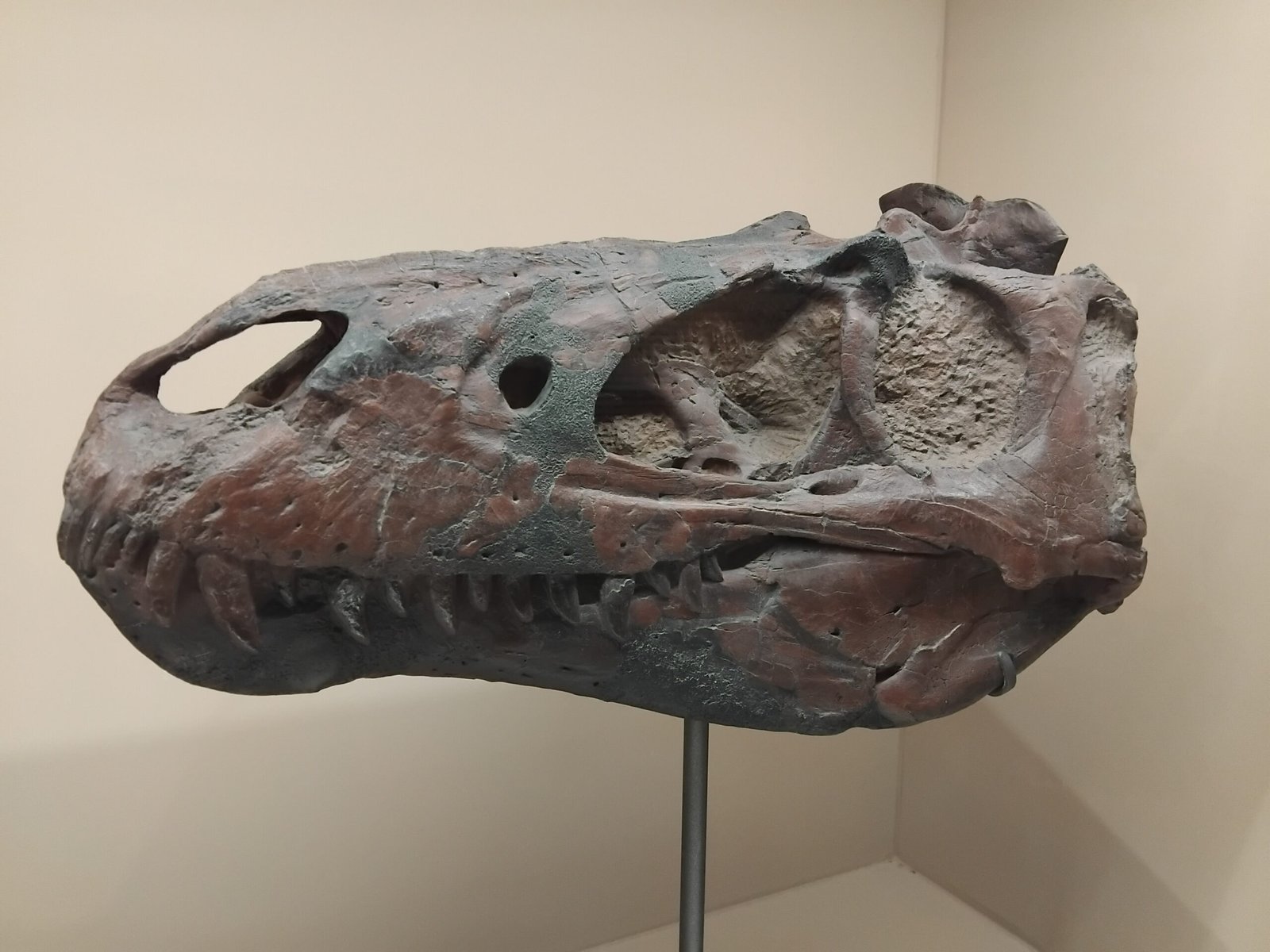
Jodi is a Nanotyrannus, a smaller and more lightly built cousin of Tyrannosaurus rex. The mounted skeleton stretches about 19.6 feet from nose to tail and stands around 9 feet 6 inches tall, roughly half the length of a full-grown adult T. rex. Sotheby’s describes it as one of only three substantial Nanotyrannus skeletons known to science, and the first of its genus to reach the market since researchers confirmed Nanotyrannus as a genuine, separate animal.
What makes this specimen special is its condition. It is considered almost 70 per cent complete, built from around 191 fossil bone elements, with a skull that is virtually complete and 35 teeth still in place. Its forelimbs are relatively longer than a T. rex’s, its hand claws are larger, and its teeth are more slender and blade-like, suited to slicing meat rather than crushing bone. Sotheby’s calls it the finest and most complete Nanotyrannus available, surpassed in completeness only by Bloody Mary, one half of the famous Dueling Dinosaurs fossil.
For all that, Jodi is not the biggest predator in its own story. Nanotyrannus lived at the very end of the Cretaceous period, in the shadow of the far larger T. rex, and weighed only around 1,500 pounds. It was fast, specialised, and, as the auction proved, far more valuable than anyone expected.
From ‘Chomper’ to Jodi: the name change

Only three years ago, this same skeleton was touring the art world under a completely different identity. In October 2023 it appeared at Frieze Masters in London as Chomper, presented as a juvenile Tyrannosaurus rex with a reported asking price of $20 million.
That identity did not survive contact with new science. A study published in the journal Nature in October 2025 formally recognised Nanotyrannus as its own genus, and the skeleton was renamed Jodi, after the rancher who found it. The rebrand cost it the T. rex name, the most famous brand in palaeontology, and with it a large slice of its old price tag: Sotheby’s $6 million to $9 million estimate was less than half the $20 million once attached to Chomper.
Then the auction happened, and the logic flipped. As a rare adult of a newly confirmed genus, rather than one more young T. rex, Jodi turned out to be worth far more than its estimate, and far more than its old $20 million tag. Scientific importance and market value, it turns out, do not always move in the same direction, until suddenly they do.
The eighty-year debate science finally settled
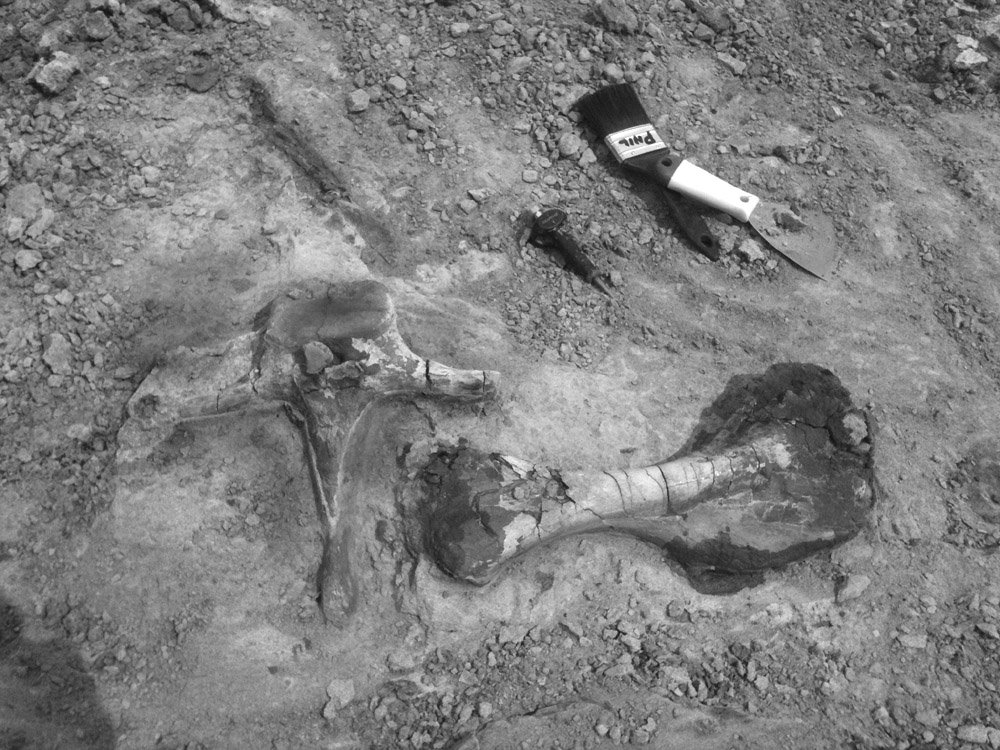
For more than eighty years, palaeontologists argued over small tyrannosaur skeletons like Jodi. One camp said they were simply young T. rex animals that had not finished growing. The other insisted they were adults of a separate, smaller predator. The argument mattered, because it decided whether T. rex ruled alone at the end of the Cretaceous, or shared its world with a second tyrant.
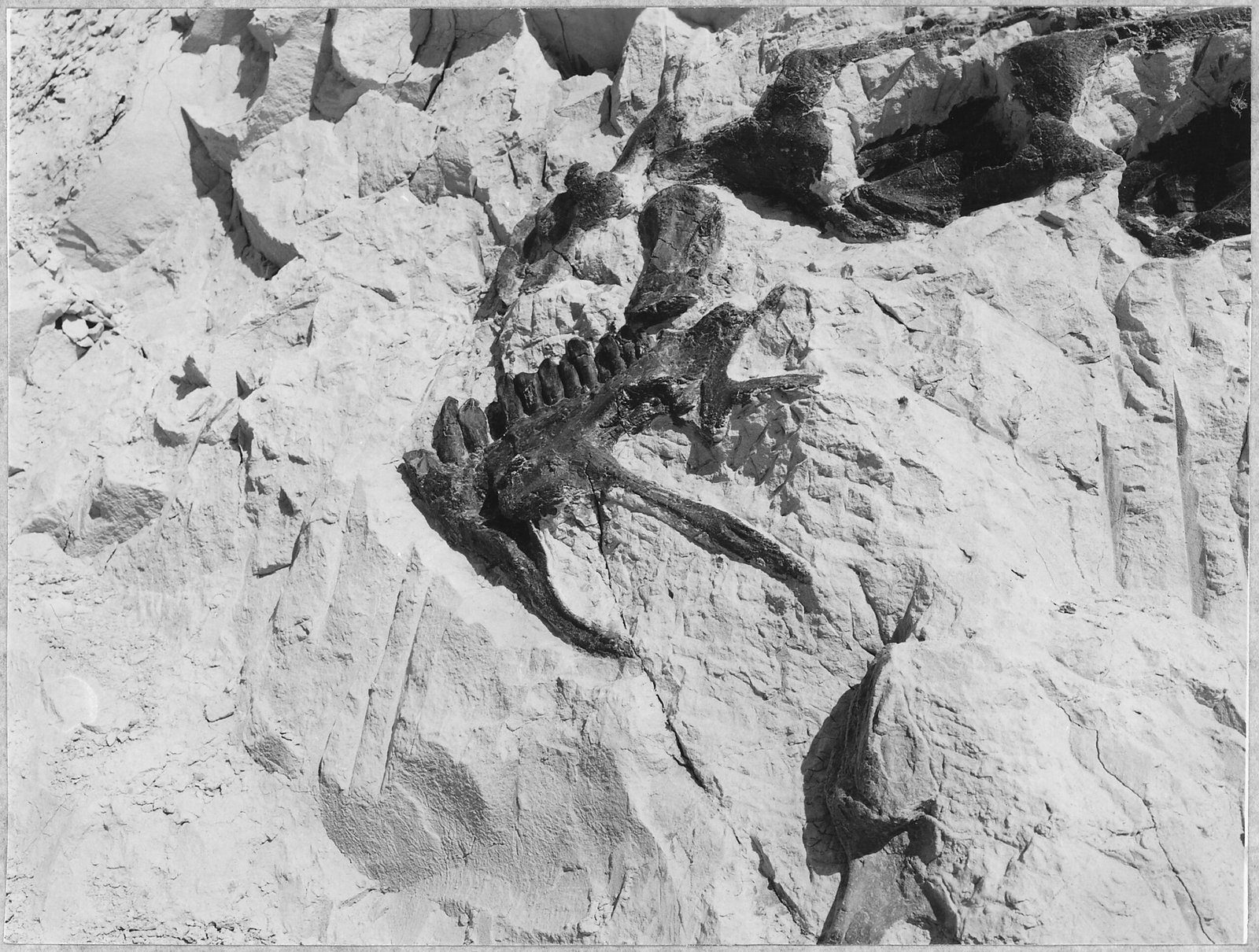
The first suspicion of a separate species came from an unusually proportioned skull found in Montana’s Hell Creek Formation in 1946, but the back-and-forth ran for decades. It was finally settled by a paper from Dr Lindsay Zanno and Dr James Napoli, based on around 200 tyrannosaur fossils examined by scientists at the North Carolina Museum of Natural Sciences. They laid out roughly 150 physical differences between Nanotyrannus and T. rex, from skull nerve patterns to tail vertebrae, and concluded that Nanotyrannus was a real, adult animal in its own right.
A crucial piece of evidence came from the Dueling Dinosaurs, a fossil showing a Nanotyrannus and a Triceratops apparently locked in combat, which helped make the case that the smaller predator was a grown animal fighting for its life, not a youngster. With that, the debate that began in the 1940s was over, and T. rex officially had company.
How Jodi was found in Montana
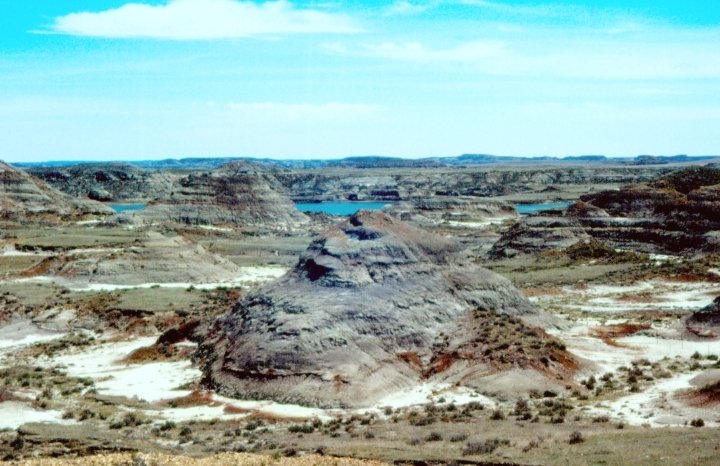
Jodi was discovered in 2019 by rancher Jodi Pierson, on her own land in Garfield County, Montana, in the Hell Creek Formation, one of the most heavily studied fossil grounds on Earth. She named the dinosaur, and the skeleton was excavated by her cousin, commercial palaeontologist Clayton Phipps, known as the Dinosaur Cowboy, together with a small team that included his then eleven-year-old son Luke.
The dig was filmed for the Discovery Channel series Dino Hunters, and the site itself was no accident of geography. Phipps had found the Dueling Dinosaurs only about eight miles away in 2006, in the same formation near the town of Jordan. Hell Creek has now produced two of the most important tyrannosaur fossils ever found, and Jodi is the latest to leave it for the auction room.
From a Montana ranch to a London art fair to a New York saleroom, Jodi’s journey is a reminder of how much of palaeontology still depends on people walking the ground and noticing what is under their feet.
Second only to Gus: the fossil market’s new order
Jodi’s $47.3 million result redraws the leaderboard of dinosaur sales. At the top sits Gus, the T. rex sold for $50.1 million in July 2026. Jodi is now second, ahead of Apex the stegosaurus at $44.6 million and the juvenile Ceratosaurus at $30.5 million. All four of the top prices have been set within the last three years, a run that has turned dinosaur fossils into one of the auction world’s most watched categories.
The pattern is striking: in each case the final price smashed the estimate. Gus beat a $30 million high estimate, the Ceratosaurus went for more than five times its high estimate, and Jodi did the same. Collectors, it seems, are no longer buying fossils as curiosities. They are buying them as trophy assets, and the rarer the science, the fiercer the bidding.
That appetite is exactly what worries researchers. Every record price is also a signal to fossil hunters that the next great skeleton could be worth a fortune, and to private buyers that a museum-worthy specimen can be theirs alone.
Will the public ever see Jodi again?
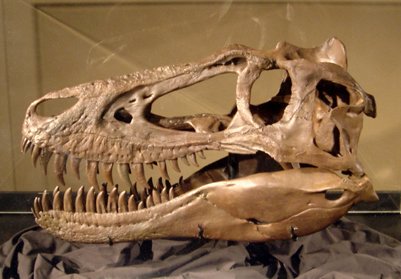
The one question Sotheby’s could not answer on auction night was the one scientists care about most: where does Jodi go now? The buyer is undisclosed, and has not said whether the skeleton will be shown publicly, loaned to a museum, or kept in a private collection.
That matters because fossils in private hands usually cannot be studied or used in peer-reviewed research. Jodi is one of only three substantial skeletons of its kind, and its near-complete skull could still answer questions about how Nanotyrannus hunted, grew, and lived beside its giant cousin. If it disappears into a private gallery, that evidence goes with it.
For now, the public’s last sight of Jodi was its two-week display at Sotheby’s, before the bidding started. Whether it returns to a museum hall, or becomes the most expensive dinosaur most people will never see, is a decision that now rests with a single anonymous buyer. Either way, a little predator that spent eighty years being mistaken for someone else’s child has finally made its own name, and its own price, in history.
For more world and science stories, see our reports on the magnitude 7.0 earthquake in Tibet, the UN space conference opened by SUPARCO in Islamabad, and the final trailer for Dune: Part Three.
Related Posts
 World NewsTibet Earthquake 2026: Magnitude 7.0 Quake Kills 16, Destroys 339 Homes in Nagqu
 World NewsSaudi Arabia Executes Two Bangladeshi Nationals in Mecca; Bangladesh Says It Was Not Informed
 World NewsSaudi Defense Minister Meets UAE President in Abu Dhabi Amid Regional Tensions
 World NewsKatie Zacharia Fired After Five Days as White House Press Secretary
 World NewsStrait of Hormuz Closed: IRGC Declares Waterway Shut After Tanker Attacks
 World NewsTurkey News 2026: Latest Headlines and Updates
Most Popular
 SportsBallon d’Or 2026: London Ceremony, Nominees and All-Time Records Ahead of 70th Anniversary289 views
 How-ToPTA Tax Calculator 2026: Check Mobile Tax on Any Phone287 views
 TechnologyRedmi K100 Launching on 28 October: 10,000mAh Battery, 185Hz Display and Full Specs267 views
 SportsUEFA Champions League 2026-27: Format, Teams and Schedule265 views
 TechnologyAround 20 Pakistani Tech Companies Showcase Innovation at TechCrunch Disrupt 2026 in San Francisco262 views
 Canada JobsTech Jobs in Canada: Roles, Salaries, and Skills Needed255 views