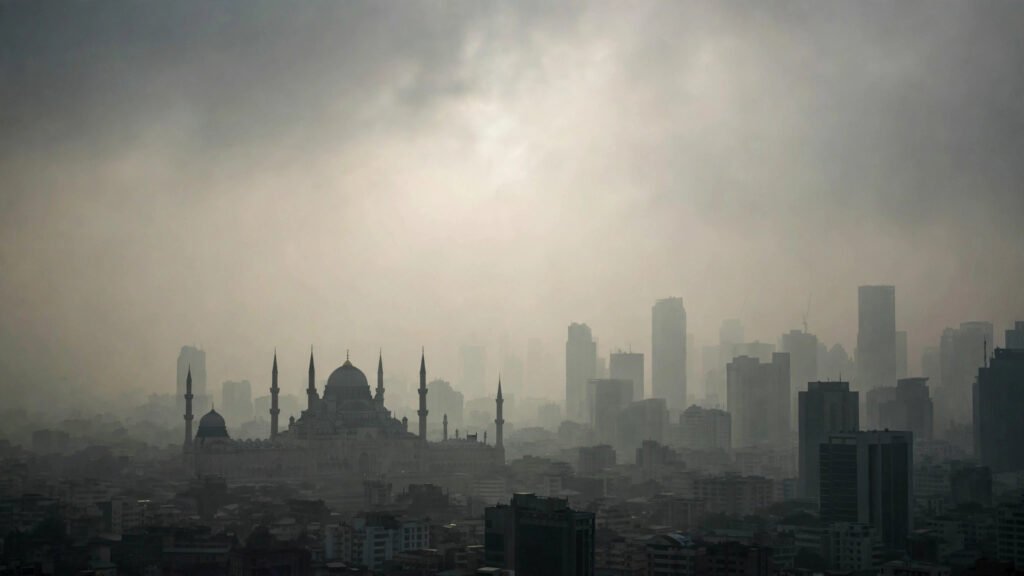
Lahore woke on Monday, 9 November 2026, to air so thick with pollution that the city once again topped the global ranking of the world’s most polluted major cities. The Lahore smog AQI 563 reading came at around 8am, according to live data from Swiss air-quality monitor IQAir, and fine particulate matter — the tiny PM2.5 particles that do the most damage to human lungs — stood at 357 micrograms per cubic metre. For a city that has lived through this crisis every winter, the numbers were a grim reminder that the smog season is back in full force, and that the measures taken so far have not stopped the worst days from returning.
Lahore back on top of the world’s most polluted list
The 563 reading at 8am was only the citywide figure. IQAir’s hourly index climbed to 647 during the morning, and individual monitoring stations recorded even higher pollution: the CERP Office station hit 898, Burki Road Paragon B reached 862 and the ARM station recorded 754 — all deep inside the hazardous category. The PM2.5 concentration of 357 micrograms per cubic metre was nearly 80 times the World Health Organization’s annual guideline value, a level at which health experts advise everyone to avoid outdoor exposure and wear a mask.
Lahore was not alone. The same live ranking put Raiwind at 688, Multan at 655 and Faisalabad at 600, meaning four Punjabi cities were simultaneously in the hazardous band. The second-most polluted major city in the world on Monday morning, Ulaanbaatar in Mongolia, recorded 177 — less than a third of Lahore’s reading. The gap shows how extreme the episode was, even by the standards of a region that struggles with winter air pollution every year. Lahore had already made smog headlines last week, when the air quality index hit 722 in Iqbal Town, and Monday’s readings confirmed that the crisis has not eased.
A bad first week of November

Monday’s spike did not come out of nowhere. A separate assessment by the Pakistan Air Quality Initiative, reported on 9 November, found that Lahore endured unhealthy to hazardous air throughout the first week of the month. The city’s average AQI for the week stood at 268, with pollution reaching very unhealthy levels on five days and hazardous levels on two. Average PM2.5 concentrations reached 215.5 micrograms per cubic metre — roughly 25 per cent higher than during the same period in 2025, and more than 14 times the World Health Organization’s 24-hour guideline of 15 micrograms per cubic metre.
There was one piece of apparently good news in the same assessment. Average PM2.5 concentrations across 26 monitoring locations fell by about 27 per cent in October 2026 compared with October 2025. But once the researchers adjusted for weather conditions — the wind and atmospheric mixing that can temporarily clear pollution even when emissions stay high — the real improvement narrowed to only about 4 per cent. The finding matters because it separates genuine progress from a lucky break in the weather, and it suggests the underlying emissions problem has barely moved.
What pushed the air over the edge

Several factors combined to produce Monday’s hazardous readings. The Punjab government had warned a day earlier that smoke from Diwali fireworks in neighbouring Indian Punjab, together with crop-residue burning and easterly winds, could worsen air pollution in Lahore and adjoining districts. A special provincial report issued on 8 November predicted that the Diwali smoke could reach Lahore within five to 13 hours, and the timing of Monday morning’s spike fits that forecast.
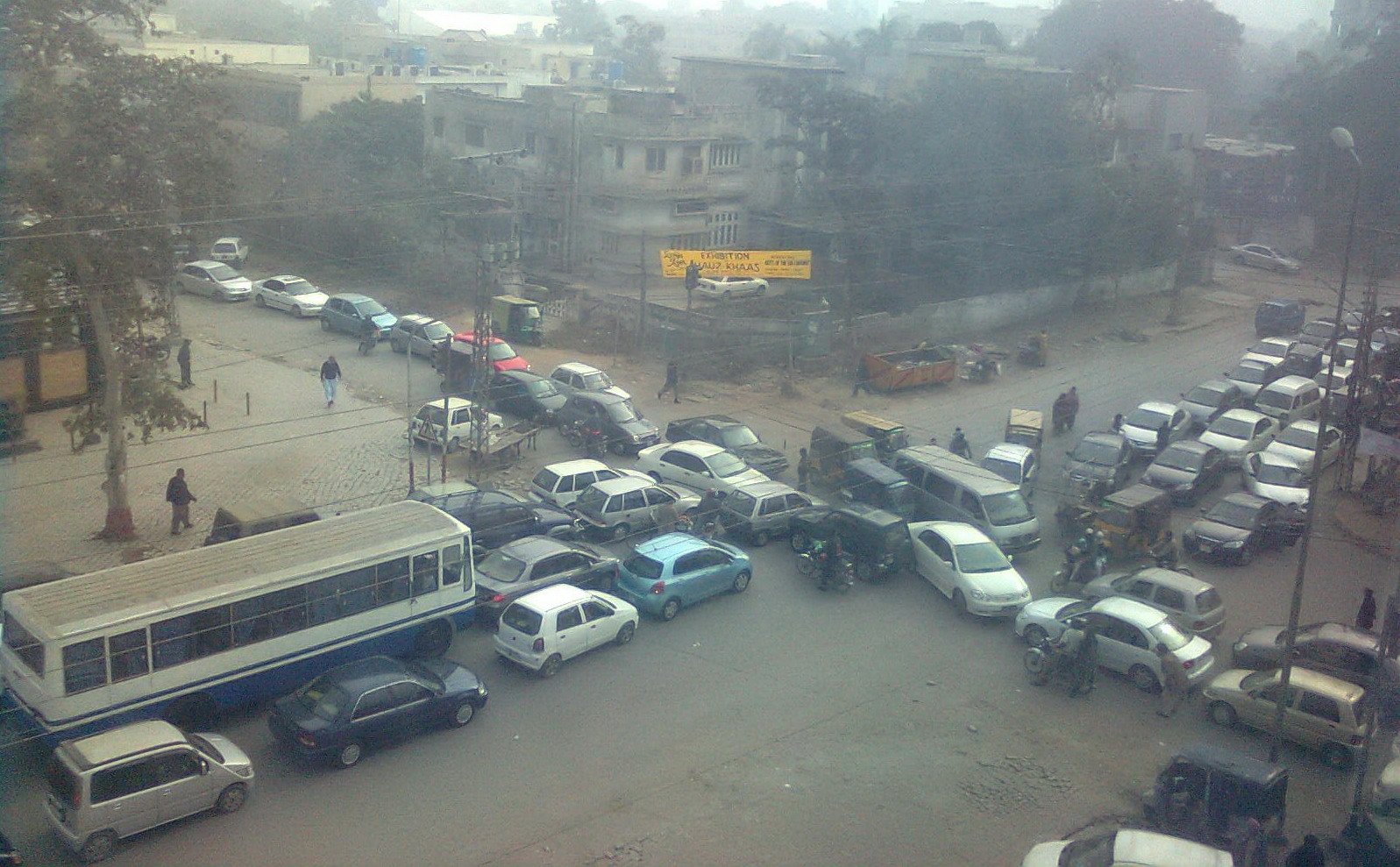
Those cross-border and seasonal factors sat on top of Lahore’s own year-round sources: vehicle exhaust, industrial combustion, construction dust, waste burning and agricultural residue burning. Winter makes the mix worse, because lower temperatures, weak winds and temperature inversions trap pollutants close to the ground instead of letting them disperse. The result is the thick grey haze that now settles over the city most mornings — a problem that seasonal restrictions alone cannot solve, because the emissions continue all year.
For background on causes, AQI levels and how to stay safe, see our Lahore Smog 2026 guide.
What happens next

The Punjab government expects pollution to stay high through Tuesday, 10 November, with some improvement likely from Wednesday, 11 November, as weather conditions change. The Environment Protection Department is due to release comparative findings on 10 November, assessing how much of the current episode came from cross-border smoke and how much from local sources — a distinction that matters for deciding where the next round of enforcement should fall.
The Hawanama AI forecasting system predicts smog three days ahead.
The longer-term answer is supposed to come from the World Bank-backed Punjab Clean Air Programme, approved in March 2025 with 300 million dollars in concessional financing and scheduled to run until June 2030. The programme aims to cut PM2.5 concentrations by 35 per cent over the next decade and is meant to benefit around 13 million residents of Lahore Division, through 600 electric buses, 5,000 super seeders to cut crop burning, more regulatory-grade monitoring stations and fuel-quality testing facilities. But the approved financing is not money already spent, and the programme’s results will have to be judged on completed projects and independently verified air-quality improvements — not on announcements.
For now, the advice for Lahore’s residents is the same as on every hazardous day: limit time outdoors, wear a mask when outside, and keep children, older people and anyone with breathing problems indoors as much as possible. Monday’s readings show that the smog season has arrived in earnest — and that the city still has a long way to go before a morning like this one becomes the exception rather than the rule.
Related Posts
 Pakistan NewsKhawaja Asif Backs Up to 12 Provinces — But Only on Administrative Grounds
 Pakistan NewsUN Warns Heatwaves Are Devastating Punjab Agriculture: Fruit Yields Down 50%
 Pakistan News92 News Anchor Rabia Ahsan Shot Dead in Rawalpindi; Husband Held
 Pakistan NewsNA-77 By-Election Final Result: PML-N’s Rashid Basheer Virk Wins Gujranwala Seat by 13,147 Votes
 Pakistan NewsPCRWR Declares 27 Bottled Water Brands Unsafe in Pakistan — Full List
 Pakistan NewsPP-203 By-Election Result: PML-N’s Asad Hanif Wins by 17,602 Votes
Most Popular
 How-ToPTA Tax Calculator 2026: Check Mobile Tax on Any Phone419 views
 Pakistan NewsPIA Boeing 787 Lease Deal: What It Means for the Airline392 views
 Canada JobsTech Jobs in Canada: Roles, Salaries, and Skills Needed389 views
 SportsUEFA Champions League 2026-27: Format, Teams and Schedule386 views
 TechnologyPM Shehbaz Sets November Deadline for Alibaba AI and Digitalisation Projects in Pakistan367 views
 ShowbizWomen’s Fashion in Pakistan 2026: Trends, Brands and Style Guide362 views