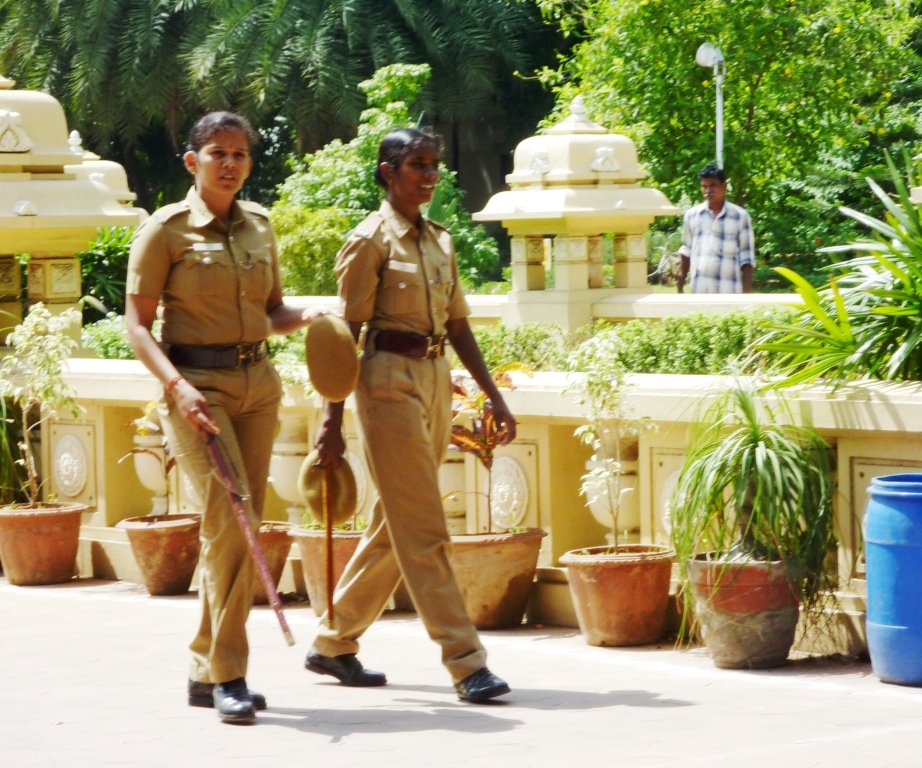
Islamabad’s police officers will now get at least one day of rest every week, under a new leave policy that rewrites how time off is approved across the capital’s force. The Islamabad Police Leave Policy 2026, issued by Inspector General of Police Muhammad Sohail Chaudhry, makes a weekly rest day mandatory for all officers and personnel of Islamabad Capital Territory (ICT) Police, and sets out in one document who can approve leave, how much leave is allowed for marriage, Hajj and examinations, and how many staff can be away at the same time.
The IGP Sohail Chaudhry leave policy was announced on 24 October 2026 and is to be implemented immediately across all branches of Islamabad Police. An order dated 23 October, reported by Dawn, supersedes all previous instructions, including the leave policy issued in 2022. For a force that works shifts, night duties and public-order deployments around the clock, the headline change is simple: rest is no longer something an officer has to ask for as leave. It is now built into the working week.
One weekly rest day for every officer

Under the new policy, at least one day of weekly rest must be provided to every officer and official, and that day does not count as leave. It sits separate from casual leave, earned leave, medical leave and all other entitlements, so taking a weekly rest does not eat into an officer’s leave balance.
The change matters because police working patterns rarely follow a normal office week. Officers on duty rotations, checkpoint work, court attendance and emergency call-outs can go long stretches without a fixed day off, and the spokesperson presenting the policy linked it directly to personnel welfare: a better-rested force, it is argued, will be healthier and more disciplined. For officers, the Islamabad Police weekly off is meant to be a predictable break in an otherwise unpredictable roster.
Who approves leave, and how much

One of the most practical changes is that the Islamabad Police Leave Policy 2026 spells out, rank by rank, who can sign off leave. Until now, officers often faced uncertainty about which senior officer had the authority to approve an application, which could delay even short periods of leave. The new rules delegate that power down the chain of command.
Station House Officers (SHOs) can approve up to three days of casual leave for constables and head constables. Deputy Superintendents of Police (DSPs) can approve up to five days of casual leave. Superintendents of Police (SPs) can approve up to three days of casual leave for personnel from constable to inspector rank, while Senior Superintendents of Police (SSPs) can approve three days of casual leave for SPs and SHOs.
Deputy Inspectors General (DIGs) have been authorised to approve all types of leave for personnel from constable to inspector rank. Leave applications from DIGs and SSPs themselves go to the Inspector General of Police for approval. By pushing routine decisions to the level closest to the officer, these ICT Police leave rules are designed to make the process faster and clearer: an officer should know, before applying, exactly whose desk the application lands on.
Caps that keep stations staffed
To stop leave from stripping a unit of its strength, the policy sets two ceilings. No more than 10 per cent of the personnel in a unit or office can be on casual leave at the same time. The combined limit for earned leave and leave outside Pakistan is 3 per cent of a unit’s strength.
Those caps explain why the weekly rest rule is written the way it is. A rest day is not leave, so it is not caught by the 10 per cent ceiling — but it still has to be rostered sensibly, because a police station cannot empty out on the same day. Commanding officers will have to spread weekly rest across the week so that operational strength is maintained.
Marriage, Hajj, Umrah and family leave
The Islamabad Police Leave Policy 2026 also fixes the leave available for major life and religious occasions. Male police personnel are entitled to 10 days of marriage leave, while female officers and personnel are allowed one month of leave on marriage, subject to approval by the competent authority.
For religious travel, the policy allows 45 days of leave for Hajj and 21 days for Umrah and other religious pilgrimages. Medical leave is available according to health needs, and the policy also provides for maternity and paternity leave, with sanctioning powers delegated according to rank. These are not new ideas in themselves, but putting fixed figures into a single published policy removes the guesswork that used to surround them. Together, these Islamabad police marriage leave Hajj leave entitlements are now fixed in one document.
For officers and their families, the difference between a vague assurance and a written entitlement is real. A wedding date, a Hajj booking or a medical procedure can now be planned around a number in the policy, rather than around a verbal understanding with a supervisor.
Exam leave for CSS and PCS candidates
Officers who want to sit competitive examinations also get a clear entitlement. Police personnel appearing in Central Superior Services (CSS) and Provincial Civil Services (PCS) examinations can take up to 20 days of leave, while up to 15 days are allowed for interviews, subject to approval.
That provision recognises a reality of police service in Pakistan: many junior officers study for civil service examinations alongside full-time duty. Twenty days around an examination, and fifteen around an interview, give candidates a defined window to prepare and appear without having to negotiate leave from scratch each time.
What changes for officers in remote districts
One of the most thoughtful parts of the policy concerns officers posted far from home. Personnel belonging to remote districts of Sindh, Balochistan and Khyber Pakhtunkhwa, including Chitral, Gilgit-Baltistan and the former FATA region, may choose between a weekly rest day and a longer block of rest: seven days after every 45 days of duty, or 14 days after every 90 days of duty.
For an officer whose family lives hundreds of kilometres from Islamabad, a single day off is often not enough to travel home and back. A block of seven or fourteen days makes that journey possible, which is why the policy offers the choice rather than imposing one pattern on everyone.
Taken together, the Islamabad Police Leave Policy 2026 does three things at once: it guarantees rest, it clarifies who decides leave, and it caps absence so that stations keep functioning. Whether it works in practice will depend on how it is rostered in the coming weeks, and officers will be watching to see whether the promised weekly rest actually appears on duty rosters. What is not in doubt is the direction of travel: after years in which leave rules were scattered across older instructions, Islamabad Police now have a single, current policy — and a weekly day off written into it. Readers following recruitment can also see the Police Jobs Pakistan 2026 guide and the Federal Government Jobs Pakistan 2026 guide for current openings.
Related Posts
 Pakistan NewsWorld Polio Day 2026 Pakistan: Seven Cases This Year Show the Fight Is Not Over Yet
 Pakistan NewsLPG Prices Hit Rs750 Per Kg in Pakistan: Cylinders Cross Rs10,000 as Supply Crisis Deepens
 Pakistan NewsBasant 2027 Punjab: Government Decides to Celebrate Kite Festival Across the Whole Province
 Pakistan NewsFIA Arrests Two NADRA Officials in Bahawalpur Over CNICs Issued to Afghan Nationals
 Pakistan NewsShehbaz Sharif Announces Rs160 Billion KP Development Package
 Pakistan NewsPakistan, Maldives Move to Launch Direct Flights as Trade Target Set at $200 Million
Most Popular
 How-ToPTA Tax Calculator 2026: Check Mobile Tax on Any Phone269 views
 SportsBallon d’Or 2026: London Ceremony, Nominees and All-Time Records Ahead of 70th Anniversary258 views
 TechnologyAround 20 Pakistani Tech Companies Showcase Innovation at TechCrunch Disrupt 2026 in San Francisco254 views
 TechnologyRedmi K100 Launching on 28 October: 10,000mAh Battery, 185Hz Display and Full Specs243 views
 Canada JobsTech Jobs in Canada: Roles, Salaries, and Skills Needed242 views
 TechnologyPaklaunch UNConference 26.2 New York: Pakistani Founders Meet 80 Global Investors at the Yale Club239 views