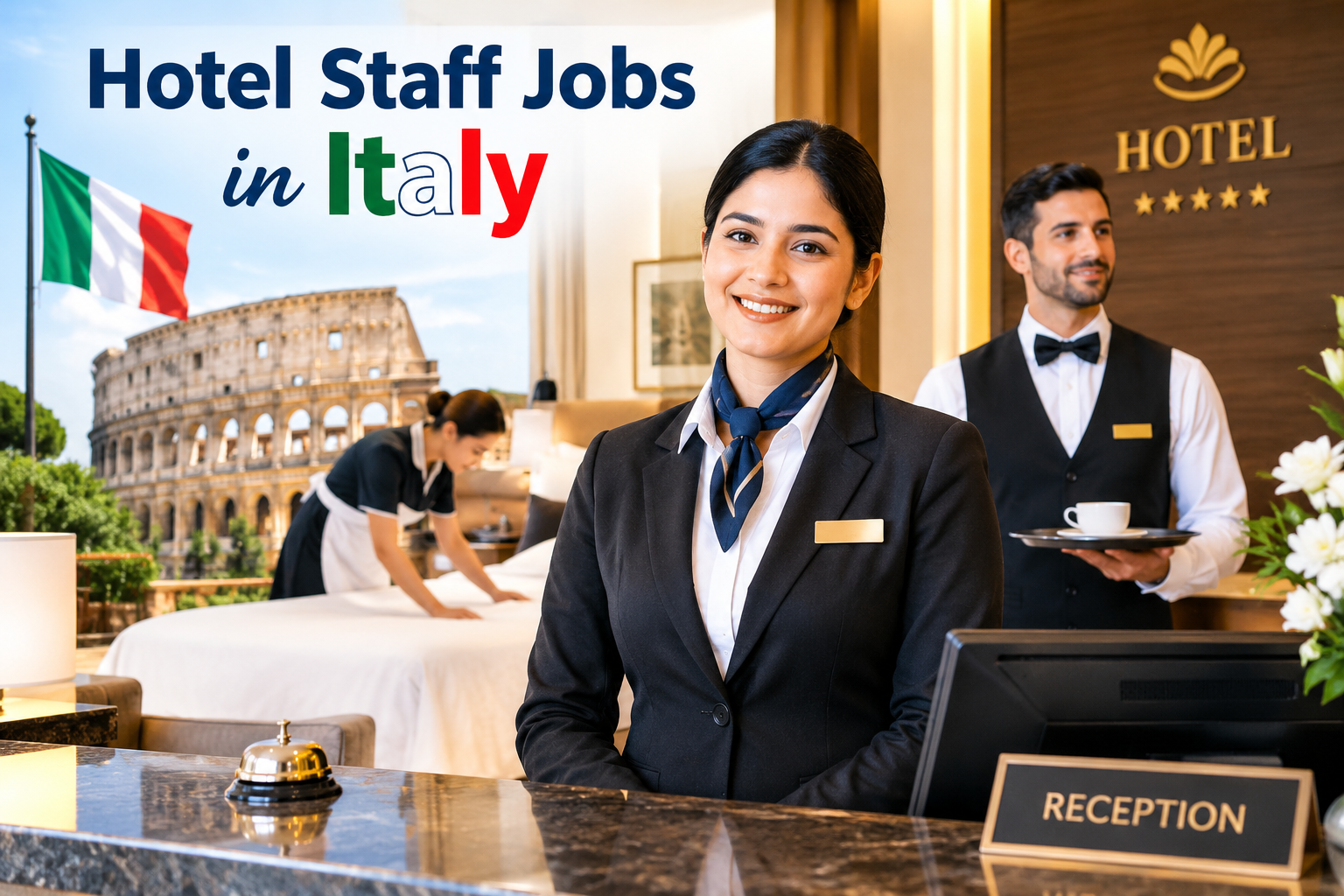
Italy welcomes tens of millions of visitors every year. They come for Rome’s ancient ruins, Venice’s canals, the Amalfi Coast, the Dolomites, and the food. All those travelers need somewhere to sleep, eat, and relax, and that is why hotel staff jobs in Italy are among the most consistent employment opportunities in the country.
Hotels, resorts, boutique guesthouses, and agriturismi (farm stays) hire constantly, especially before the summer and winter seasons. Many employers struggle to fill positions locally, which opens the door for international candidates.
But there is also a lot of misleading information online, and fake job offers are a real problem. This guide covers the roles available, typical pay, visa pathways, the application process, and how to protect yourself from fraud.
Why Hotel Jobs in Italy Are in Demand
Tourism is one of Italy’s largest economic sectors. The industry depends on seasonal peaks, and many Italian employers report difficulty finding enough housekeepers, cooks, waiters, and front-desk staff.
Here is why hospitality work in Italy appeals to foreign workers:
- Steady demand: Coastal regions, lakes, mountain resorts, and major cities all hire.
- Entry-level friendly: Many roles do not require a university degree.
- Accommodation support: Some employers offer staff housing or meals, which lowers living costs.
- Cultural experience: You live and work in one of the world’s most visited countries.
- Career growth: Staff can move from entry-level roles into supervisory and management positions.
Read More: Canada Jobs
Types of Hotel Staff Jobs in Italy
Hotels run on teams. Here are the most common roles.
Front Office Jobs
- Receptionist / Front Desk Agent: Handles check-in and check-out, reservations, and guest questions. Fluent English is vital, and Italian, French, German, or Spanish is a big plus.
- Concierge: Recommends restaurants, books tours, and arranges transport. This role needs strong local knowledge and communication skills.
- Night Auditor: Manages overnight operations and accounts.
- Bellhop / Porter: Assists with luggage and guest arrival.
Housekeeping Jobs
- Room Attendant / Chambermaid: Cleans guest rooms and maintains standards. This is one of the most common entry points for foreign workers.
- Laundry Attendant: Handles linens, towels, and uniforms.
- Floor Supervisor: Inspects rooms and manages cleaning teams.
- Public Area Cleaner: Maintains lobbies, corridors, and shared spaces.
Food and Beverage (F&B) Jobs
- Waiter / Waitress: Serves guests in the hotel restaurant or at breakfast.
- Bartender: Prepares drinks and manages the bar.
- Commis Chef / Line Cook / Kitchen Assistant: Supports meal preparation. Italian cuisine knowledge is a big advantage.
- Dishwasher / Kitchen Porter: Keeps the kitchen clean and running.
- Breakfast Attendant: Common in smaller hotels.
Maintenance and Support Jobs
- Maintenance Technician: Handles repairs, plumbing, electrical, and equipment.
- Gardener / Groundskeeper: Cares for gardens and pools at resorts.
- Spa Attendant / Pool Staff: Found in wellness and resort properties.
Management and Administrative Jobs
- Duty Manager, Front Office Manager, Revenue Analyst, Reservations Agent, Sales Coordinator
These usually require experience, strong language skills, and sometimes a hospitality degree.
How Much Do Hotel Workers Earn in Italy?
Salaries depend on the role, region, and employer. Italy does not have a single national minimum wage. Pay is largely set through national collective bargaining agreements (CCNL), and the tourism sector has its own contract covering minimum pay levels, working hours, overtime, leave, and severance.

As a general guide:
- Entry-level roles (housekeeping, kitchen helper, dishwasher) typically pay modest monthly wages, often in the range of €1,200 to €1,500 net per month.
- Mid-level roles (receptionist, waiter, bartender, cook) may earn somewhat more, especially with language skills and experience.
- Supervisors and managers earn considerably more, depending on the property.
These are rough estimates, not guarantees. Pay is higher in luxury hotels and major tourist cities, and tips, overtime, and free staff housing or meals can change your real income. Always check the contract and the applicable CCNL level before accepting an offer.
Who Can Work in Italy? Understanding Visa Options
Your work rights depend on your nationality.
EU/EEA and Swiss Citizens
You can live and work in Italy without a visa. You only need to complete local registration procedures after arrival.
Non-EU Citizens
Most non-EU citizens need a work visa, and the process starts with an Italian employer. You generally cannot simply fly to Italy and look for a job. The main pathways are:
1. Seasonal Work Visa
Italy offers seasonal work permits for sectors like tourism and hospitality. Employers apply for authorization for workers to come for a limited period, often up to nine months, depending on the rules in force. Seasonal workers can sometimes return in later years more easily.
2. Non-Seasonal Subordinate Employment (Decreto Flussi)
Italy sets annual entry quotas for foreign workers through a decree known as the Decreto Flussi. Recent decrees have authorized several hundred thousand entries over multi-year periods, and the tourism-hospitality sector is included. Employers submit applications during designated “click days,” and quota spots are limited and allocated quickly.
3. EU Blue Card or Highly Skilled Routes
These apply to degree-qualified or highly skilled professionals, such as senior hotel managers, and are less relevant for entry-level roles.
4. Working Holiday and Youth Mobility Schemes
Italy has agreements with a limited number of countries that let young people work temporarily. Eligibility depends on your nationality and age.
Important: Visa rules, quotas, and procedures change frequently. Before applying, verify the latest requirements on the official Italian Ministry of Foreign Affairs (esteri.it), the Ministry of Interior’s immigration portal, or your nearest Italian embassy or consulate.
Skills and Qualifications Employers Look For
You do not need a university degree for most roles, but employers value these qualities:
- Language skills: English is the baseline. Italian is a significant advantage, and even basic Italian shows commitment.
- Customer service attitude: Warmth, patience, and professionalism matter.
- Previous experience: Even a few months in a restaurant, hotel, or cafe helps.
- Reliability and flexibility: Hotels operate 24/7, so shifts, weekends, and holidays are normal.
- Physical stamina: Housekeeping, kitchen, and banquet work can be demanding.
- Hygiene and food safety knowledge: Kitchen and F&B roles may require food-handling certification.
- Basic computer skills: Needed for front desk and reservation systems.
Documents You Will Typically Need
Requirements vary, but expect to prepare:
- A valid passport with sufficient remaining validity
- A signed job offer or employment contract from an Italian employer
- The nulla osta (work authorization) issued by Italian immigration authorities
- Proof of accommodation in Italy
- A CV/resume tailored to hospitality
- Police clearance certificate (if requested)
- Medical insurance or health coverage as required
- Educational or training certificates, translated and legalized where needed
- Passport-size photographs and completed visa application forms
Keep both digital and printed copies.
How to Find Hotel Jobs in Italy
Online Job Portals
Use reputable hospitality and general job sites that list Italian vacancies, and filter by hotel, region, and seasonal work. Search in both English and Italian: “receptionist hotel,” “cameriere ai piani” (housekeeper), “addetto sala” (dining room attendant), and “aiuto cuoco” (kitchen assistant).
Hotel Career Pages
Large hotel groups and individual properties often post vacancies directly on their websites. Applying directly can be more effective than going through third parties.
LinkedIn and Professional Networks
Follow hotel brands, connect with recruiters, and set job alerts. LinkedIn works especially well for front office and management roles.
EURES and Official Channels
For EU citizens, the EURES portal lists genuine European job vacancies. Official regional employment centers in Italy also share openings.
Recruitment Agencies
Some licensed agencies specialize in hospitality placements. Verify the agency is legally registered, and never pay large upfront fees for a “guaranteed” job.
Direct Applications
Sending a polite, well-written email with your CV to hotels in tourist regions before the season starts can work, particularly for those already authorized to work in Italy.
Best Regions and Cities for Hotel Jobs
- Rome, Florence, Venice, Milan: Year-round city tourism with plenty of front office and F&B roles.
- Amalfi Coast, Sorrento, Capri: Strong seasonal demand from spring to autumn.
- Sicily and Sardinia: Resort-heavy islands with large summer hiring.
- Lake Como and Lake Garda: Upscale hotels and busy tourism seasons.
- Dolomites and Alpine areas: Winter ski-season roles and summer hiking-season roles.
- Rimini and the Adriatic Riviera: Beach resorts that hire in large numbers for summer.
Choosing a region that matches the season you want to work in improves your chances.
Step-by-Step: How to Apply for Hotel Jobs in Italy
- Choose your target role based on your skills and experience.
- Prepare an Italian/European-style CV that is clear, one to two pages, and highlights relevant experience and languages.
- Write a short, personalized cover letter explaining why you want to work in that hotel or region.
- Search and apply through trusted job sites, hotel career pages, and licensed agencies.
- Prepare for interviews, which are often held by video call. Be ready to discuss your experience, availability, and how you handle guest complaints.
- Receive a job offer and review the contract carefully, including salary, hours, duties, and accommodation terms.
- Employer applies for work authorization (nulla osta) through the Italian immigration system.
- Apply for the visa at the Italian embassy or consulate in your country once the authorization is approved.
- Travel and complete post-arrival steps, such as applying for your residence permit (permesso di soggiorno) and obtaining your tax code (codice fiscale).
Tips to Improve Your Chances
- Learn basic Italian. Phrases for greeting guests, taking orders, and handling check-in go a long way. Free apps and online courses can help.
- Highlight your multilingual ability. Hotels serve guests from everywhere.
- Apply early. Seasonal hiring often happens months ahead of the season.
- Be flexible about location and role. Starting in housekeeping or a kitchen can lead to better positions.
- Get relevant certifications. Food safety, barista skills, or hospitality diplomas add credibility.
- Keep a professional online presence. Recruiters may check your LinkedIn profile.
- Collect references from previous employers.
Beware of Job Scams
Hotel jobs in Italy attract fraudsters because many people are eager to work abroad. Watch for these warning signs:
- Someone asks for money in exchange for a guaranteed job or visa. Legitimate employers do not sell visas.
- The job offer comes from a free email address (Gmail, Yahoo) with no company website.
- The salary is unrealistically high for the role.
- You are told you do not need an interview or contract.
- The “recruiter” pressures you to pay quickly or share your passport details early.
- The agency refuses to share its registration details.
How to protect yourself:
- Confirm the hotel exists and check its official website and phone number.
- Contact the employer directly through channels you find independently.
- Never pay for a work permit through an individual. Official fees are paid to government bodies through official channels.
- Verify any immigration claims on official Italian government websites.
If something feels wrong, walk away.
Life as a Hotel Worker in Italy
Working Conditions
Expect long shifts during peak season, with split shifts common in restaurants. Italian labor law and the tourism CCNL set rules on working hours, rest days, overtime, and paid leave, so make sure your contract reflects them.
Accommodation and Cost of Living
Some hotels provide staff rooms or help with housing. If not, rent varies widely: cities like Rome and Milan are expensive, while smaller towns are cheaper. Shared apartments are common among seasonal workers.
Culture and Workplace Etiquette
Italians value courtesy, a friendly greeting, and a bit of personal conversation. Punctuality and neat presentation matter in hospitality. Learning local customs helps you connect with colleagues and guests.
Career Growth
A housekeeper can become a floor supervisor, and a waiter can become a restaurant manager. Language skills and experience in Italy can also open doors across Europe’s hospitality industry.
Advantages and Challenges
Advantages:
- Consistent seasonal and year-round demand
- Possible accommodation and meals
- Exposure to a multicultural workplace
- A path to long-term residence for those who qualify
- Valuable international experience
Challenges:
- Visa quotas and paperwork can be complex
- Language barriers at the start
- Physically demanding work and long hours
- Seasonal contracts mean job stability can vary
- Fraud risks for the unwary
Conclusion
Hotel staff jobs in Italy offer a real opportunity to build international experience, earn an income, and live in a remarkable country. Success depends on preparation: choose the right role, build relevant skills, apply through trusted channels, understand the visa process, and stay alert to scams.
Start by improving your CV, learning some Italian, and researching the work authorization route that matches your nationality. Check official government sources for current rules, because immigration quotas and procedures change.
Frequently Asked Questions (FAQ)
1. Can foreigners get hotel jobs in Italy?
Yes. Hotels regularly hire international workers, but non-EU citizens generally need an employer to sponsor them through an official work authorization process.
2. Do I need to speak Italian?
Not always for entry-level or international-facing roles, but Italian greatly improves your chances and daily life. English is essential for front desk roles.
3. Is a visa required to work in an Italian hotel?
EU/EEA citizens do not need one. Most non-EU citizens do, typically through the seasonal or Decreto Flussi route.
4. What is the average salary for hotel staff in Italy?
Entry-level staff commonly earn roughly €1,200 to €1,500 net per month, with higher pay for skilled and supervisory roles. Actual pay depends on the contract level, region, and employer.
5. Do hotels provide accommodation?
Some do, especially seasonal resorts. Always confirm this in writing in your contract.
6. Which months are best for finding seasonal hotel work?
Applications for summer roles usually open from winter to early spring, and ski-resort hiring begins in autumn.
7. Can I find a job without experience?
Yes, in roles like housekeeping, kitchen assistance, or dishwashing. Showing reliability, willingness to learn, and some language ability helps.
8. How can I check whether a job offer is genuine?
Verify the hotel’s official website and contact details, insist on a written contract, and never pay anyone for a guaranteed job or visa.
9. Can I bring my family?
Family reunification is possible under certain conditions, but seasonal workers generally cannot bring family. Check the rules for your specific permit.
10. Can I stay in Italy long term after working in a hotel?
Some workers move from seasonal to longer-term permits, depending on the contract, quotas, and eligibility. Check current rules with official authorities.
Disclaimer: Salary figures, quotas, and visa rules change. Confirm all details with official Italian government sources before making decisions.
1 thought on “Hotel Staff Jobs in Italy: A Complete Guide for International Job Seekers”