Apple services went down around the world on Tuesday, leaving users unable to pay with Apple Pay, sign in to iCloud or download apps from the App Store. The Apple outage in November 2026 hit several of the company’s biggest consumer services at once, and for a few hours even Apple’s own retail stores could not complete a sale.
Reports of problems spiked around midday in the United States, which was late evening in Pakistan. Apple’s own System Status page confirmed full outages for the App Store, Apple Music and AppleCare, and said iCloud account sign-in “may be slow or unavailable”. Apple Pay, Apple Support and the company’s business and education services were also affected. By early Wednesday, most consumer services were back online, although a small number of business and school services were still listed as impaired.
Apple Outage November 2026: What Went Down — App Store, Apple Music, AppleCare and More

The Apple outage in November 2026 was wide rather than deep: it touched many services at the same time instead of knocking out one product completely. The App Store would not load properly for many users, Apple Music stopped playing, and AppleCare’s support pages and device services were unavailable. iCloud users reported being signed out without warning, failing login checks, or being unable to reach their mail and files.
Apple later added more services to its status list, including Apple Business, Apple School Manager and Schoolwork. Its developer site also showed problems with Xcode Cloud and App Store Connect, the tools developers use to build and release apps. Apple Pay was not listed on the company’s public status page, even though user reports about payment failures were among the highest of the day.
How Big Was the Disruption?
Outage tracker Downdetector recorded about 2,300 reports about Apple Pay at the peak of the disruption, with Apple Support close behind at more than 2,200. Reports about iCloud peaked at roughly 1,700 to 1,800, while App Store problems drew about 950 reports. About half of the Apple Pay reports were about payments failing, and about nine in ten iCloud reports were about login trouble. Six in ten App Store reports were about server-connection errors.
Those numbers count user reports, not affected users, so the real number of people hit by the outage was almost certainly far higher. Many users only notice a problem when a payment fails at a shop counter or a download refuses to start, and plenty never report it anywhere.
Apple Blames an Internal Update — Not a Cyberattack
As rumours of a hack spread online, Apple moved quickly to rule one out. The company told Bloomberg’s Mark Gurman and other outlets that an internal software update had caused the problem, and that no cyberattack was involved. “Many of our systems are back up and running after an internal update caused some outages this morning. We’re working to get the remaining systems online as soon as possible,” Apple said in its statement.
Apple did not say what the update changed, which systems it touched, or how many users were affected. That silence left the obvious question unanswered: how does a routine internal update take down the App Store, Apple Music, iCloud sign-in and Apple Pay at the same time? For now, the company’s word is the only explanation available, and the speed of the recovery suggests the damage was limited to the update itself rather than to user data.
Apple Stores Felt It Too
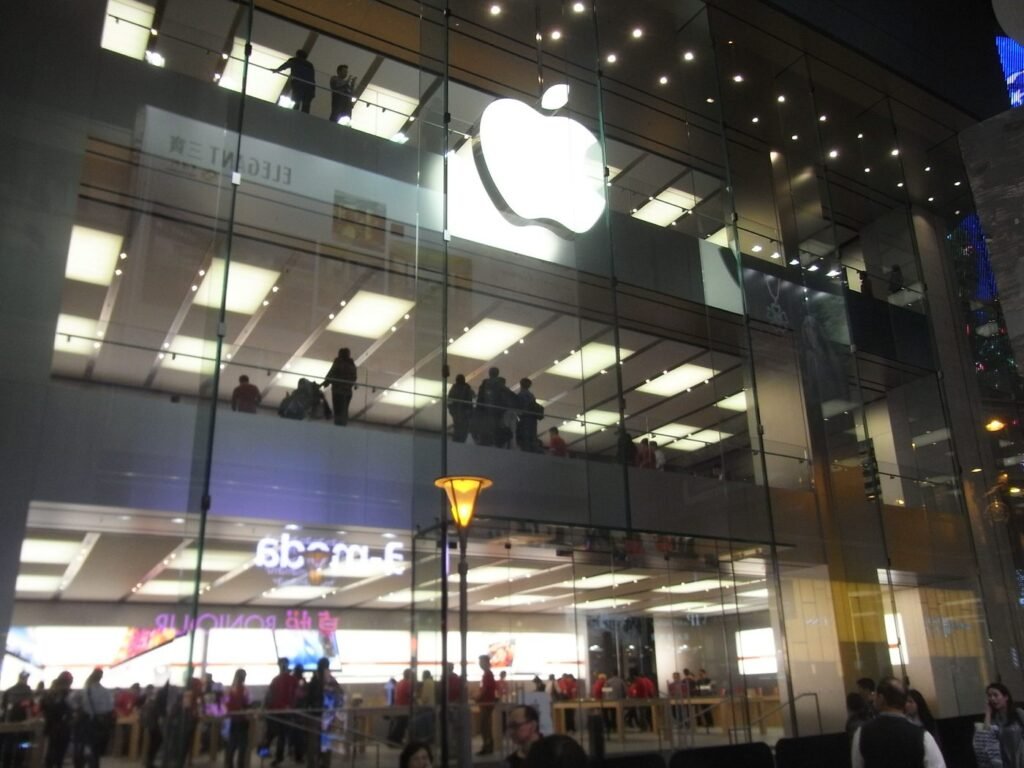
The outage was not confined to phones and laptops. Technology site 9To5Mac reported that Apple retail stores were also affected, and customers shared stories of standing in shops that could not sell them anything. One customer at the Upper West Side store in New York said staff told him the problem was system-wide: no sales, no repairs, and a request to come back later. There were also reports from Apple employees that some corporate offices were offline.
For a company that sells itself on things just working, a day when its own shops cannot take money is an embarrassing look. Apple shares slipped modestly in Tuesday trading as the reports spread.
A Week of Big-Tech Outages
The Apple outage in November 2026 is the latest in a run of disruptions at major technology companies. Microsoft’s Outlook and Microsoft 365 services suffered a global outage recently, and the US Federal Aviation Administration and United Airlines have also faced disruptions in recent days. Each incident had a different cause, but together they underline how much of daily life now depends on a handful of giant platforms — and how quickly a single bad update can ripple across them.
For iPhone users, there is little to do but wait after the Apple outage November 2026. Anyone still seeing a problem should check Apple’s System Status page first: if a service is listed as resolved, signing out and back in usually clears a stuck session. Payments that failed during the outage should be checked against a bank statement before being tried again. And if history is any guide, Apple will say little more about what went wrong — the company’s next update, whenever it comes, will be watched far more closely than usual.
Read more: Apple’s Siri as an AI agent in 2027.
Related Posts
 TechnologyMicrosoft To Do Is Shutting Down on 30 June 2027 — and Your Lists Won’t Move Themselves
 TechnologyYango Pakistan Launches Bank Card Payments — First Ride-Hailing App to Offer Cashless Rides
 TechnologyGlobal Memory Shortage Hits Smartphones: Qualcomm Says Brands Are Cutting Production as Prices Surge
 TechnologyElon Musk Says He Feels “Pretty Foolish” After Spending Nearly $500 Million on Republicans
 TechnologyPakistan Plans 15,206 MW of Renewable Energy by 2035 as NEPRA Approves Power Expansion Plan
 TechnologyGoogle Rolls Out Gemini 4 Neon Today: Faster Frontier AI for Pro and Ultra Users
Most Popular
 How-ToPTA Tax Calculator 2026: Check Mobile Tax on Any Phone420 views
 Pakistan NewsPIA Boeing 787 Lease Deal: What It Means for the Airline396 views
 Canada JobsTech Jobs in Canada: Roles, Salaries, and Skills Needed392 views
 SportsUEFA Champions League 2026-27: Format, Teams and Schedule389 views
 TechnologyPM Shehbaz Sets November Deadline for Alibaba AI and Digitalisation Projects in Pakistan369 views
 ShowbizWomen’s Fashion in Pakistan 2026: Trends, Brands and Style Guide366 views



One comment