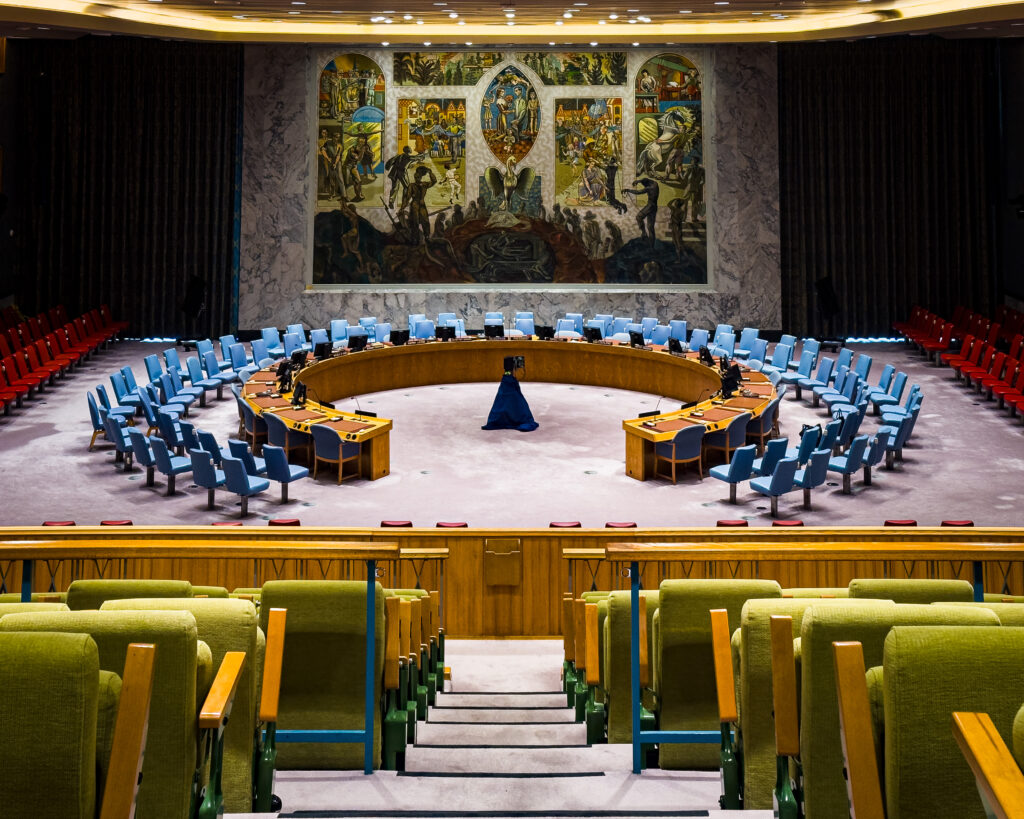
Pakistan has told the United Nations Security Council that decisions on the use of nuclear weapons must always remain in human hands, warning that artificial intelligence must never be used to target nuclear command systems. The warning puts Pakistan nuclear weapons human control at the centre of a fast-growing global debate over how far machines should be allowed to go in war.
Ambassador Syed Haider Shah, Pakistan’s Permanent Representative to the United Nations, delivered the message during a high-level open debate on conflict resolution in an era of rapid technological change. Pakistan’s mission shared the statement on 24 November, and the remarks were reported on 25 November. For Pakistan, the point is simple and serious: as military technology moves faster, human judgement must not be pushed aside.
AI must never target nuclear command systems

The sharpest line in Pakistan’s statement concerned the nuclear domain. Ambassador Shah said this is where the danger is greatest, because decisions on the use of nuclear weapons must remain under human control, and AI systems must never be used to target nuclear command, control and communications systems.
That warning matters because nuclear command systems are the channels through which leaders receive information, weigh options and give orders in a crisis. If those systems are attacked, confused or rushed by automated tools, the risk of a terrible mistake rises. Pakistan warned that interference, miscalculation or compressed decision-making timelines in the nuclear domain could have catastrophic consequences.
The message also carries weight in South Asia, where Pakistan and India both possess nuclear weapons and where the safety of nuclear command and control remains central to strategic stability. Pakistan’s position is that technology should never shorten the time leaders have to think during a crisis to a point where an accident becomes more likely. Readers can see the same concern in Pakistan’s earlier warning that military AI without human control risks faster and deadlier wars.
Faster technology must not supercharge an arms race
Pakistan also warned that the rapid development and convergence of emerging technologies are adding unprecedented speed, scale and complexity to international security challenges. In Pakistan’s view, that speed could accelerate the global arms race if countries rush to deploy new tools without safeguards.
Ambassador Shah said technology itself is neutral, and its impact depends on the intentions and motivations of those using it. Human judgement and control, he stressed, must remain central to the design, development and deployment of emerging technologies. Pakistan called for appropriate safeguards, regulations and governance frameworks so that technological progress supports peace and stability instead of becoming an instrument of domination or warfare.
In the military domain, Pakistan advocated restraint and confidence-building measures to reduce the risk of miscalculation. The envoy proposed crisis communication channels, deconfliction mechanisms and mutual restraint to lower mistrust and prevent accidental escalation. He also warned that delaying regulation to secure advantage will not work, and that selective forums cannot address shared technological challenges.
The debate was not only about weapons. Pakistan said advanced technologies must not become the exclusive domain of a handful of powerful countries. All member states, including developing nations, should be able to take part through inclusive and equitable processes, and restrictions introduced in the name of safety should not be used to deny countries access to essential technologies. Pakistan has made a similar inclusion argument before, including its call for responsible AI for maritime security at the Security Council.
UN chief echoes the human-control warning

UN Secretary-General Antonio Guterres also addressed the meeting and echoed the human-control message. He said that as long as nuclear weapons exist, only humans should decide whether to use them, adding that when civilians die, nobody can blame the algorithm. He repeated his call for talks on a legally binding treaty on lethal autonomous weapons, saying killer robots have no place in the future.
Guterres warned that today’s wars have become testing grounds for AI-based targeting, with algorithms helping to shape life-and-death choices from gathering intelligence to picking targets. He also warned that AI spreads false information and has started an uncontrolled race driven by profit and rivalry, while the hunt for critical minerals and the huge energy and water needs of data centres raise tensions between communities and countries. He urged the Council to protect peace as competition grows, saying countries with the most AI power carry the most responsibility, and he asked for direct communication channels to prevent miscalculation.
Pakistan linked the technology debate to wider threats as well, including misinformation, disinformation, fake news and cyberattacks on critical infrastructure by state and non-state actors. Ambassador Shah said the UN Charter and international law apply in all situations, irrespective of the underlying technologies, and called for collective efforts to clarify how international law applies to emerging security threats. The same envoy this week also warned of a global energy crisis at the UN, underlining how technology, conflict and supply chains now overlap.
For Pakistan, the core demand is clear. Pakistan nuclear weapons human control must remain absolute, AI must never target nuclear command systems, and new technologies need inclusive global governance before they make crises faster and more dangerous. The full statement coverage and the debate report set out Pakistan’s five points in detail: technology is neutral, it must not be a monopoly, it must not supercharge an arms race, it is already supercharging misinformation and cyberattacks, and shared benefits matter more than discriminatory barriers.
Related Posts
 TechnologyWhatsApp Scheduled Messages Roll Out: Send Texts Later, Even Offline
 TechnologyKarachi Safe City Cameras Trace 1,631 Stolen Vehicles in 10 Months
 TechnologyZeeshan Ali Tiangong Boarding Makes History as First Foreign Astronaut Enters China’s Space Station
 TechnologyHuawei Convicted in US: Jury Finds Tech Giant Stole Trade Secrets and Broke Iran Sanctions
 TechnologyAlibaba Super App Pakistan: Government Services to Come Together on One Platform
 TechnologyPakistan Cyber Police Proposal: Shehbaz Orders Fast-Track NCCIA Restructuring
Most Popular
 How-ToPTA Tax Calculator 2026: Check Mobile Tax on Any Phone421 views
 Pakistan NewsPIA Boeing 787 Lease Deal: What It Means for the Airline399 views
 Canada JobsTech Jobs in Canada: Roles, Salaries, and Skills Needed395 views
 SportsUEFA Champions League 2026-27: Format, Teams and Schedule391 views
 TechnologyPM Shehbaz Sets November Deadline for Alibaba AI and Digitalisation Projects in Pakistan372 views
 ShowbizWomen’s Fashion in Pakistan 2026: Trends, Brands and Style Guide366 views