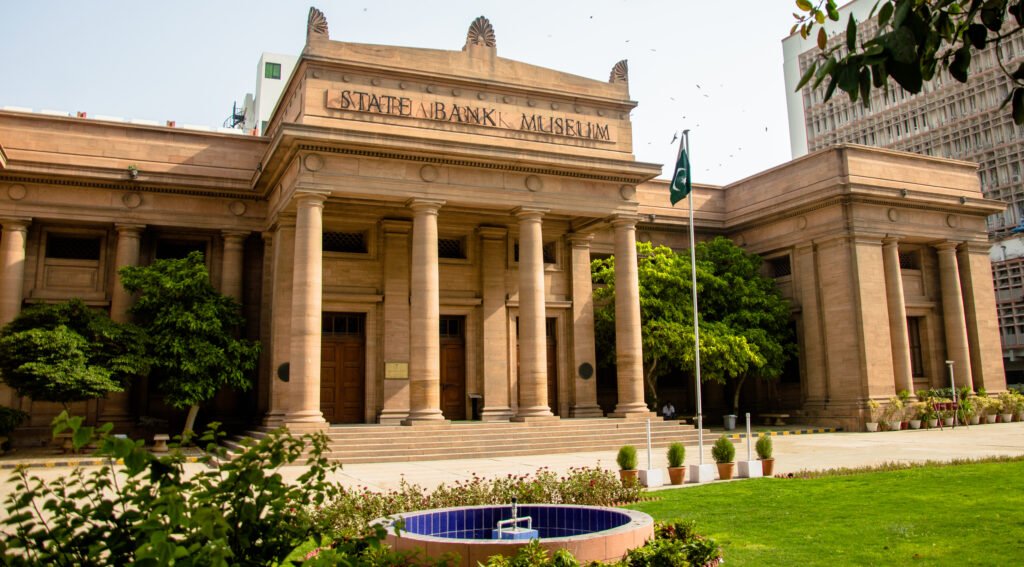
The State Bank of Pakistan (SBP) has raised its benchmark policy rate to 12%, lifting borrowing costs for the first time since April as it tries to stop high inflation from becoming entrenched. The Monetary Policy Committee increased the SBP policy rate by 50 basis points, from 11.5%, at its meeting on Monday 26 October 2026, with nine of its ten members voting in favour. The new rate takes effect from Tuesday 27 October 2026.
The decision was widely expected. Most analysts had forecast a half-point rise after inflation stayed in double digits for months and global energy prices remained high. The SBP’s message was blunt: the inflation outlook has worsened since its last assessment, and waiting would risk letting price pressures spread further through the economy.
The decision in numbers
The headline figures tell the story of a central bank changing direction after six months on hold. The SBP raised its policy rate by 100 basis points to 11.5% on 27 April 2026, then left the SBP policy rate unchanged at its meetings in June, July and September. Monday’s move takes the SBP policy rate to 12%, its highest level since the easing cycle that followed the 22 percent peak of 2023-24.
For ordinary readers, a basis point is simply one-hundredth of a percentage point, so 50 basis points equals half a percentage point. The SBP policy rate is the rate at which the central bank lends to commercial banks, and it sets the anchor for interest rates across the economy, from business loans to the benchmark used to price many bank borrowings.
The near-unanimous vote matters too. Nine out of ten committee members backed the increase, a sign that the committee broadly agreed that the risks from inflation now outweigh the risks to growth from dearer credit.
Why the State Bank raised rates

According to the SBP’s monetary policy statement, the inflation outlook deteriorated significantly because of the ongoing geopolitical crisis and developments in the Middle East. Global oil prices have stayed above 100 US dollars a barrel, and the SBP warned that the intensification of the Middle East conflict, with little prospect of a near-term resolution, is keeping global energy prices persistently elevated.
At home, headline inflation rose to 10.3 percent year-on-year in September, higher than the committee had expected. That was down from 11.1 percent in August, but it remains far above the State Bank’s medium-term target range of 5 to 7 percent, where it has now sat for seven consecutive months. Core inflation, which strips out volatile food and energy prices to show underlying pressure, remained elevated at around 8.4 percent, while wholesale price inflation accelerated to 13.3 percent in September from 11.8 percent in August.
Domestic factors added to the pressure. The governor pointed to higher wheat prices over the past two to three months and their knock-on effect on food inflation. The SBP policy statement listed further risks in plain terms: geopolitical tensions, volatile global commodity prices, unexpected energy tariff adjustments, further wheat price rises and adverse weather, including worsening El Nino conditions.
The logic of the hike is about expectations as much as today’s prices. If households and businesses start to assume that high inflation is here to stay, they build it into wage demands and price-setting, and inflation becomes harder to bring down. By raising the SBP policy rate now, the committee said it aims to keep inflation expectations anchored, contain these second-round effects of the supply shock, and bring inflation back inside the 5 to 7 percent target over the medium term.
What the hike means for loans, businesses and households

A higher SBP policy rate tends to feed through to the cost of borrowing, though not overnight and not by the same amount for everyone. Many business and personal loans in Pakistan are priced off the Karachi Interbank Offered Rate, known as KIBOR, which moves with expectations about the policy rate. A loan linked to KIBOR usually changes at its next reset date after an SBP policy rate change, so existing borrowers may see the effect at their next adjustment rather than immediately.
For businesses, dearer credit raises the cost of financing stock, expansion and working capital. For households, it can mean higher monthly payments on variable-rate loans and costlier instalment purchases, at a time when household budgets are already stretched. Weekly price data underlines that strain: the Sensitive Price Indicator, which tracks 51 essential items, was 11.85 percent higher than a year earlier in the week ended 22 October, with LPG up 22.44 percent in a single week.
Savers should not assume an automatic windfall. Deposit rates do not move in lockstep with the SBP policy rate, and banks adjust their savings and term-deposit offers at different speeds. Anyone with savings should check what their own bank is actually offering rather than assuming the half-point rise flows straight into their account.
The practical advice is straightforward: borrowers should check whether their loan is fixed or variable, when it next resets, and what the new payment would be, before committing to fresh borrowing. Businesses that rely on bank finance should revisit their cash-flow plans for the next quarter with the higher SBP policy rate in mind.
Growth and the external account: what the State Bank still expects
Despite the tighter stance, the committee left its growth outlook broadly unchanged. It maintained its projection for real GDP growth of 3.5 to 4.5 percent in fiscal year 2026-27, and said economic activity had started to recover gradually. Large-scale manufacturing output grew 1.9 percent year-on-year during July and August, compared with marginal growth of 0.4 percent in the final quarter of fiscal 2026, while cement and petroleum sales, private-sector credit and purchasing managers’ index readings also pointed to recovery.
On the external front, Pakistan recorded a current account deficit of 874 million US dollars in the first quarter of 2026-27. Exports were recovering, helped by rice, high-value-added textiles and services, and workers’ remittances remained resilient. Imports rose sharply, however, led by non-energy products. The SBP still expects the full-year current account deficit to stay within its earlier projected range of zero to 1 percent of GDP, and said higher financial inflows should help lift foreign exchange reserves beyond their current level of around 21.5 billion US dollars, roughly three months of import cover.
On the fiscal side, Federal Board of Revenue tax collection grew 7 percent year-on-year in the first quarter and exceeded its target by 33 billion rupees, while substantial State Bank profits and contained government spending were expected to keep the fiscal balance in surplus for the quarter. The committee also noted Pakistan’s staff-level agreement with the International Monetary Fund, reached earlier in October, while stressing that prudent fiscal management remains essential to preserving macroeconomic stability.
Business reaction: industry calls the hike anti-business

The reaction from industry was swift and hostile. The Federation of Pakistan Chambers of Commerce and Industry strongly denounced the decision, arguing that raising borrowing costs when manufacturers already face soaring utility tariffs and severe liquidity constraints would damage stabilisation, industrial expansion and export competitiveness.
Its president, Atif Ikram Sheikh, urged the central bank to recalibrate policy and bring rates down to single digits. The federation’s core argument is that Pakistan’s inflation is driven mainly by supply-side bottlenecks and energy costs, not by excess demand, so dearer credit punishes businesses without fixing the underlying cause. It warned that high rates have turned borrowing into an unsustainable burden and are pushing firms towards closure without delivering price stability.
The disagreement captures the central dilemma of this decision. The State Bank is prioritising the fight against inflation expectations, while industry argues that growth and jobs are paying the price. Both sides will be watching the same numbers in the months ahead: whether inflation falls towards the target, and whether growth holds up under the higher rate.
What to watch next

Three things will decide whether Monday’s hike proves to be a single step or the start of a longer tightening phase. The first is the next inflation readings: a sustained fall towards single digits would vindicate the decision, while another upside surprise would strengthen the case for further action. The second is energy and food prices, especially oil, electricity and gas tariffs, and wheat. The third is whether inflation expectations, among consumers and businesses, start to come down.
For readers, the immediate point is simpler. From 27 October, Pakistan’s SBP policy rate is 12%. Borrowing is dearer, the SBP is signalling that it will prioritise bringing inflation back to its 5 to 7 percent target, and the next few months of price data will show whether that gamble pays off.
Related Posts
 BusinessGeely Pakistan Launch: Bestway Brings EX2, EX5 and Starray to Pakistan
 BusinessAskari Bank × Nium Brings Real-Time Cross-Border Payments for DHA Islamabad–Rawalpindi Customers
 BusinessGovt Bans Manual Detection Bills: DISCOs Ordered to Bill Consumers Through Online Portal Only
 BusinessPakistan Weekly Inflation Jumps to 11.85% as LPG Prices Soar 22.44% in a Week
 BusinessGold Price in Pakistan Falls by Rs7,000 to Rs424,536 per Tola on Friday
 BusinessPTCL Group Financial Results 2026: Revenue Up 62% as Ufone–Telenor Merger Pays Off
Most Popular
 SportsBallon d’Or 2026: London Ceremony, Nominees and All-Time Records Ahead of 70th Anniversary279 views
 How-ToPTA Tax Calculator 2026: Check Mobile Tax on Any Phone277 views
 TechnologyAround 20 Pakistani Tech Companies Showcase Innovation at TechCrunch Disrupt 2026 in San Francisco256 views
 TechnologyRedmi K100 Launching on 28 October: 10,000mAh Battery, 185Hz Display and Full Specs250 views
 SportsUEFA Champions League 2026-27: Format, Teams and Schedule248 views
 Canada JobsTech Jobs in Canada: Roles, Salaries, and Skills Needed245 views