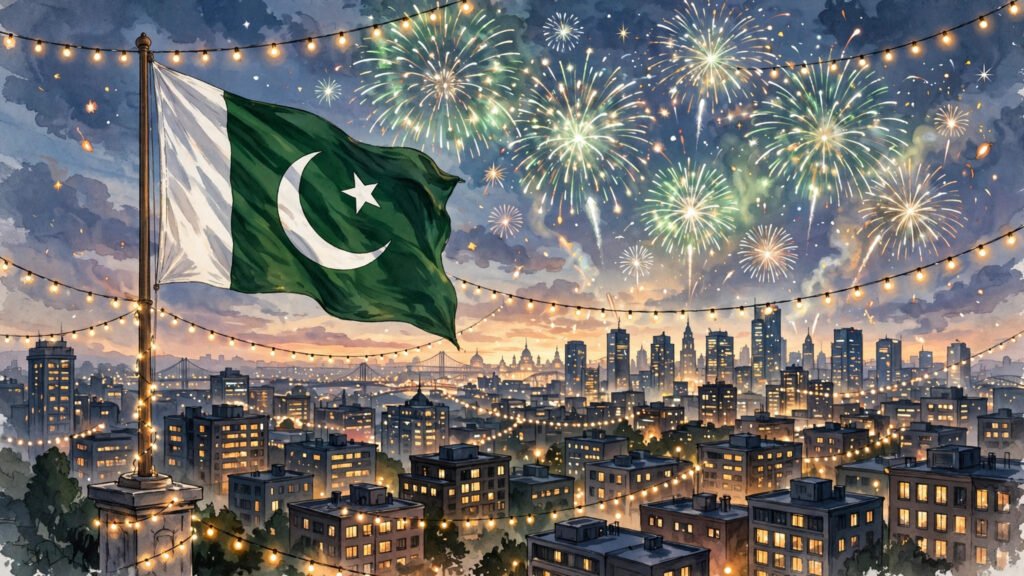
14 August Pakistan 2026: Independence Day Celebrations Guide
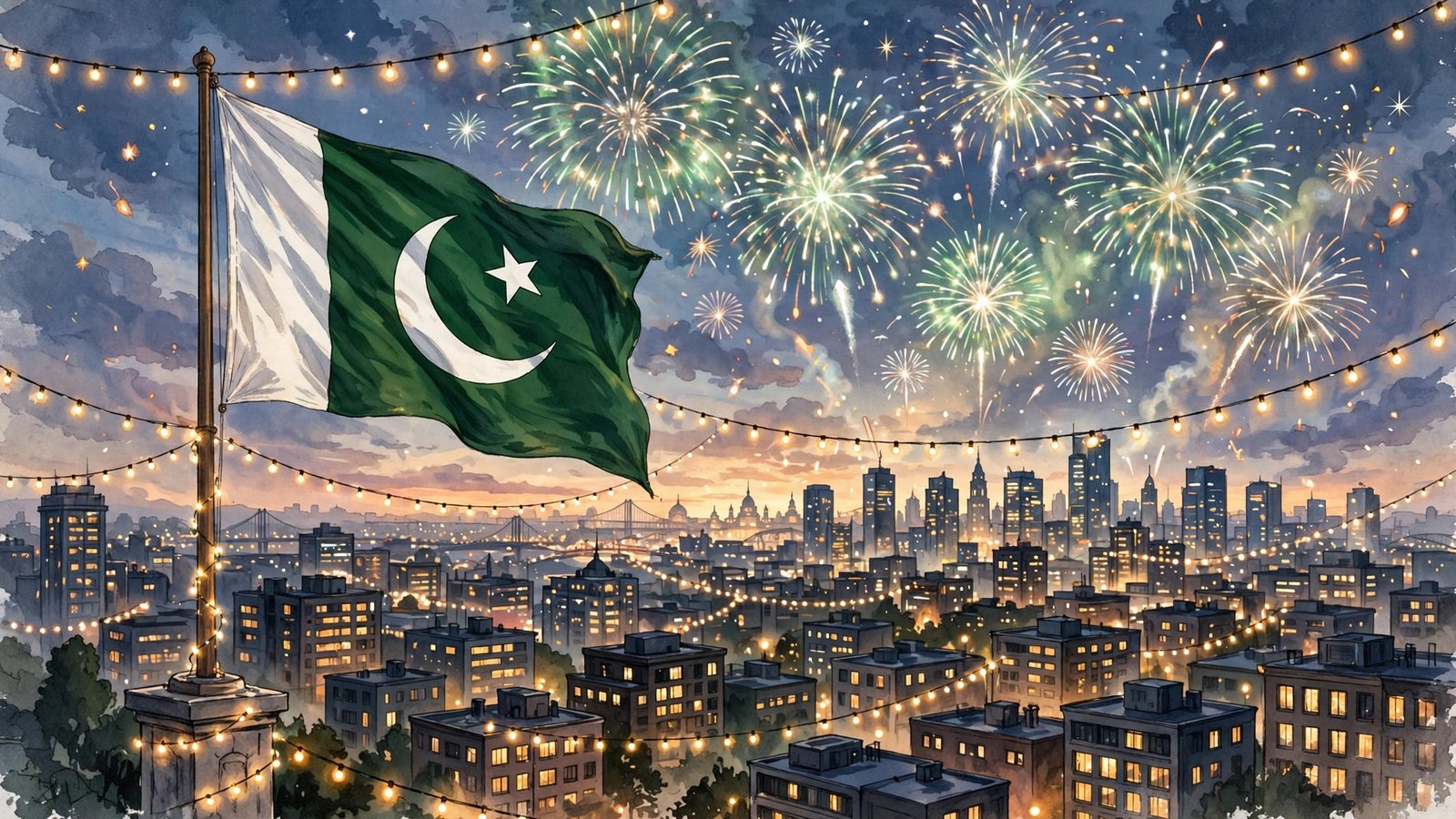
14 August 2026 marked Pakistan’s 79th Independence Day — Youm-e-Azadi — commemorating the country’s emergence as a sovereign state on 14 August 1947. The day fell on a Friday and was observed as a national public holiday, with flag-hoisting ceremonies, special prayers, illuminations and cultural events held across the country from Karachi to Khyber.
14 August 2026: How Independence Day Was Celebrated
The official festivities began in Islamabad with the raising of the national flag at the Parliament House and the Presidency, accompanied by a 31-gun salute in the federal capital and 21-gun salutes in the provincial capitals. The day opened with special prayers in mosques across the country for Pakistan’s integrity, solidarity and development, and the national anthem was sung at government buildings, schools and public gatherings.
In Punjab, the provincial government synchronised the morning observances: at exactly 7:59 am a siren sounded and traffic paused across the province, followed at 8:00 am by flag-hoisting ceremonies and the national anthem at schools, colleges and government offices. Educational institutions held morning assemblies to mark the occasion, with students and teachers participating in the ceremonies.
Flag Hoisting Ceremonies Across Pakistan
Flag-hoisting ceremonies were held at institutions large and small on the day. The Supreme Court of Pakistan held a dignified ceremony in Islamabad where the national flag was hoisted by children from minority communities alongside the Chief Justice and judges — a symbolic expression of the country’s constitutional commitment to equality and religious harmony. Business bodies such as the Rawalpindi Chamber of Commerce and Industry marked the day with flag hoisting and cake-cutting ceremonies attended by diplomats and government representatives.
Pakistani missions abroad also observed the day: the High Commission of Pakistan in Pretoria, South Africa, hosted a flag-hoisting ceremony with members of the Pakistani community, where messages from the President, the Prime Minister and the Foreign Minister were read out, paying tribute to the leaders of the Pakistan Movement.
Streets, Bazaars and the Spirit of Youm-e-Azadi
In the weeks before the big day, special stalls and bazaars appeared in every major city selling national flags, buntings, badges, portraits of national heroes and green-and-white decorations. Homes, vehicles, streets and marketplaces were decorated with flags and lights, and illuminated public buildings glowed green and white on the eve of the holiday and through the night itself.
Public celebrations included fireworks displays, street parades, seminars, televised transmissions, music and poetry competitions, children’s shows and art exhibitions. In Naran, the Independence Day programme featured a cricket tournament final and a rafting race on the River Kunhar, drawing tourists to the Kaghan Valley during the holiday. Universities organised month-long programmes — blood donation drives, cultural performances, photography exhibitions and tree plantation drives — extending the festive spirit well beyond a single day.
The History Behind the Date
Independence Day commemorates the events of August 1947, when Pakistan became an independent dominion following the end of British rule in the subcontinent, with Muhammad Ali Jinnah as its first Governor-General. The day honours the sacrifices of the Pakistan Movement and the vision of its leaders, and each year’s celebrations renew the pledge to build a prosperous, peaceful and united Pakistan.
Read more: our Eid ul Adha 2026 date and holidays guide and Muharram 2026 observance guide. The celebrations described here were cross-checked on 15 October 2026 against the Independence Day 2026 events overview and Sabah News’ report on the Supreme Court ceremony.
Celebrating at Home: Ideas for Families
Families across Pakistan mark the day in their own way. Many hoist a small flag at home, dress children in green and white, and bake Azadi cakes decorated with the crescent and star. In the evening, neighbourhoods gather to watch the fireworks, while television channels air the official ceremonies, national songs and classic milli naghmay that everyone sings along to.
Community spirit runs high: residents organise clean-up drives, decorate their streets with buntings, and hold small functions with speeches and tableaus by children. Schools often assign Independence Day projects — essays, paintings and models of national monuments — keeping the history alive for the next generation long after the holiday ends.
Frequently Asked Questions
Which Independence Day did Pakistan celebrate in 2026? The 79th Independence Day, marking 79 years since 1947.
Was 14 August 2026 a public holiday? Yes — it fell on a Friday and was observed as a national public holiday across Pakistan.
How do official celebrations begin? With flag hoisting at the Parliament House and Presidency in Islamabad, a 31-gun salute in the capital and 21-gun salutes in provincial capitals.
What do people do on Independence Day? Attend flag-hoisting ceremonies, decorate homes and streets, watch fireworks, and join cultural and community events.
Why is 14 August called Youm-e-Azadi? Youm-e-Azadi means “Day of Freedom” in Urdu — the day Pakistan achieved independence from British rule in 1947.
Frequently Asked Questions: 14 August Celebrations
14 August — Pakistan’s Independence Day — is the country’s most patriotic celebration. This FAQ covers 14 August celebration Pakistan traditions, Independence Day Pakistan 2026 events, famous 14 August speeches, and Pakistan Independence Day history.
14 August Celebration Pakistan: Traditions
14 August celebration Pakistan traditions include flag-hoisting ceremonies at the Presidency and provincial capitals, the change of guard at Mazar-e-Quaid, fireworks, milli naghmay on every channel, and streets draped in green and white. Families decorate homes and cars; children paint flags on their faces. The Independence Day Pakistan 2026 celebrations follow this beloved template with official ceremonies broadcast nationwide.
Pakistan Independence Day History
Pakistan Independence Day history begins on 14 August 1947, when Pakistan emerged as an independent nation under Quaid-e-Azam Muhammad Ali Jinnah’s leadership. Understanding the Pakistan Movement — the Lahore Resolution of 1940, the struggle for a separate homeland — gives 14 August its deeper meaning beyond festivities. Schools and media revisit this history each year; parents should share it with children as more than a holiday.
14 August Speeches and Messages
14 August speeches by the President and Prime Minister set the national tone — reflecting on achievements, acknowledging challenges and outlining direction. The armed forces’ messages emphasise defence and unity. Citizens can make the day meaningful beyond celebration: a moment reflecting on civic duty honours the Pakistan Independence Day history the day commemorates.
Related Posts
 Pakistan NewsMultan Bosan Road Crash: Five Young Men Killed as Speeding Car Hits Divider, Bursts Into Flames
 Pakistan NewsShehbaz Sharif Welcomes Gauth AI Initiative, 4,000 Free Subscriptions Announced for Pakistan
 Pakistan NewsMohsin Naqvi Doha Speech: “We Don’t Want Credit for Stopping Wars”
 Pakistan NewsPresident Zardari to Visit Germany on Oct 22 — First Presidential Visit in 20 Years
Most Popular
 How-ToPTA Tax Calculator 2026: Check Mobile Tax on Any Phone92 views
 BISPPunjab Driving License Scam Alert: Fake Websites & “Without Test” Fraud | UrduPro81 views
 Canada JobsTech Jobs in Canada: Roles, Salaries, and Skills Needed76 views
 TechnologyTecno Mobile Prices in Pakistan 2026: Spark, Camon and Pova Series Compared67 views
 BusinessTech Stocks Trillion Loss: $1 Trillion Wiped Out as Oil Hits $11066 views
 ShowbizWomen’s Fashion in Pakistan 2026: Trends, Brands and Style Guide63 views