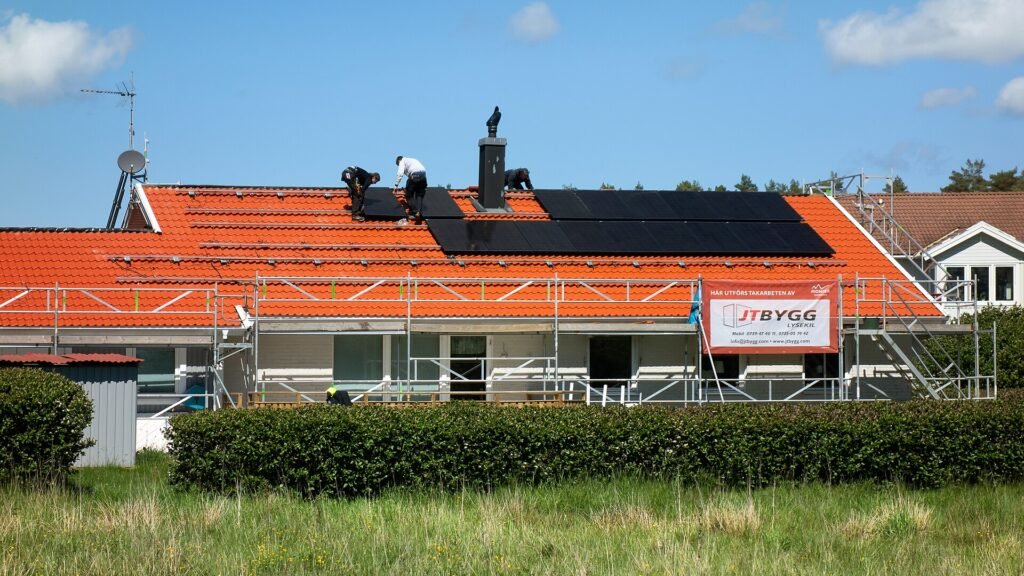
Pakistan’s rooftops saved the country up to $5.5 billion in a single year. The SBP solarization savings estimate puts net annual import savings from solar power at between $4.5 billion and $5.5 billion in fiscal year 2026 (FY26), after the cost of importing panels, inverters and batteries is taken out. The figure comes from State Bank of Pakistan staff calculations reported on 23 November, and it is an estimate — not an audited saving — built from import data, generation figures and fuel prices.
The gross saving is larger still. Before equipment costs, solar generation displaced fuel imports worth between $5.9 billion and $6.9 billion in FY26. The gap between the gross and net figures is the roughly $1.4 billion Pakistan spent in the same year importing solar equipment — $819 million on panels, $344 million on inverters and $254 million on batteries, according to Pakistan Bureau of Statistics (PBS) trade data.
Solar capacity jumped from 38GW to 51GW
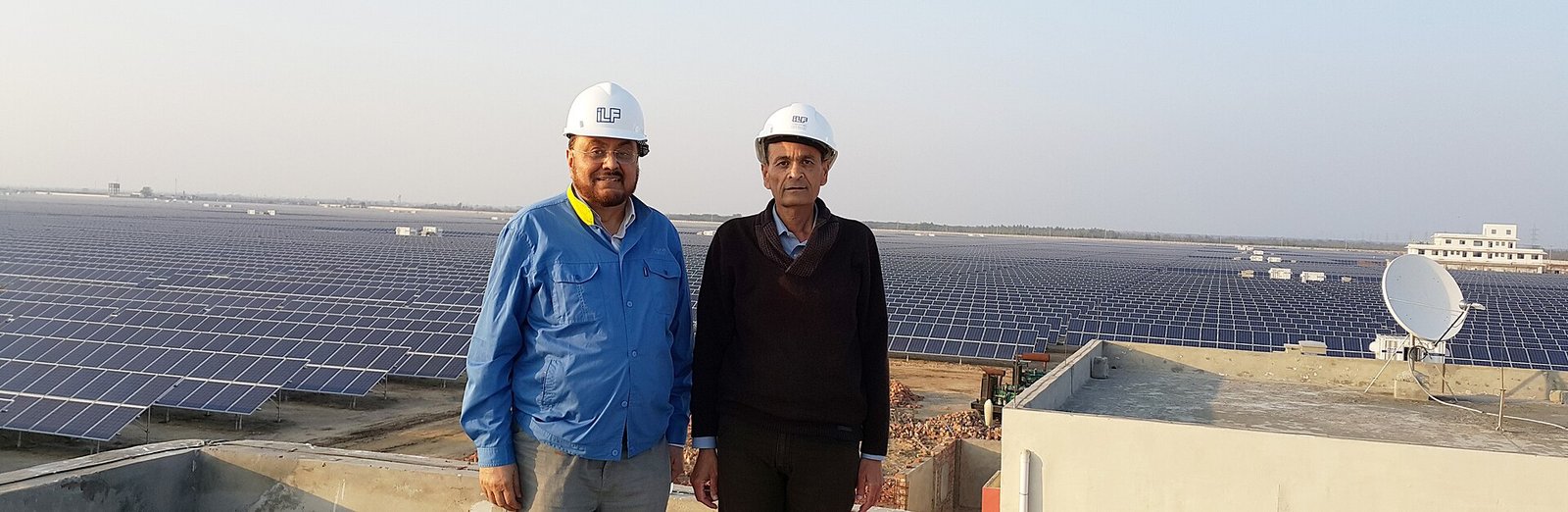
The savings follow one of the fastest consumer-led energy shifts anywhere in the world. Installed solar capacity rose from 38 gigawatts in FY2025 to 51 gigawatts by March 2026, according to the Pakistan Electricity Review Report 2026 cited in the SBP estimate. Averaged across FY26, operational capacity stood at about 44.5 gigawatts.
That capacity generated an estimated 66 to 78 terawatt-hours of electricity in the year, assuming a capacity factor of 17 to 20 percent — the five-year average for solar in Pakistan. The boom was driven by households, farmers and businesses responding to high grid tariffs and falling panel prices, rather than by a government programme. Rooftop solar pushed solar’s share of generation from 1% to 28%, and nearly 22 gigawatts of rooftop solar were added in two years.
How the SBP solarization savings were calculated

The calculation starts with what solar power replaced. SBP staff put the weighted average fuel cost of the displaced generation at PKR 24.9 per kilowatt-hour, reflecting the mix of fuels solar pushed out of the system: re-gasified liquefied natural gas (RLNG) at PKR 34 per unit, coal at PKR 16 and residual furnace oil (RFO) at PKR 58.
Multiplying that rate by the estimated 66 to 78 billion units of solar generation gives gross savings of PKR 1.65 trillion to PKR 1.94 trillion. Converted at an average exchange rate of PKR 281 to the dollar, that is $5.9 billion to $6.9 billion. Subtracting the $1.4 billion equipment import bill leaves the net range of $4.5 billion to $5.5 billion.
The estimate draws on PBS HS 8 import data, the Pakistan Electricity Review Report, NEPRA performance reports on operating power plants, China’s solar PV export data and Ember’s research on Pakistan’s distributed solar growth.
What the savings mean for Pakistan’s energy bill
For a country that imports almost all of its oil and gas, the figures matter beyond the energy sector. Every unit of electricity generated on a rooftop is a unit of fuel Pakistan does not have to buy abroad, easing pressure on foreign exchange reserves and on the import bill. Punjab’s free solar panel scheme, now in its second phase covering 100,000 more homes, is one of the few government programmes riding the same wave — most of the growth has come from private households paying for their own systems.
A separate analysis underlines how large the shift has become. Renewables First and the Centre for Research on Energy and Clean Air estimated in March 2026 that Pakistan had already avoided more than $12 billion in oil and gas imports since 2018 through solar, with a further $6.3 billion possible by the end of 2026 if prices stay high. That is a different measure from the SBP’s single-year estimate, and the two should not be added together.
There are limits to what the SBP figure claims. It is an estimate for one fiscal year, not a cash saving in the budget, and solar power does not cut the fuel used by transport, which still runs almost entirely on imported oil. The grid also has to absorb power that flows in the daytime and stops at sunset — a challenge that grows as more rooftops come online. What the numbers do show is that the panels already on Pakistani roofs are now doing measurable work for the national import bill.
Whether the savings keep growing depends on what happens next: panel prices, net-metering rules and how quickly the grid adapts to two-way power flows. For now, the SBP estimate puts a number on a change most Pakistanis can already see from their own rooftops.
Sources: TechJuice and NewzTodays.
Related Posts
 TechnologyFBR Asset Declaration Portal: Officers Must Now Declare Social Media Accounts, Foreign Trips and Club Memberships
 TechnologyPakistan Wins 11 Awards at ASOCIO Digital & AI Awards 2026 in Jakarta
 TechnologyNvidia Reinstates Jensen Huang as CEO After 11 Days — Shares Jump in Premarket Trading
 TechnologyPTA Gives Operators Three Months to Take Up District Internet Licences
 TechnologyPakistan’s First Astronaut: Ahsan Iqbal in China for Send-Off as Shenzhou-24 Launch Nears
 TechnologyPTA Resolves 94% of 7,254 Telecom Complaints in October as Jazz Tops the List
Most Popular
 How-ToPTA Tax Calculator 2026: Check Mobile Tax on Any Phone421 views
 Pakistan NewsPIA Boeing 787 Lease Deal: What It Means for the Airline396 views
 Canada JobsTech Jobs in Canada: Roles, Salaries, and Skills Needed394 views
 SportsUEFA Champions League 2026-27: Format, Teams and Schedule390 views
 TechnologyPM Shehbaz Sets November Deadline for Alibaba AI and Digitalisation Projects in Pakistan370 views
 ShowbizWomen’s Fashion in Pakistan 2026: Trends, Brands and Style Guide366 views