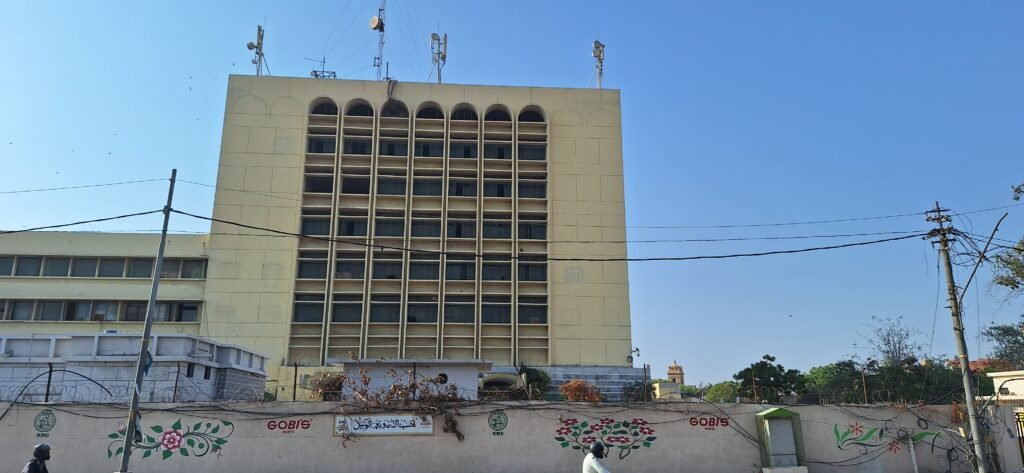
Pakistan is preparing to take one of its longest-running corporate battles to an international court. More than two decades after the UAE telecom giant Etisalat bought a controlling stake in PTCL and held back part of the payment, Dawn reported on Tuesday that the federal cabinet has directed the attorney general’s office to prepare the case, seeking not just the unpaid $800 million but two decades of lost value and damages.
The move marks a sharp break from Pakistan’s long policy of quiet diplomacy on the dispute. Islamabad has spent years choosing negotiation over litigation to protect its relationship with the UAE. That patience has now run out: the government’s own committee, constituted in July 2026, concluded that international arbitration under the original sale agreement is the only remaining route to recover the money.
What the cabinet has decided

The federal cabinet has instructed the Office of the Attorney General for Pakistan to start building the case, with the direction to act “at the earliest” under Rule 24 of the Rules of Business, 1973. The matter came up on Tuesday at a joint meeting of the Senate standing committees on information technology and privatisation, jointly chaired by Dr Afnanullah Khan and Palwasha Khan.
The session itself was a tense affair. IT Secretary Zarrar Hasham Khan called the item sensitive and asked reporters and other unauthorised people to leave the room, after which the meeting continued behind closed doors. Some senators were visibly annoyed that they had not even been shown the sale purchase agreement governing the deal. “The strange part is that we parliamentarians cannot handle information, but it is safe with the bureaucrats,” one senator remarked, capturing the frustration in the room.
Crucially, there are still steps before any case is actually filed. The July committee recommended that the attorney general first assess the strength of Pakistan’s case, its chances of success and the legal risks. Only if the merits permit arbitration would the attorney general seek approval from the prime minister or the federal government before issuing a formal Notice of Intent to Etisalat. The Privatisation Division told the Senate committees that a summary on the matter has already been sent to the federal cabinet.
The $800 million that was never paid

At the centre of the row is one of Pakistan’s biggest privatisations. In 2005, the government sold a 26 per cent stake in Pakistan Telecommunication Company Limited — along with management control — to Etisalat International Pakistan for $2.59 billion. Of that sum, $1.76 billion has been received. About $800 million remains unpaid.
The unpaid portion is tied to land and buildings. Under the deal, PTCL’s properties were to be transferred to the new management, and while 99 per cent of them have been handed over, 32 of the total 3,246 properties are still untransferred. Etisalat, which has since rebranded as e&, has kept holding back the $800 million because of those outstanding transfers — an argument that has stalled any settlement for twenty years.
Twenty years of failed talks

This is far from a new dispute. The Ministry of Privatisation says the government has been trying since 2015 to resolve the post-privatisation issues, setting up several committees and holding direct talks with Etisalat. In January 2026, Deputy Prime Minister and Foreign Minister Ishaq Dar travelled to Dubai to meet Etisalat chairman Jassem Mohammed Bu Ataba Al Zaabi, and both sides committed to resolving the matter quickly. Ten months later, that promise has produced no settlement.
The July 2026 committee — headed by the prime minister’s adviser on privatisation, with members from the IT and law ministries and the attorney general’s office — looked at that twenty-year record and recommended the arbitration route. Its view is that the sale purchase agreement itself provides for international arbitration, and Pakistan should use it to recover the $800 million along with its opportunity cost since 2008 and damages.
What happens next — and why it matters

If the attorney general’s assessment clears the way and the prime minister signs off, the next milestone will be the formal Notice of Intent to Etisalat. Arbitration, though, is a slow and costly road, and Etisalat’s defence — that properties were never fully transferred — is the same argument that has defeated every settlement attempt since 2008.
But if Pakistan wins, the payoff could be enormous: $800 million plus two decades of lost value and damages flowing back into the public purse at a time when every rupee counts. The case would also close one of the most embarrassing loose ends of Pakistan’s privatisation history — a deal from 2005 that is still unfinished in 2026. What is clear is that the era of waiting for a negotiated handshake is over; the fight for Pakistan’s $800 million is heading to court.
Also read: PTCL broadband and fibre packages. The dispute is playing out against a telecom landscape where IT Minister Shaza Fatima Khawaja continues to push digital expansion across the country.
Related Posts
 TechnologyPakistan’s Byonyks Heads to San Francisco for Startup World Cup Grand Finale With $1 Million Prize at Stake
 TechnologyMicrosoft Offers 60,000 Employees a Voluntary Exit as AI Spending Soars
 TechnologyChina Proposes Export Controls on Solar Manufacturing Tech: What It Means for Pakistan
 TechnologyShaza Fatima Named ‘Industry Champion of the Year’ at The Fast Mode Awards 2026
 TechnologyMicrosoft Prices $25 Billion Bond Sale to Fund AI Push — Its Biggest Debt Raise in Nine Years
 TechnologyFungoLabs NFT Sale Goes Live Tomorrow: 3,232 Secret-Bid NFTs on Ethereum
Most Popular
 How-ToPTA Tax Calculator 2026: Check Mobile Tax on Any Phone404 views
 Pakistan NewsPIA Boeing 787 Lease Deal: What It Means for the Airline382 views
 SportsUEFA Champions League 2026-27: Format, Teams and Schedule375 views
 Canada JobsTech Jobs in Canada: Roles, Salaries, and Skills Needed361 views
 SportsBallon d’Or 2026: London Ceremony, Nominees and All-Time Records Ahead of 70th Anniversary338 views
 ShowbizWomen’s Fashion in Pakistan 2026: Trends, Brands and Style Guide336 views