Pakistan Economy 2026: Growth, Inflation and Outlook

The pakistan economy 2026 story took a sharper turn in October, when the International Monetary Fund released its latest World Economic Outlook and painted a more difficult picture than the government’s own numbers. The Fund kept its growth forecast for fiscal year 2026-27 at 3.5% but raised its inflation projection sharply to 9.9%, warning that Pakistan faces firmer prices, a wider external gap and limited room for policy easing. As of 15 October 2026, the economy is growing but households are feeling the squeeze of rising living costs.
Pakistan Economy 2026: What the IMF’s Latest Outlook Says
According to the IMF’s World Economic Outlook, released on 13 October 2026 during the World Bank-IMF Annual Meetings, the pakistan economy 2026 outlook is a mixed bag. GDP growth is projected at 3.5% for FY27, below the government’s 4% target and slightly lower than the 3.6% recorded in the previous fiscal year. The Fund also noted that real GDP growth had reached 4% during the first three quarters of FY26, before higher energy prices and supply disruptions slowed momentum.
The more consequential warning is on inflation. The IMF now expects consumer prices to rise 9.9% in FY27, up sharply from its earlier 8.4% forecast and well above the government’s 8.2% target. The Fund raised inflation estimates across the Middle East and Central Asia region, citing the ongoing conflict in the Middle East, oil prices above $100 a barrel and disrupted energy supplies.
Growth Versus Government Targets
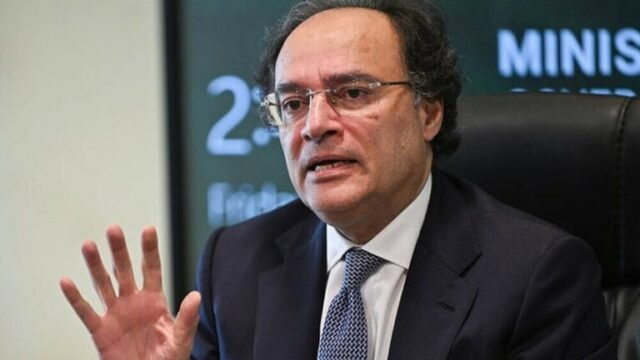
Finance Minister Muhammad Aurangzeb has expressed confidence that growth will come in “north of 4%”, telling Reuters that Pakistan’s economy remains resilient. The IMF’s numbers suggest the lender is not yet convinced, a gap that will matter when the next programme review is discussed. The Fund’s report kept Pakistan below the government’s target but only modestly ahead of the global rate of 3.4% projected for 2027.
The trade-off is real: the IMF also expects Pakistan’s current account balance to swing to a deficit of 1% of GDP (about $4.4 billion) from a surplus of 0.5% in fiscal 2025. That means the country may need more external financing just as price pressures rise, since Pakistan’s exports alone cannot cover a rising import bill. The Fund expects unemployment to ease from 6.9% to 6.5%, offering some relief on the jobs front.
What It Means for Prices and Interest Rates
For households, the IMF’s 9.9% inflation forecast means wage gains are likely to lag living costs again through FY27. The government has been passing higher international fuel costs on to domestic consumers, alongside heavy taxes on petroleum products. It also introduced a scheme paying monthly compensation of Rs 2,000 to motorcyclists and Rs 3,000 to small car owners — a scheme the IMF objected to, calling it broad-based and expensive.
The high inflation forecast may focus attention on tight monetary policy. During recent review talks, the federal government and the State Bank of Pakistan expressed hope of hitting the 8.2% annual target despite mounting pressures, but the IMF’s revision points to a more challenging path. Headline inflation had eased to around 10.3% in September 2026 after peaking in May, suggesting the worst of the spike may be behind, though core price pressures persist.
Structural Reforms Still Unfinished
The pakistan economy 2026 cannot grow its way out of trouble without fixing deep structural weaknesses. Narrow exports, weak revenue collection, persistent fiscal deficits and expensive energy keep the country dependent on external support. Read our detailed breakdown of Pakistan’s debt and the latest IMF programme review to see how financing ties into this outlook.
Power-sector circular debt remains a sore point: the IMF flagged a Rs 61 billion rise in the last fiscal year, taking the outstanding amount to Rs 1.675 trillion by June 2026. Progress on privatisation, energy pricing and documentation of the economy will decide whether this growth story converts into durable prosperity or another cycle of stabilisation followed by slippage.
Frequently Asked Questions
What is Pakistan’s GDP growth forecast for FY27?
The IMF projects 3.5% GDP growth for FY 2026-27, below the government’s 4% target and slightly below the 3.6% recorded in FY26.
What is the IMF’s inflation forecast for Pakistan?
The IMF raised its FY27 inflation forecast to 9.9%, up from 8.4% in April and July, and above the government’s 8.2% target.
Will Pakistan’s current account stay in surplus?
No — the IMF expects a deficit of about 1% of GDP (roughly $4.4 billion) in FY27, versus a 0.5% surplus in FY25.
How does Pakistan compare with global growth?
Global growth is projected at 3.1% in 2026 and 3.4% in 2027, so Pakistan’s 3.5% is broadly in line, though well below India’s projected 7%.
Where can I follow Pakistan’s economic data?
Follow the IMF’s World Economic Outlook and the State Bank’s monthly statistical bulletin for official figures.
In-Depth: Pakistan’s Economy in 2026 — Growth and Inflation
Pakistan economy 2026 performance is judged on two headline numbers: GDP growth and inflation. The pakistan gdp growth 2026 figures reflect agriculture output, large-scale manufacturing and services activity, with the government’s stabilisation programme aiming to convert recovery into durable growth.
The pakistan inflation rate 2026 trajectory matters more to ordinary citizens — food and energy prices determine household welfare. The pakistan economy outlook 2026 from analysts balances IMF programme compliance, remittance strength and export performance against risks from global commodity prices and climate shocks to agriculture.
The sbp monetary policy 2026 decisions on interest rates tie it all together: lower rates support growth but risk inflation, while higher rates tame prices at the cost of investment. For businesses and investors, following the Pakistan economy 2026 data releases — CPI, trade figures and SBP statements — is essential planning input.
Related Posts
 BusinessNational Savings Profit Rates Revised: New Rates Effective From 21 October 2026
 BusinessIMF Urges Fairer Pakistan Tax System as Salaried Class Pays Rs629 Billion
 BusinessPSX Suspends LSE SPAC-I Trading as Ningbo Green Light Energy Merger Clears Way for October 26 Listing
 BusinessPakistan Freelancers Earn Record $197 Million in September 2026
 BusinessPakistan Introduces Electronic Power Monitoring System to Crack Down on Power Theft
Most Popular
 How-ToPTA Tax Calculator 2026: Check Mobile Tax on Any Phone143 views
 Canada JobsTech Jobs in Canada: Roles, Salaries, and Skills Needed117 views
 TechnologyRedmi K100 Launching on 28 October: 10,000mAh Battery, 185Hz Display and Full Specs110 views
 TechnologyTecno Mobile Prices in Pakistan 2026: Spark, Camon and Pova Series Compared110 views
 ShowbizWomen’s Fashion in Pakistan 2026: Trends, Brands and Style Guide97 views
 BISPPunjab Driving License Scam Alert: Fake Websites & “Without Test” Fraud | UrduPro94 views