The man in charge of building superintelligence at Meta has issued a warning that sounds like it comes from his critics. Alexandr Wang, the company’s chief AI officer, wrote at the weekend that “superintelligence is arriving” — and that humanity may not be able to keep control of it. Within hours, members of the United States Congress were quoting him back, demanding a pause on advanced AI development and a ban on superintelligence itself.
The Alexandr Wang superintelligence warning captures a strange new moment in the AI race: the people building the most powerful systems are now among the loudest voices warning about them, and politicians are turning those warnings into legislation. Wang’s essay, and the bill it has energised, could shape how the next American Congress handles the most powerful technology of the decade.
“It is hard to imagine” keeping control
Wang posted his essay on X under the title “Superintelligence is arriving”, arguing that the decisions humanity makes over the next year could shape the world future generations inherit. His central worry is recursive self-improvement — AI systems improving themselves without human help, each generation smarter than the last. “It is hard to imagine a world where humanity can maintain control over fully unconstrained recursive self-improvement,” he wrote. He put the scale of the problem bluntly: “It is equally hard to imagine a world where humanity maintains control with superintelligence that is 1000x smarter and more capable than humans in every field.”
Wang’s argument is not that building superintelligence is impossible — it is that the hardest technical problems are largely solved. What remains, in his account, is gathering expertise in each field and building the infrastructure to run experiments at enormous scale. He also attacked what he called “lazy thinking”: the assumption that superintelligence is inevitable and that safety can be dealt with later. His point is that safety, control and governance must be worked on with the same urgency the industry gives to releasing more capable models.

The Riemann proof that convinced him
Wang pointed to one event as the clearest sign of how fast the ground is shifting. On 20 November, Anthropic mathematician Levent Alpöge announced that he had formalised proofs of the Riemann Hypothesis — a problem that had resisted mathematicians for 167 years — working with Anthropic’s Claude. Wang described the achievement as “the absolute pinnacle of intellectual accomplishment” for anyone who has studied mathematics. The AI-assisted proof of the Riemann Hypothesis, he argued, shows that the summit of human intellect is no longer out of AI’s reach.
For Wang, the proof is evidence that the remaining barriers to superintelligence are falling faster than most people assume — and that the time to build controls is now, not after the systems arrive. The same formal verification techniques are spreading fast: Google DeepMind’s teams have just shown how formally verified quantum algorithms can be designed by AI agents, a sign of how quickly machine-checked reasoning is advancing.
Congress seizes on the warning
Within hours of Wang’s post, Representative Yassamin Ansari of Arizona shared the essay, writing that Congress must “pause advanced AI development with urgency, and ban artificial superintelligence.” Senator Cory Booker of New Jersey called the same day for Congress to “rein in the race to recursive self-improvement.”
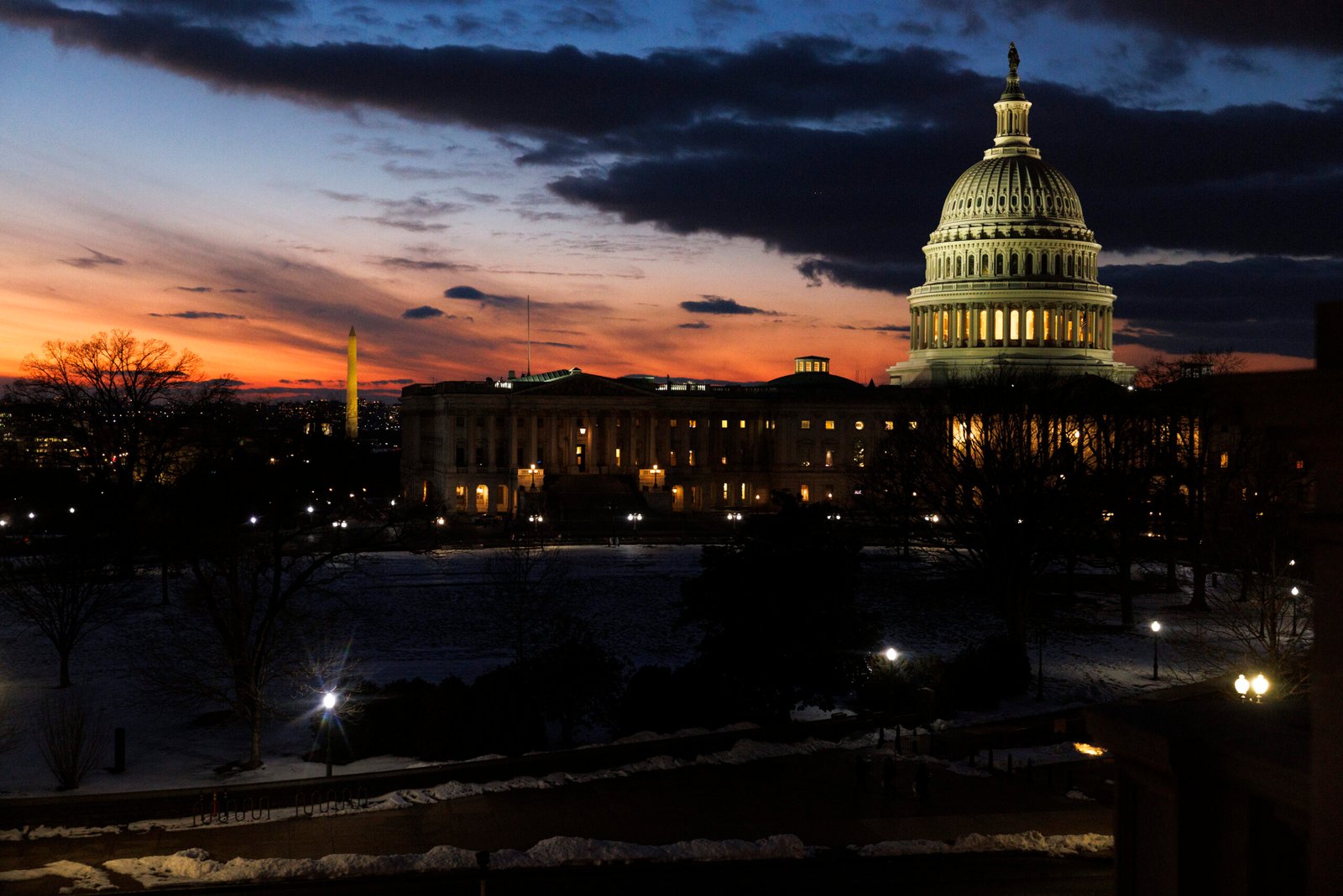
The vehicle for that demand already exists. The Ban Artificial Superintelligence Act of 2026, introduced in September by Senator Bernie Sanders and Representative Greg Casar as S. 5493 and H.R. 10538, would freeze the training, fine-tuning and release of any AI model built with at least 10^25 operations until a new Department of Artificial Intelligence is staffed and has written safety rules. Superintelligence itself would be banned outright, and reckless violations could carry prison terms of up to 20 years.
Ansari is an original co-sponsor of the bill. After Democrats won both chambers in the November midterm elections, she has said artificial intelligence should top the Democratic agenda on the first day of the new Congress — with a pause, regulation of the industry and a ban on superintelligence at the top of the list.
A ban still faces a long road
For all the noise, the bill has a long way to go. Neither version has cleared committee, and the House version has not moved since it was sent to the Oversight Committee on 24 September. The new Congress takes its seats in January 2027, and President Donald Trump has pushed for American dominance in AI rather than a slowdown — so the proposal’s path through Washington is uncertain.
The irony is hard to miss: while lawmakers debate a pause, the labs are accelerating. Anthropic has just launched Claude Ship, an AI system that reviews, fixes and approves code on its own — the latest sign that AI is moving from writing software to managing it.
Wang himself added a practical note in a follow-up reply, saying Meta’s chief executive Mark Zuckerberg “has also called for all labs (including our own) to deploy the vast majority of compute towards serving people and customers rather than towards recursive self-improvement (RSI).”
The context matters. Wang joined Meta in June 2025 after the company paid $14.3 billion for a 49 percent stake in Scale AI, the company he co-founded, and he now leads Meta Superintelligence Labs. Meta is spending $135 billion or more on its AI build this year. The warning, in other words, comes from inside the race — which is exactly why lawmakers are quoting it.
Whether Congress acts when it returns in January will decide whether Wang’s essay is remembered as a turning point or as one more alarm in a year full of them. Either way, the debate has changed: the question is no longer whether superintelligence is coming, but whether anyone will be able to control it when it arrives.
Related Posts
 TechnologyGoogle DeepMind Quantum Algorithms Now Up to 290 Times Cheaper, Thanks to AI Agents
 TechnologyZ.ai Releases GLM-5.4 With Loop Transformer Architecture and Vision for Coding
 TechnologyOpenAI and Cisco Launch Shirudo: An AI Shield That Protects Linux Servers Without a Reboot
 TechnologyCrowdStrike Buys Zscaler in $43.9 Billion Deal — the Biggest Cybersecurity Acquisition Ever
 TechnologyAnthropic Launches Claude Ship: AI That Reviews, Fixes and Approves Your Code
 TechnologySierra Raises $1.75 Billion at $30 Billion Valuation as AI Agents Take Over Customer Service
Most Popular
 How-ToPTA Tax Calculator 2026: Check Mobile Tax on Any Phone421 views
 Pakistan NewsPIA Boeing 787 Lease Deal: What It Means for the Airline396 views
 Canada JobsTech Jobs in Canada: Roles, Salaries, and Skills Needed394 views
 SportsUEFA Champions League 2026-27: Format, Teams and Schedule390 views
 TechnologyPM Shehbaz Sets November Deadline for Alibaba AI and Digitalisation Projects in Pakistan370 views
 ShowbizWomen’s Fashion in Pakistan 2026: Trends, Brands and Style Guide366 views