Maryam Nawaz Calls for Pakistan-China ‘Data Corridor’ at Guiyang Big Data Expo
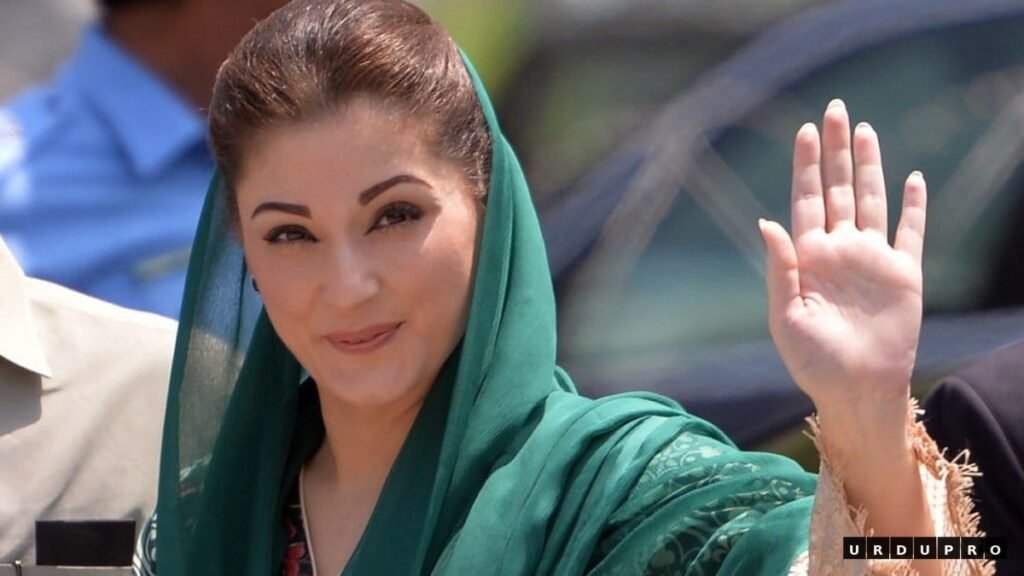
Punjab Chief Minister Maryam Nawaz Sharif has proposed a new chapter in the Pakistan-China relationship — a “new corridor of data, innovation and shared ideas” running alongside the physical connectivity the two countries have built over the decades. Speaking at the China International Big Data Expo 2026 in Guiyang, the city China brands as its “Big Data Capital”, she invited Chinese technology companies and investors to partner with Punjab in building its digital economy.
Maryam Nawaz said Punjab wanted to move beyond being a mere consumer of technology and become an equal partner in its creation and innovation. She framed data not as a technical resource but as critical national infrastructure, arguing that Pakistan and China should now connect their digital futures as closely as their roads and ports.
The Guiyang pitch: data as infrastructure
Addressing the expo, the chief minister said Punjab had enormous opportunities for Chinese companies, and invited them to invest in energy, computing, cloud, connectivity and tokenisation infrastructure. She stressed that the province was determined to use technology to improve governance, transparency and public services.
“Data should not merely be collected; it should be transformed into practical action,” she told the audience. She said the government was developing an autonomous, secure and intelligent digital foundation designed to connect reliable data with identity, public services, infrastructure, energy, financial systems and economic opportunities.
She argued that the real value of data would be visible when it could help a businessperson establish financial credibility without traditional collateral, identify vulnerable families so assistance reaches them faster, give farmers timely information and targeted support, tailor education to individual students, strengthen healthcare systems, and let environmental institutions make evidence-based decisions instead of relying on estimates.
OneMap: 12 terabytes from 31 departments
The centrepiece of her announcement was “OneMap”, a province-level shared data engine that will integrate more than 12 terabytes of geospatial data and over 6,000 datasets from 31 Punjab government departments.
According to the chief minister, OneMap will support better planning, help resolve land-related disputes and enable more informed urban development. The system is also being linked with the Punjab Socio-Economic Registry, so authorities can understand citizens’ needs more accurately, target resources more effectively and make sure public services reach the right people.
She said Punjab was simultaneously developing a “Punjab Data Lake” and establishing its first dedicated data centre to strengthen the province’s sovereign capacity to securely store, process and use its own data. Work is also underway on a sovereign cloud, a digital identity system, interconnected government systems and an AI-based implementation framework.
Dedicated AI Office and Safe City example
Maryam Nawaz announced that Punjab has become the first Pakistani province to establish a dedicated “AI Office”, with the goal of placing artificial intelligence at the centre of governance. She said the office would improve decision-making, speed up public services, enhance transparency and make the government more effective and accountable.
She pointed to Punjab’s Safe City programme as proof that technology and AI-based analysis can deliver tangible public benefits. “Through integrated systems and AI-based analysis, we are making our cities safer, improving emergency response and making policing more proactive and effective,” she said.
Provincial Special Assistant Ali Dar, briefing the meeting on the AI Office, said the government was working to ensure AI is used in healthcare, education and governance. He noted that around 65 per cent of Punjab’s population is young, creating a large talent pool for the technology sector.
The chief minister said her experience of governing a province of around 128 million people had reinforced the importance of data-driven decision-making, and that every dataset and algorithm ultimately affects people’s lives — so technology must be built with practical public outcomes in mind.
Huawei partnership: six data centres and AI training
During her China visit, Maryam Nawaz also led a delegation in a meeting with Huawei officials, where both sides discussed expanding the Chinese technology giant’s partnership with Punjab. She invited Huawei to make substantial investments in the Nawaz Sharif IT City, and the discussions covered the establishment of six data centres and a sovereign data centre there.
The two sides agreed on a strategic partnership aimed at equipping Punjab with artificial intelligence capabilities. Under the proposed cooperation, Huawei master trainers will train 1,000 young people in Punjab, while 300 women trainers will receive AI training. The meeting also explored cooperation in smart cities, command centres, healthcare, education, agriculture and manufacturing, and both sides agreed to designate a focal person to make coordination between Huawei and the Government of Pakistan more effective.
Maryam Nawaz welcomed Huawei’s commitment to Punjab’s digital transformation and reiterated that advancing the province in artificial intelligence was among her government’s top priorities. She praised Guizhou’s data-driven development model and said Punjab intended to follow a similar path adapted to its own requirements.
She linked the digital agenda to the broader Pakistan-China relationship, saying the friendship rested not only on government-to-government ties but on trust, mutual respect and people-to-people relations. She credited Chinese President Xi Jinping’s leadership, former prime minister Nawaz Sharif’s longstanding contribution and Prime Minister Shehbaz Sharif’s continued commitment with advancing the relationship, and said she was proud to carry the legacy of Pakistan-China friendship into a new arena focused on data, technology and joint innovation.
She expressed hope that Pakistan and China would turn their shared vision of a digital economy into a new chapter of cooperation, innovation, development and shared prosperity.
Sources: Pak Souch Media Group, Biometric Update
Related Posts
 TechnologyMotorola Signature 27 Launches November 5: 200MP Periscope Zoom, Snapdragon 8 Elite Extreme Gen 6
 TechnologyAI Conference in Karachi Concludes: Scientists Call for Responsible AI to Protect Environment
 TechnologyPakistan’s National CERT Warns: Phones Can Be Hacked Through Ads — No Click Needed
 TechnologyPIA Boeing 787 Dreamliner Cleared to Fly in Pakistan — First Flight PK-786 Departs London Today
 TechnologyOpenAI and Google Back Shared Robots.txt AI Training Preference Signal
 TechnologyOneOffice and ZIEL Global Bring Affordable Cloud Office Suite to Pakistan
Most Popular
 How-ToPTA Tax Calculator 2026: Check Mobile Tax on Any Phone334 views
 SportsBallon d’Or 2026: London Ceremony, Nominees and All-Time Records Ahead of 70th Anniversary320 views
 SportsUEFA Champions League 2026-27: Format, Teams and Schedule320 views
 Canada JobsTech Jobs in Canada: Roles, Salaries, and Skills Needed310 views
 Pakistan NewsPIA Boeing 787 Lease Deal: What It Means for the Airline297 views
 ShowbizWomen’s Fashion in Pakistan 2026: Trends, Brands and Style Guide296 views