LUMS has won a major multi-year grant from the Gates Foundation to establish the LUMS National AI Hub, Pakistan’s first nationally coordinated artificial intelligence hub. The hub will launch with a flagship focus on maternal, newborn and child health — one of the country’s most urgent public health priorities — and is designed as a long-term national platform that will progressively expand to other development challenges facing Pakistan.
The announcement, published by LUMS on Monday, brings together two of Pakistan’s leading research universities. LUMS will build on its longstanding expertise in artificial intelligence, language technologies and digital public health, while Aga Khan University (AKU) will serve as the key technical and clinical partner, contributing large maternal health datasets, clinical expertise and support for field testing AI-enabled interventions across diverse care settings.
The hub will be led by Dr Maryam Mustafa, Associate Professor of Computer Science at the Syed Babar Ali School of Science and Engineering (SBASSE) at LUMS, with Professor Fyezah Jehan, Chair of the Department of Paediatrics and Child Health at AKU, collaborating closely on clinical design and implementation. The initiative is also supported by Mubarik Imam, a member of the Advisory Board at SBASSE.
“This is a milestone moment for both LUMS and Pakistan,” Dr Mustafa said in the LUMS announcement. “We are launching this Hub with maternal, newborn, and child health because this is where the need is most urgent and the opportunity for immediate impact is greatest.”
Why the LUMS National AI Hub starts with mothers and babies
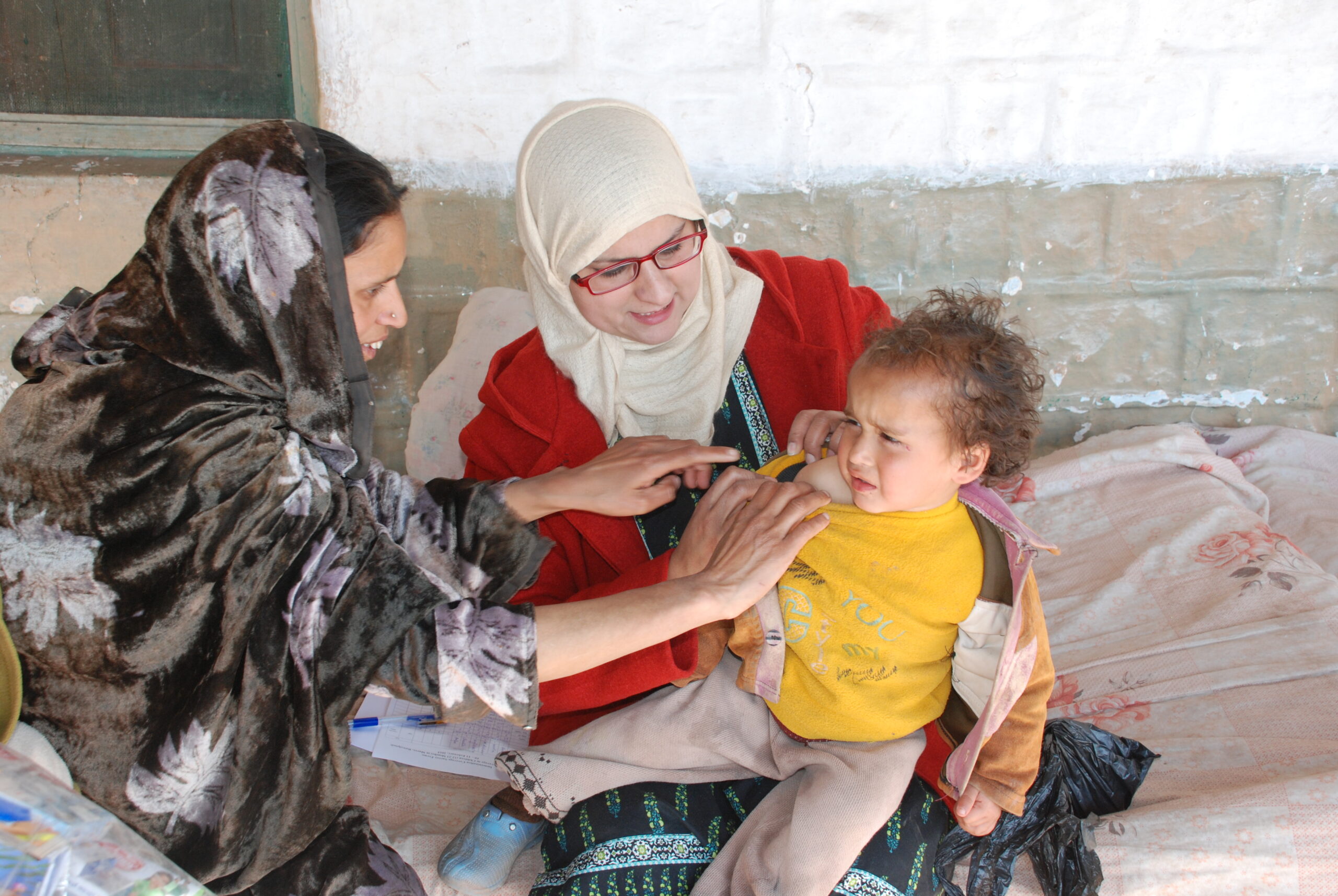
Pakistan continues to face some of the highest maternal and neonatal mortality rates in the region. Maternal mortality currently stands at 186 deaths per 100,000 live births, driven by limited access to quality antenatal, delivery and postnatal care, shortages of skilled health workers, weak referral systems and delays in managing critical complications such as haemorrhage, eclampsia and sepsis. Language and literacy barriers, fragmented health data systems and social and economic constraints make the problem worse.
The hub is designed to close those gaps from inside the existing health system. Its tools will include AI-enabled risk prediction and decision-support systems for frontline health workers, speech-based and multilingual tools to bridge literacy and language barriers, stronger referral and follow-up mechanisms, and frameworks to make health data systems work together.
For a mother in a remote village, that could mean earlier identification of pregnancy-related risks and faster referrals when complications arise. For the health worker seeing her, it could mean a tool that flags a warning sign in the few minutes available. As Dr Mustafa told the Gates Foundation in a profile of her work, doctors in crowded clinics often have only three minutes per patient — barely enough to ask why the woman came in. Many women make only one prenatal visit, and the next time they are seen is often in an emergency room, when it may already be too late.
From Awaaz-e-Sehat to a national platform

The new hub builds on a successful earlier project led by Dr Mustafa. Under a previous Grand Challenges grant from the Gates Foundation, her team developed Awaaz-e-Sehat — “Voice of Health” in Urdu — a voice-assisted app that guides frontline health workers through structured questions in local languages, helping them spot warning signs of conditions such as pre-eclampsia or gestational diabetes during brief consultations. A simpler voice-based tool delivered over WhatsApp lets women answer key health questions in their own language before seeing a doctor.
Early data from the pilot is striking. According to the Gates Foundation profile of Dr Maryam Mustafa, doctors in traditional settings were detecting symptoms of gestational diabetes and hypertension only 7 per cent of the time, while the app was flagging the same symptoms 40 per cent of the time. The app is still in its pilot phase, but the team is already seeing success — and the new hub is explicitly designed to move beyond proof-of-concept pilots by integrating AI tools into national care pathways.
Beyond maternal and child health, the hub is envisioned as a national platform for responsible AI innovation aligned with Pakistan’s public-interest priorities. As it matures, its infrastructure, governance and technical capabilities will be extended to additional nationally relevant areas, while also strengthening the country’s AI ecosystem through capacity building, policy development, AI governance and support for startups working at the intersection of AI and social impact.
The initiative also places Pakistan alongside a small group of countries building nationally coordinated, responsible AI platforms for health. The Gates Foundation is supporting similar AI Scaling Hubs in Rwanda, Nigeria, Senegal and Kenya as national platforms to scale mature AI solutions across health, education and agriculture.
Already moving: Punjab, Sindh and AKU partnerships

The hub is not starting from zero. In the days before the grant announcement, the National AI Hub for Maternal, Newborn and Child Health at LUMS signed a memorandum of understanding with the Office of Artificial Intelligence Punjab to advance responsible AI in public-sector health priorities and healthcare delivery in the province. The signing brought together Punjab’s Minister for Health and Population Khawaja Imran Nazir, the Chief Minister’s Adviser on AI Ali Dar, and LUMS Provost and Acting Vice Chancellor Dr Tariq Jadoon, alongside Dr Mustafa.
The hub has also formalised a partnership with the Government of Sindh and Aga Khan University to advance AI-enabled risk-stratification models, clinical decision-support systems and voice-assisted tools for frontline maternal and child healthcare providers. A high-level Gates Foundation delegation, including Dr Anita Zaidi, President for Gender Equality, and Dr Kalpana Kochhar, Interim President for Global Policy and Advocacy, also visited the hub at LUMS to review its work on AI and public health.
The momentum reflects a wider push to put AI to work in Pakistan’s public systems. Punjab’s plan to train 25,898 public school teachers in AI, which began on 23 November, and KMU’s decision to raise MBBS seats to 150 at three KP medical colleges show the same direction of travel — more trained people, and more technology, reaching the public services that need them most. The LUMS National AI Hub now gives that push a national home, starting with the mothers and babies who need it first.
Related Posts
 TechnologyMotorola Edge 70 Pro Now Available in Pakistan at Rs 174,999
 TechnologyAI Riemann Hypothesis Proof Confirmed True by Independent Mathematicians
 TechnologyVivo V80 Goes on Sale in Pakistan — ZEISS Cameras, 7,200mAh Battery, Price Starts at Rs 209,999
 TechnologySamsung Galaxy A18 Launched in Pakistan — Gemini AI, 50MP Triple Camera, Price Starts at Rs 99,999
 TechnologyDRAP Launches Online Licensing and Registration for Health and OTC Products
 TechnologyTikTok Launches Likeness Detection and a Free AI Checker to Catch Deepfakes
Most Popular
 How-ToPTA Tax Calculator 2026: Check Mobile Tax on Any Phone421 views
 Pakistan NewsPIA Boeing 787 Lease Deal: What It Means for the Airline396 views
 Canada JobsTech Jobs in Canada: Roles, Salaries, and Skills Needed394 views
 SportsUEFA Champions League 2026-27: Format, Teams and Schedule390 views
 TechnologyPM Shehbaz Sets November Deadline for Alibaba AI and Digitalisation Projects in Pakistan370 views
 ShowbizWomen’s Fashion in Pakistan 2026: Trends, Brands and Style Guide366 views