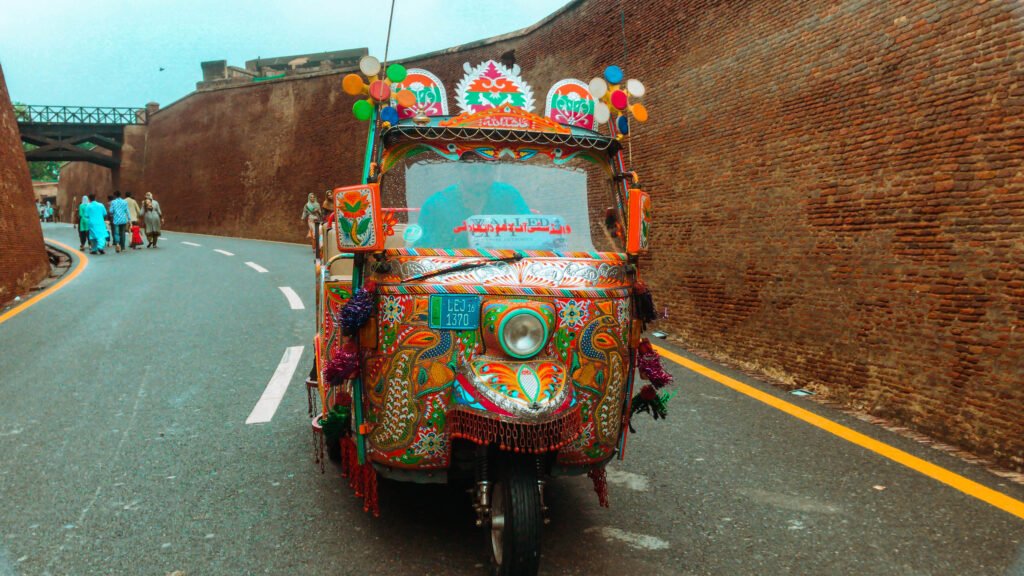
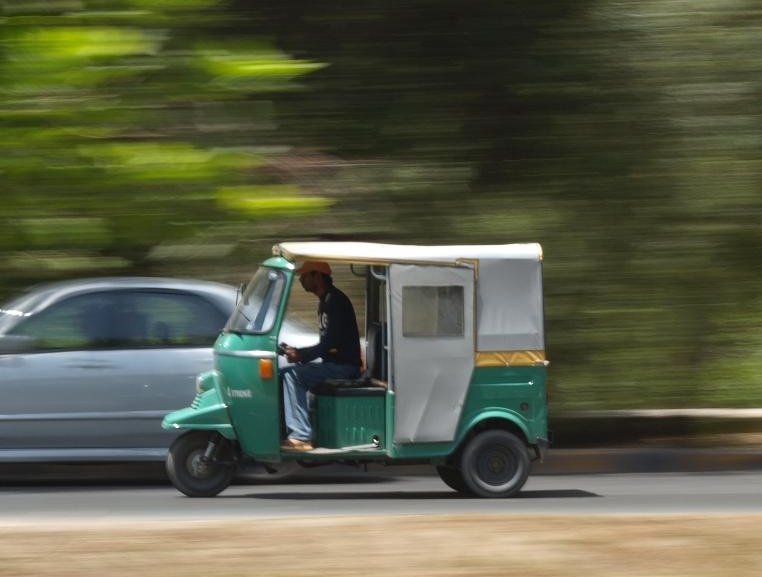
For thirteen years, Rashid Ali has driven a three-wheeled motorised rickshaw through the streets of Lahore. His day begins at 6 in the morning and sometimes does not end until midnight. For most of those years, he could make about $6.50 a day — enough, just barely, for his family’s essentials. Now, with liquefied petroleum gas prices surging across Pakistan, he says he is lucky to make $3 a day. His family has cut back to two meals a day.
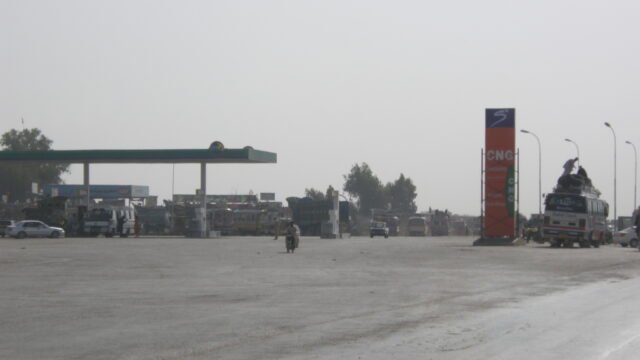
Ali is among thousands of Pakistani drivers who run their vehicles on LPG, the fuel sold in cylinders that is also used for cooking and heating. Majeed Ghauri, chairman of the Awami Rickshaw Union, calls it “the fuel of the poor,” according to Reuters’ 3 November report. He says roughly 70 per cent of the union’s 43,000 auto-rickshaws — and nearly 8,000 Qingqis, the motorcycle-based three-wheelers that carry passengers on fixed routes — run on LPG.
‘Fuel of the Poor’: Who Runs on LPG in Pakistan
LPG is the working-class fuel of Pakistan’s transport economy. For drivers like Rashid Ali, a cylinder is not just a kitchen commodity — it is the tank of gas that decides whether a day’s work pays for dinner. When prices climb, there is no alternative: petrol costs far more, and switching fuels is not an option for most rickshaw owners.
The numbers behind the crisis are stark. Traders told Reuters that the price of a 12-kg cylinder jumped 56 per cent within days of the border closures, reaching Rs7,000 — about Rs583 per kg on the open market. “Now, it’s just not possible to get by on seven or eight hundred [rupees], is it?” one driver is quoted as saying in the report. For a man like Ali, who once earned enough to keep his family fed three times a day, the maths no longer works.
Why Prices Exploded: Iran’s Border Crossings Closed on October 17
LPG prices have surged since October 17, when two Iranian border crossings closed and halted imports, traders say — the latest energy shock since the US-Iran war began in February. Before the closures, Pakistan was importing about 7,000 metric tons of LPG a day from Iran, according to the Pakistan LPG Association.
Why the crossings closed is itself disputed. The government of Balochistan, the province that borders Iran, cited security and smuggling as the reason. Iran’s foreign ministry blamed technical issues. Iran’s ambassador later said Iran had imposed no restrictions at all, including on LPG exports, and blamed changes in Pakistan’s import paperwork instead. Each claim leaves the outcome the same for the rickshaw driver in Lahore: less gas, higher prices, emptier pockets.
The dependence on Iranian supply runs deep. Irfan Khokhar, chairman of the LPG Distributors Association of Pakistan, has noted that Iran supplies 70 per cent of Pakistan’s LPG while domestic production accounts for only 30 per cent — a fragility that the October closures exposed in full.
Official Price vs Open Market: The Double-Price Reality
The gap between what regulators say and what people pay has become a story of its own. As we reported on 23 October, LPG had already crossed Rs750 per kg in some parts of the country in late October. Fresh figures show the divide persisting into November.
The Oil and Gas Regulatory Authority (OGRA) set the official LPG price for November at Rs294,075 per tonne, up from Rs279,341 the previous month — which puts the official retail cost of an 11.8-kg domestic cylinder at Rs3,470, or about Rs294 per kg. The regulator attributed the rise to a 6.47 per cent increase in the Saudi Aramco contract price, partly offset by a slight improvement in the exchange rate, as Dawn reported on 1 November.
On the open market, however, LPG has been selling at up to Rs630 per kg — more than double the official rate — while even company-operated franchises charge around Rs400 per kg. The drivers buying fuel by the day rarely see anything close to the official price.
Inflation, Interest Rates and the Rs458 Petrol Backdrop
October inflation figures stood at 9.6 per cent, and the central bank raised the policy interest rate to 12 per cent last week, citing energy and wheat prices. Petrol touched a record Rs458 a litre on April 3 and remains about 40 per cent above its pre-war price.
For rickshaw drivers, that combination is brutal: the fuel they burn keeps getting dearer, the fares passengers can afford stay flat, and the cost of everything their families eat and wear keeps climbing. Rashid Ali’s story — $6.50 a day collapsing to $3 — is not an exception. It is the arithmetic of thousands of union members whose livelihoods are priced in rupees and whose fuel is priced against a geopolitical crisis.
What Comes Next for Drivers and the LPG Market
Short of the Iranian border crossings reopening — and the two sides agreeing on why they closed — relief looks distant. The Balochistan government shows no sign of reversing its decision, and the blame game between Quetta, Tehran and Islamabad’s paperwork gives traders no reason to expect supply to normalise soon.
Winter adds pressure: LPG demand for heating rises each year in the colder months, and with the 56 per cent jump in cylinder prices already straining household budgets, another supply squeeze could push open-market rates further from the official numbers. The union’s leadership has been sounding the alarm; the drivers themselves have fewer options. Cut fuel use and lose fares, or burn expensive gas and lose money — and, as Ali’s family knows, eat two meals instead of three.
For now, the “fuel of the poor” is behaving like a luxury. Until the borders reopen or supply lines shift, Pakistan’s rickshaw economy will keep paying the price of a crisis it did nothing to create.
Related Posts
 BusinessGold Prices in Pakistan Rebound: Per-Tola Rate Rises After Three-Day Slide
 BusinessKia Sportage L HEV Gets Up to Rs800,000 Price Cut in Pakistan
 BusinessPetrol Price in Pakistan Cut: Rs374.51 Per Litre From 3 November — Diesel Down Rs7.76
 BusinessAdrian Hamilton-Manns Takes Charge as New PIA CEO
 BusinessUS-Backed $4.4 Billion LNG Project Proposed for Pakistan: Port Qasim Terminal and 1,100km Pipeline
 BusinessPakistan Inflation Falls to 9.61% in October 2026 — PBS Data Shows
Most Popular
 How-ToPTA Tax Calculator 2026: Check Mobile Tax on Any Phone398 views
 Pakistan NewsPIA Boeing 787 Lease Deal: What It Means for the Airline381 views
 SportsUEFA Champions League 2026-27: Format, Teams and Schedule374 views
 Canada JobsTech Jobs in Canada: Roles, Salaries, and Skills Needed355 views
 SportsBallon d’Or 2026: London Ceremony, Nominees and All-Time Records Ahead of 70th Anniversary336 views
 ShowbizWomen’s Fashion in Pakistan 2026: Trends, Brands and Style Guide333 views